


Republicans Link Energy Costs to Senate Vulnerability
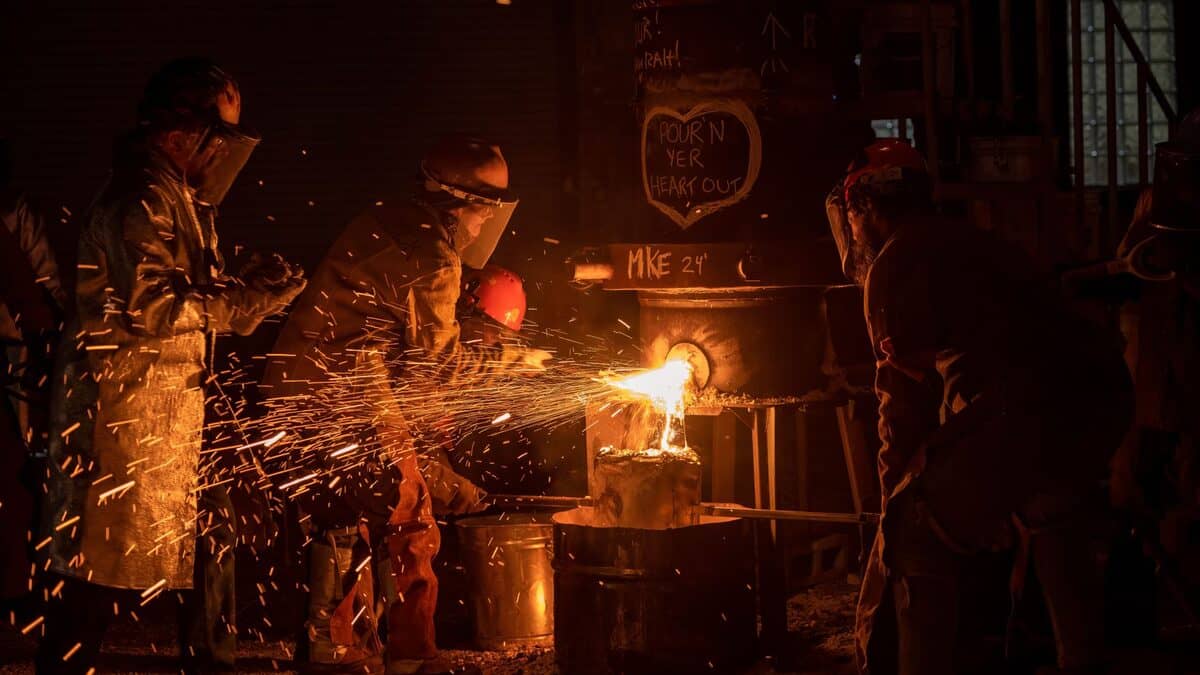
Vice President JD Vance and Senator Jon Husted appeared together at a steel manufacturing facility in Middletown, Ohio, on Aug. 21, 2026, to address growing concerns within their party regarding the political impact of rising energy prices. Republican leaders have warned that voter anger over increasing power costs, driven by the expansion of data centers, could jeopardize the party's hold on Ohio's Senate seat.
The event served as a defense of the state's current energy policy at a time when members of Husted's own party are expressing caution about how the issue might affect electoral outcomes. The location of the stop was described as significant because Middletown is Vance's hometown, and steel plants represent large energy consumers whose hiring decisions can be directly impacted by electricity costs.
Vance stood alongside Husted and other Republican leaders during the visit, which doubled as a public relations effort to highlight the economic importance of reliable and affordable power for traditional industries. The appearance underscored the tension between supporting new technological infrastructure and maintaining competitiveness for established manufacturing sectors that rely heavily on consistent energy supplies.
Steel Industry Represents Energy Competition
The choice of a steel plant as the venue for this political messaging highlighted the direct competition for power resources between industrial manufacturers and data centers. Steel production requires enormous amounts of electricity, making power costs a critical line item in operational budgets. Decisions regarding hiring and expansion at such facilities are often shaped by the total cost of energy inputs.
Data centers are spreading across Ohio's grid, creating a scenario where traditional heavy industry must compete for available capacity with technology firms that require continuous power. This dynamic has become a focal point for Republican officials who are attempting to frame the debate around protecting existing jobs and industrial bases from the financial burdens associated with new utility demands.
Utility Costs Allocated to Existing Customers
A central component of the concern raised by Republican leaders involves the financial mechanics of grid expansion. Data centers are characterized by enormous and constant energy demand that arrives faster than transmission lines and generation capacity can be built to serve them. When a state adds this type of load quickly, the cost of expanding the power system does not disappear.
According to reports from the event, these costs are allocated among existing customers on the grid. This allocation mechanism means that businesses and residents who were already connected to the system may see their bills rise to fund the infrastructure required to support new data center developments. The rapid growth of data centers has thus become a utility issue that has transformed into a campaign issue for state and national politicians.
Political Implications for Ohio's Senate Seat
The intersection of energy policy and electoral politics is now a direct concern for Republican officials in Ohio. The warning issued by Husted and Vance suggests that the party fears voter dissatisfaction with utility bills could translate into lost support in upcoming elections. By visiting a steel plant in Vance's hometown, the officials aimed to connect with constituents who feel the immediate financial impact of grid upgrades.
The appearance on Friday was part of a broader effort by Republican leaders to manage the narrative around Ohio's energy future. While data centers are often promoted for their economic contributions and technological advancement, the associated infrastructure costs present a political challenge. The officials' presence at the steel plant served to illustrate the tangible effects of these costs on local employment and industrial viability.
Defense of State Energy Policy
The stop in Middletown was explicitly framed as a defense of Ohio's energy policy. Republican leaders utilized the platform to argue that the state must balance the needs of emerging industries with the financial realities faced by traditional manufacturers. The event highlighted the difficulty of maintaining political support for policies that drive infrastructure growth when those costs are passed directly to ratepayers.
The discussion at the steel plant focused on the immediate economic pressures facing businesses in the region. By linking the Senate race to these local economic concerns, Vance and Husted attempted to make the abstract issue of grid capacity a concrete electoral liability for their opponents. The visit reinforced the message that energy affordability is a key determinant of Ohio's industrial health.
Timing of the Political Visit
The timing of the Aug. 21, 2026, visit coincided with heightened scrutiny of data center legislation in Ohio. As bills related to utility regulation and grid expansion move through the legislative process, political figures are increasingly forced to take positions on how these changes will affect voters. The appearance at the steel plant was a strategic move to demonstrate sensitivity to the concerns of working-class voters who rely on stable employment in energy-intensive sectors.
Republican leaders continue to monitor public sentiment regarding power costs as they prepare for the Senate contest. The warning that data center-driven energy costs could cost them the seat reflects a calculated assessment of voter priorities. By addressing these issues directly at a site symbolic of Ohio's industrial heritage, the officials sought to align their party with the economic interests of traditional manufacturing workers.