


The Shift From Containment to Endemic Risk
A decade of reporting from the frontiers of health and medicine has established a baseline understanding regarding viral hemorrhagic fevers. Historically, the concept of Ebola becoming an endemic disease was considered unthinkable by public health officials. The prevailing view held that outbreaks would inevitably burn out due to natural herd immunity or successful intervention strategies.
However, recent developments in the Democratic Republic of Congo and neighboring Uganda present a scenario distinct from previous incidents. According to Ivan Buendia Gayton and Eric D. Perakslis, there is a growing concern among health professionals that Ebola could become endemic within the borders of the DRC. This perception represents a significant departure from historical norms where such persistence was deemed impossible.
The primary risk associated with this current outbreak differs fundamentally from earlier fears regarding global spread to Western nations or other continents. The authors note that the greatest danger is not necessarily the geographic expansion of the virus across borders, but rather the possibility that it may never be fully contained within its region of origin and could persist indefinitely.
Historical Precedents vs. Current Reality
In past instances involving Ebola outbreaks, containment was viewed as an absolute certainty given sufficient resources and time. The idea of endemicity—where a virus remains in a population continuously without causing major epidemics but maintaining transmission chains—was not part of the standard risk assessment models used by agencies like the World Health Organization.
Despite these historical precedents, the current situation challenges established assumptions. Ivan Buendia Gayton and Eric D. Perakslis argue that this time is different. The factors driving this change include complex social dynamics in affected regions, limited access to remote treatment centers, and evolving viral strains adapted to local populations.
Implications for Global Health Security
The potential transition from sporadic outbreaks to endemic presence alters the strategic approach required by international health bodies. If Ebola becomes endemic in the DRC, standard containment protocols may fail over time as they did not account for long-term persistence scenarios previously dismissed.
This shift necessitates a reevaluation of resource allocation and surveillance mechanisms designed specifically for chronic viral threats rather than acute epidemic responses. The authors suggest that while previous outbreaks were managed through rapid isolation and contact tracing, an endemic model requires sustained infrastructure investment over decades rather than months or years.
Voices From the Field
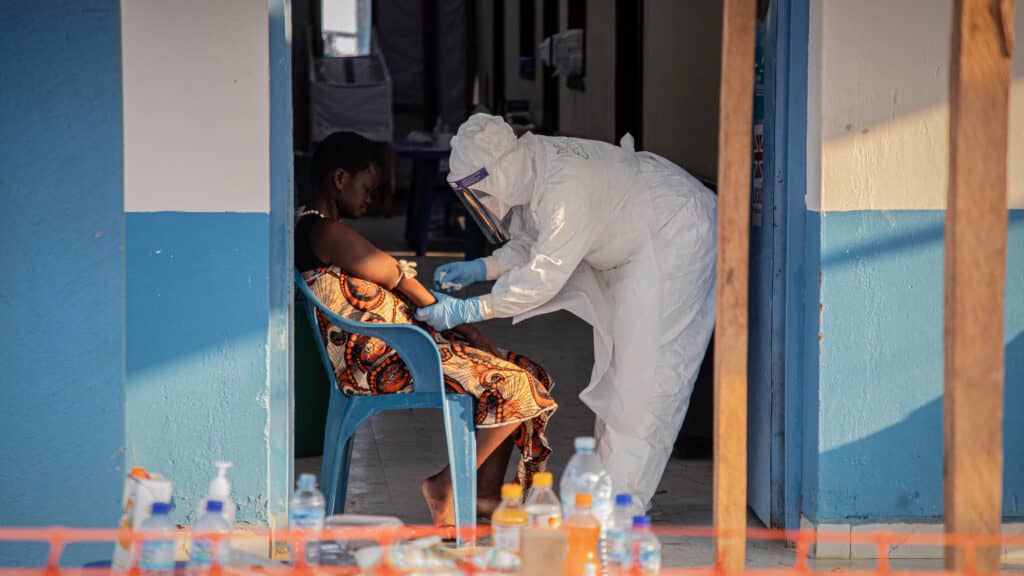
A frontline health worker taking samples from a patient at an Ebola treatment center in the Democratic Republic of Congo on June 23 illustrates the ongoing challenges faced by medical personnel. The image, captured by Benediction Murhabazi and distributed via AFP through Getty Images, underscores the human element behind statistical projections about endemic risks.
Health workers operating in these environments face daily decisions regarding patient isolation, protective gear usage, and community engagement strategies that directly influence whether an outbreak remains contained or evolves into a persistent threat. Their experiences provide critical data points for researchers attempting to model future trajectories of viral persistence.
Divergent Perspectives on Containment Strategies
While some experts advocate for aggressive containment measures modeled after successful responses in West Africa during the 2014-2016 epidemic, others argue that such approaches may be insufficient against a virus adapted to local ecological conditions. The debate centers on whether current interventions can maintain suppression indefinitely or if adaptation will inevitably lead to endemic status.
No opposing party response was explicitly recorded in available sources regarding alternative containment strategies beyond the general acknowledgment of differing expert opinions within public health circles globally. Consequently, specific rebuttals from rival organizations remain unattributed outside broader academic discourse.
Operational Challenges and Resource Constraints
The logistical difficulties inherent to sustaining long-term response efforts in remote areas cannot be overstated. Supply chains for personal protective equipment often face disruption due to infrastructure limitations affecting road networks connecting rural clinics to major supply hubs.
Funding cycles typically aligned with acute outbreak phases may not support the prolonged expenditure required if endemicity becomes reality. Donor organizations accustomed to funding short-term emergency responses must adapt their grant structures to accommodate extended timelines without compromising care quality or safety standards for staff and patients alike.
Community Engagement as a Critical Variable
Cultural beliefs surrounding illness causation play a pivotal role in determining community cooperation with health interventions. Misinformation regarding traditional healing practices versus biomedical treatments continues to hinder effective case finding even when clinical facilities are available nearby.