

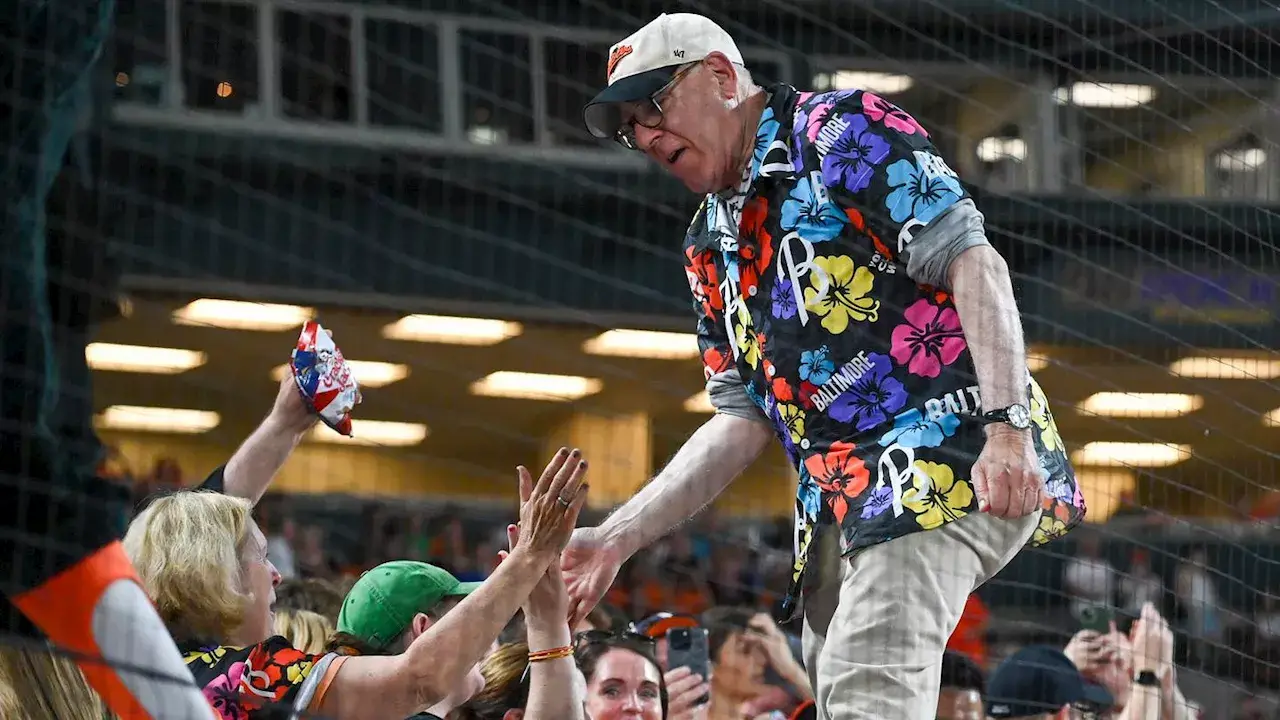

Private Equity Background and Asset Liquidity
Baltimore Orioles owner David Rubenstein’s private-equity background and recent financial actions suggest a strategy aimed at managing public expectations regarding payroll spending, despite his substantial personal wealth. According to reporting by Sports Illustrated, Rubenstein has engaged in high-value asset transactions that demonstrate significant liquidity.
Rubenstein previously purchased the Magna Carta for $20 million and sold a ski chalet for $19 million. These transactions indicate that the team’s financial operations are not solely dependent on revenue from MASN, the regional sports network owned by the Rubenstein family. The ownership group includes other billionaires beyond Rubenstein, further insulating the franchise from reliance on a single income source to cover operational costs.
Projected Payroll Figures and Contract Obligations
Financial projections for the Orioles' future payroll reveal specific constraints and opportunities. Stripping away unexecuted contract options for players such as Ryan Mountcastle and Zach Eflin leaves a base payroll of approximately $140 million for the 2027 season, when factoring in expected arbitration awards.
Additionally, the team has existing financial commitments that impact its flexibility. The Orioles have $120 million still owed to Pete Alonso. These figures form the baseline against which any new spending must be measured.
Strategic Spending Thresholds
Analysts suggest that extending two pitchers at average salaries under $20 million would be considered "peanuts" in the context of the team's overall budget. Similarly, an extension for Samuel Basallo is described as a "steal." These assessments frame smaller contracts as low-risk moves within Rubenstein’s broader financial strategy.
Owner Expectations and Attendance Metrics
While running a $200 million payroll is suggested as an aspirational goal to win games and buy back goodwill, the actual spending behavior of the ownership group appears more conservative. The author of the Sports Illustrated analysis suspects Rubenstein’s actual spending will remain in the $160 million range.
This threshold is linked to specific attendance metrics. The strategy aims to prevent attendance from dropping below 1.5 million next season. This figure serves as a practical floor for financial planning, balancing competitive costs with fan engagement targets.
Critique of Financial Narratives and Metrics
The reporting challenges the narrative that Orioles fans should expect minimal spending. It argues that decades of propaganda from owners regarding economic rules have conditioned the public to accept limited investment. The article notes that Rubenstein often straddles a stance of praising his own generosity while simultaneously lowering expectations about significant payroll increases.
Furthermore, the analysis criticizes the reliance on external metrics for team building. The article claims that the Elias Sports Bureau is a "fraud" and argues that winning requires taking significant swings in trades and free agency rather than relying on their metrics. This perspective supports the view that Rubenstein’s financial decisions are driven by a desire to control narrative and maintain specific operational thresholds rather than an inability to spend.