


Emergency Measures and Provincial Suspension
The Pakistani government imposed a state of emergency in the northwestern province of Khyber Pakhtunkhwa on Monday, October 12, 2026. The central administration simultaneously suspended the provincial government, which is dominated by the Pakistan Tehreek-e-Insaf (PTI) party.
President Asif Ali Zardari ordered the closure of schools across the province as part of the emergency protocols. Reports indicate that internet connectivity experienced major disruptions throughout Khyber Pakhtunkhwa during this period, further isolating the region from external communication.
Law Minister Azam Nazeer Tarar stated that a provincial governor would be appointed to administer the region for at least six months. This appointment replaces the suspended PTI-led administration, effectively transferring executive authority from the provincial level to the central government's appointee.
Government Justification and Security Concerns
Central government officials claimed the emergency measures were necessary to address security threats. Officials stated that provincial leaders had failed to contain an Islamist insurgency leaking across the border from neighboring Afghanistan, which they argued required immediate central intervention.
Current Prime Minister Shehbaz Sharif addressed the political tensions surrounding the emergency declaration. He asked PTI to postpone a planned march on Islamabad, citing threats posed by the Tehrik-e-Taliban Pakistan (TTP) that made such large gatherings dangerous.
President Zardari defended the government's actions by asserting that residents of the province desired peace and stability. The administration framed the suspension of the provincial government as a security necessity rather than a political maneuver, emphasizing the need to quell the insurgency.
Opposition Response and Political Context
PTI leaders rejected the government's justification for the emergency. They described the suspension of their government as an "ambush on democracy" and characterized the move as a coup, arguing that the timing was designed to suppress political opposition.
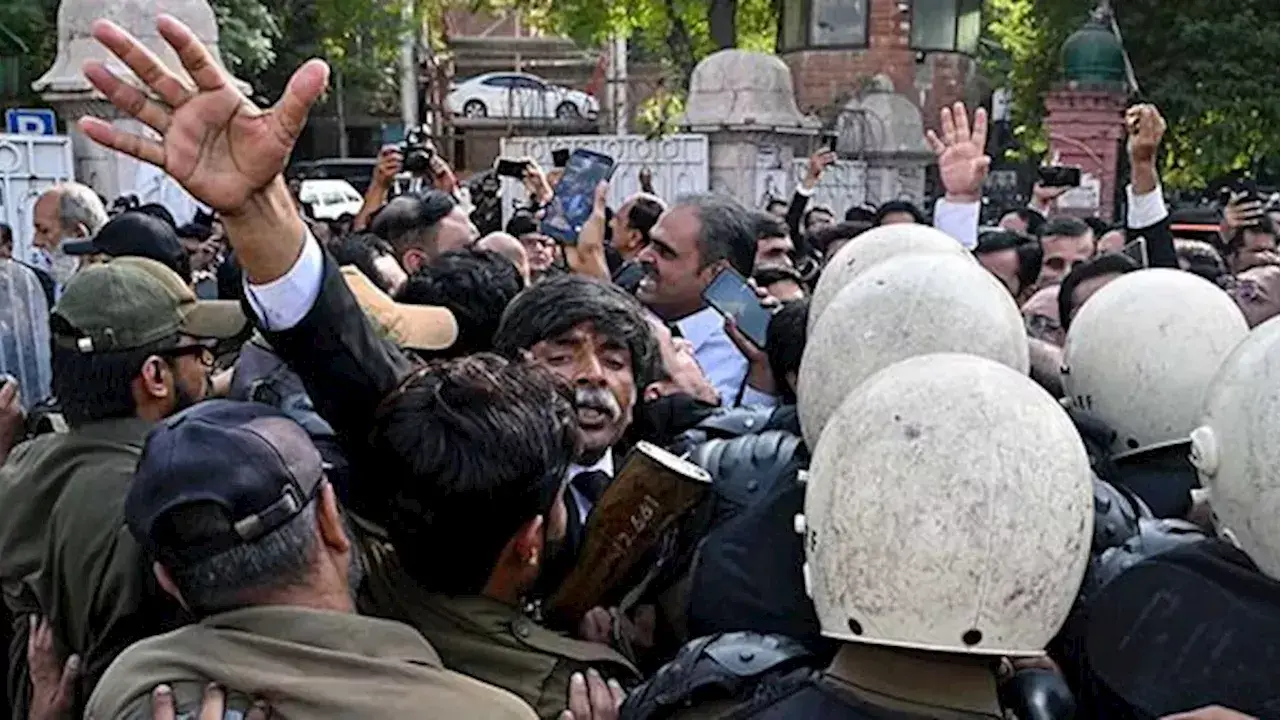
The opposition argued that the central government's actions were an attempt to suppress democratic expression and arrest political leaders ahead of the planned march on the capital. Police arrested high-ranking PTI members during this period, including Chief Minister Sohail Afridi, marking a significant escalation in the conflict between the provincial and federal authorities.
The political conflict occurs against the backdrop of former Prime Minister Imran Khan's imprisonment. Khan has been jailed since 2023 on corruption charges. His supporters have consistently denounced these charges as political fabrications orchestrated by the current administration, viewing the recent emergency measures as part of a broader pattern of political suppression.