

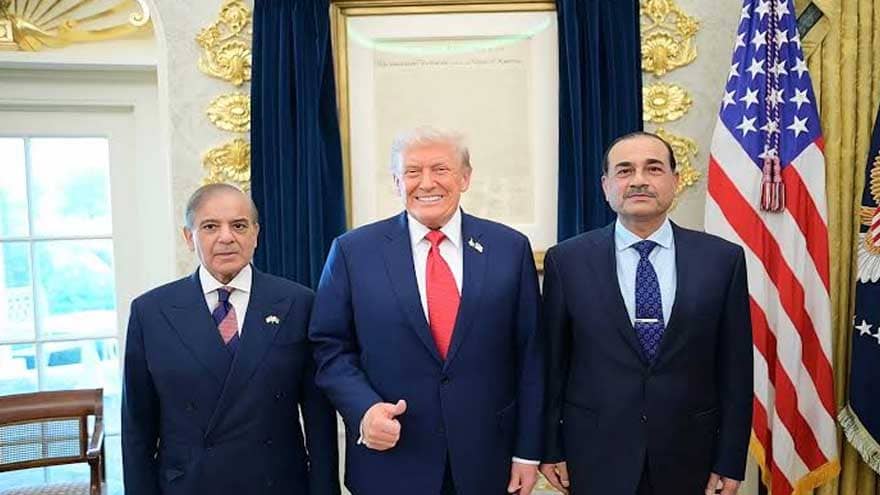

Pakistan Defined as a 'Hinge Power' in Global Politics
Pakistan is emerging as a "hinge power" in global politics, a designation attributed by the British newspaper Financial Times. This strategic positioning stems from Islamabad's unique ability to leverage its relationships with multiple global powers, including the United States, China, Gulf states, and Iran. The publication identified this capacity to maintain interest-based partnerships with diverse major players simultaneously as a core element of Pakistan's rising international stature.
The Financial Times report underscored that one of Pakistan's key strategic strengths lies in its capacity to sustain these multifaceted relationships without being exclusively tied to a single global bloc. This distinctive diplomatic posture allows the country significant flexibility, enabling it to act as an intermediary between different centers of power. Such a role signals Islamabad's clear intent to play a more active and influential part in the evolving global order, moving beyond traditional alignments.
A tangible demonstration of Pakistan's growing diplomatic importance, as noted by the Financial Times, was its role in hosting direct talks between Washington and Tehran. This high-stakes diplomatic activity not only showcased the nation's increasing significance in complex regional security dynamics but also highlighted its potential and willingness to facilitate crucial dialogue between historically adversarial nations.
Navigating Great Power Rivalry: US and China
Central to Pakistan's identity as a "hinge power" is its adept management of relationships with both the United States and China. The capacity to maintain robust, interest-based partnerships with these two global superpowers simultaneously is a defining strategic strength. This delicate balance allows Pakistan to engage with both Washington and Beijing on various fronts, from economic cooperation to security matters, without being compelled to choose an exclusive alignment.
This dual engagement strategy provides Pakistan with significant geopolitical maneuverability, enabling it to pursue its national interests while contributing to regional stability. By fostering strong ties with both the US and China, Islamabad positions itself to draw benefits and cooperation from both, reinforcing its pivotal role in an increasingly multipolar international system.
Makkah Agreement and Regional Security Roles
The Financial Times highlighted the Makkah Joint Defence Agreement with Saudi Arabia and Turkey as a significant reflection of Pakistan’s growing importance in regional security architectures. This agreement serves as a concrete example of Islamabad's deepening ties with key Islamic nations and its expanding role in collective defense frameworks within the broader Middle East and South Asia.
The Makkah Agreement signifies Pakistan's commitment to enhancing security cooperation with strategic partners, contributing to a more integrated regional defense posture. This engagement underscores Pakistan's active participation in initiatives that aim to bolster stability and security across a vital geopolitical landscape, further solidifying its standing among influential Islamic states.
Bridging Divides in the Middle East
Another crucial aspect of Pakistan's "hinge power" status is its unique ability to maintain relations with both Gulf states and Iran. This capacity is particularly significant given the often-complex and historically fraught relationships between these regional actors. By sustaining diplomatic and other ties with both sides, Pakistan possesses the distinct advantage of being able to bridge gaps and foster communication where direct engagement might otherwise be challenging.
This position enables Pakistan to engage with various geopolitical actors across the Middle East without aligning fully with any one faction. Consequently, Islamabad enhances its utility as a diplomatic conduit, capable of facilitating dialogue, reducing tensions, and potentially mediating disputes within a region critical to global stability. This intermediary role is a direct manifestation of its non-aligned, interest-based foreign policy approach.
Economic Engagement and Diversifying Global Ties
Beyond its diplomatic and security maneuvers, Pakistan is actively pursuing new avenues for economic engagement as part of its evolving foreign policy. The Financial Times reported that the country's new economic diplomacy includes a concerted effort to explore trade opportunities with the United States in strategically important sectors such as critical minerals and crypto. These initiatives are integral to a broader national strategy aimed at diversifying economic partnerships and strengthening ties with Western markets.
This proactive economic approach is designed to complement Pakistan's existing strategic strength in balancing relationships with both Washington and Beijing. By actively engaging with both superpowers on economic fronts, Islamabad aims to secure a wider array of economic and political benefits from multiple sources. This diversification strategy is crucial for fostering sustainable growth and resilience in Pakistan's economy, while simultaneously reinforcing its status as a pivotal player in global politics and trade.
The exploration of trade in critical minerals, for instance, aligns with global demands for resources essential to high-tech industries and renewable energy, positioning Pakistan as a potential supplier in a competitive market. Similarly, engagement in the burgeoning crypto sector reflects an openness to modern financial technologies and a desire to attract investment and expertise in innovative areas. These efforts collectively underscore Pakistan's commitment to a dynamic, forward-looking economic policy that supports its broader geopolitical objectives.