


Security Clearance Withdrawn Amid Disclosure Allegations
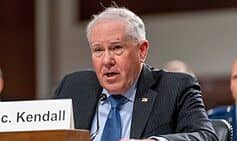
Pentagon officials have revoked the security clearance of former Air Force Secretary Frank Kendall, effectively removing his ability to access classified information. In addition to the loss of clearance, officials determined that Kendall is no longer eligible to "hold any sensitive position" within the department. This decisive action represents a significant administrative penalty, underscoring the Department of Defense's stringent approach to safeguarding national security secrets.
The revocation of a security clearance for a former high-ranking official like Kendall is a rare and serious measure. It signifies that the individual is deemed a risk to national security if granted access to sensitive government data. For someone who once held a cabinet-level position, this decision carries substantial professional ramifications, effectively barring him from any future roles requiring trust with classified material, whether within government or in related private sector capacities. The process of revoking such a clearance is typically thorough, involving reviews of alleged misconduct and adherence to established security protocols.
The action was taken in response to allegations that Kendall had engaged in the unauthorized disclosure of classified material. A Pentagon spokesperson confirmed the decision, stating that the revocation followed his "unauthorized disclosure of classified information." This move marks a significant administrative step by the Department of Defense regarding the handling of sensitive government data, reinforcing the principle that all individuals, regardless of their past stature, are subject to strict adherence to security protocols governing classified information.
Frank Kendall served as the Secretary of the Air Force prior to his current status as a former official. His removal from sensitive roles indicates that the Pentagon views the alleged leaks as serious enough to warrant immediate and permanent restrictions on his professional capabilities within the defense establishment. Such a move sends a clear message across the defense community about the non-negotiable nature of protecting classified information, emphasizing the lifelong obligation of those entrusted with national secrets.
Allegations Centered on Presidential Aircraft Security
According to reports, the classified information at the center of the controversy pertains specifically to Air Force One. Officials within the Pentagon have accused Kendall of leaking details about the presidential aircraft to reporters. The focus on this particular asset elevates the seriousness of the allegations, as Air Force One is not merely a mode of transport but a critical symbol of American power and a highly secure mobile command center for the President of the United States.
The specific nature of the leaked data has not been fully detailed in public statements, but the focus on Air Force One suggests the disclosures involved sensitive operational or security protocols associated with the plane used by the president of the United States. Such information could potentially encompass details about its advanced defensive capabilities, secure communication systems, flight planning, or the deployment of security personnel. Any compromise of these details could theoretically create vulnerabilities, impacting the safety and operational integrity of the President and the broader national security apparatus.
The allegation implies a significant breach of protocol regarding the protection of high-value assets and presidential security details, which are paramount concerns for national defense. News outlets reported on Friday that the Pentagon had initiated the revocation process against Kendall, with these reports coinciding with official communications from defense leadership confirming the status change. The swiftness of the official response following these reports highlights the urgency with which the Pentagon addressed the perceived threat to sensitive information related to the commander-in-chief.
Pentagon Confirms Action via Social Media
The confirmation of these actions was delivered directly by a Pentagon spokesperson through social media platform X. Sean Parnell, identified as the Pentagon spokesperson, posted a statement on X declaring that the Department of War had taken immediate action against the former secretary. The use of a public social media platform for such a significant announcement underscores a modern approach to transparency and rapid communication, even in matters concerning national security breaches.
Parnell’s post read: "Effective immediately, the Department of War has REVOKED former Secretary of the Air Force Frank Kendall’s eligibility for access to classified information and his ability to hold any sensitive position." The use of capitalization in the word "REVOKED" emphasized the finality and immediacy of the decision, leaving no ambiguity about the Pentagon's firm stance on the matter.
The spokesperson further clarified that this administrative penalty was not arbitrary but was a direct consequence of prior behavior. "This action follows his unauthorized disclosure of classified information," Parnell wrote, directly linking the loss of clearance to the alleged leaks and reinforcing the accountability expected from all individuals with access to classified material, regardless of their past or present status.
Broader Implications for Defense Information Control
The revocation of Kendall’s access raises significant questions about internal security protocols within the Department of Defense, particularly concerning former officials who, by virtue of their past roles, might retain some level of access or influence. By stripping a former high-ranking official of the ability to hold sensitive positions, the Pentagon is signaling a strict stance on information control and the enduring responsibility that comes with handling classified data, even after leaving active service.
While the specific details of what was disclosed remain tied to the allegations, the administrative response underscores the severity with which the defense department treats unauthorized sharing of classified material. This case highlights the ongoing efforts within the Pentagon to monitor and restrict the flow of sensitive data, especially regarding high-profile assets like Air Force One, which are central to national defense and presidential security. The incident serves as a stark reminder of the continuous vigilance required to protect classified information from compromise.
The decision also serves as a potent reminder to all current and former defense personnel about the lifelong obligations associated with their security clearances. The Pentagon's message is clear: the unauthorized disclosure of classified information will be met with decisive action, regardless of an individual's past contributions or rank. No further comment has been provided by Kendall or his representatives in the available reporting, leaving the Pentagon’s stance focused solely on the enforcement of security regulations following the reported disclosures and the protection of national security interests.