

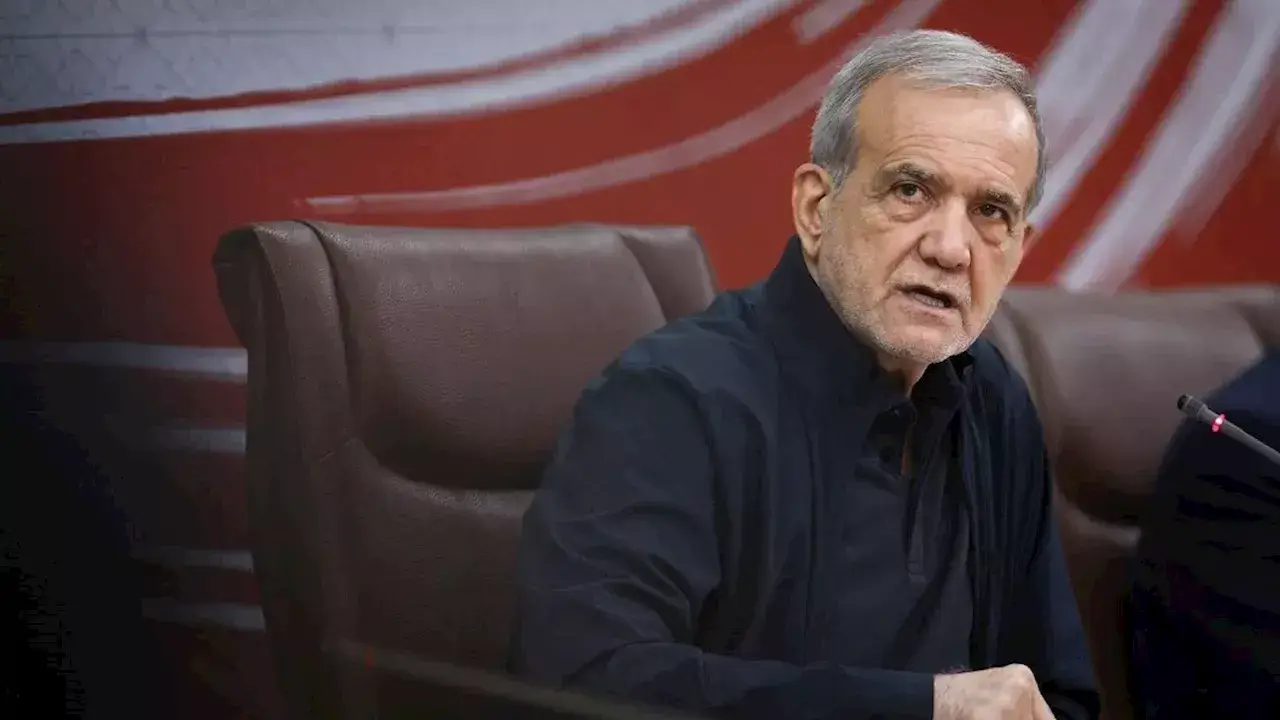

Pezeshkian Addresses War and Negotiations in Fox Interview
Iranian President Masoud Pezeshkian stated that Iran does not seek war with the United States and remains prepared to pursue a negotiated agreement, according to an interview with Fox News. The comments addressed ongoing tensions between the two nations, including uranium enrichment levels and regional military ties.
In the interview, Pezeshkian asserted that Iran did not choose the current conflict but was forced into it. He added that the decision to end the war rests with Washington, framing the responsibility for de-escalation squarely on the American side.
"We do not choose war. The war was imposed on us. We do not seek war," Pezeshkian said, according to reports of the interview.
Stance on Nuclear Obligations and Regional Actors
Pezeshkian indicated that Iran remains willing to move forward with an agreement with Washington. He referenced a memorandum from June that called for a final peace deal within 60 days. That earlier memorandum collapsed due to differences over navigation in the Strait of Hormuz, according to reports.
When asked about giving up 60 percent enriched uranium, Pezeshkian said Iran would comply with obligations under international law and the Nuclear Non-Proliferation Treaty. This clarification came as part of a broader effort to define the boundaries of potential diplomatic concessions.
The president also addressed Iran's relationship with regional militant groups. When asked if Iran would stop arming the Houthis as part of a deal, Pezeshkian stated that the Houthis act independently, distancing the Iranian government from direct operational control over the group's military activities.
Additionally, Pezeshkian rejected suggestions that Iran had closed the Strait of Hormuz, denying allegations that Tehran had utilized the strategic waterway as a lever in its geopolitical disputes.
Leadership Changes and Diplomatic Context
Pezeshkian said he reached an agreement with former President Donald Trump and expressed willingness to move forward based on that understanding. He also noted that he met Supreme Leader Mojtaba Khamenei in person almost a month earlier, spending about seven hours with him.
Mojtaba Khamenei has not been seen publicly since replacing his father, Ali Khamenei, who was killed in US-Israeli strikes in late February, according to reports. The absence of the new Supreme Leader from public view has added a layer of uncertainty to Iran's internal political landscape.
The interview occurred as international diplomatic efforts continued. Chinese President Xi urged the US and Iran to return to negotiations, signaling Beijing's interest in stabilizing regional dynamics. Meanwhile, Trump hailed a great meeting, suggesting a potential thaw in relations despite the complex history between the two nations.
Regional Security Incidents
Beyond the diplomatic talks, several security incidents highlighted the volatile nature of the broader region. Nine Kazakh servicemen died after being swept into the Caspian Sea during a military drill, underscoring the risks associated with regional military exercises.
In Eastern Europe, Poland called a Starlink station fire deliberate sabotage and linked it to Russian hybrid warfare, further complicating the geopolitical environment. Additionally, Israeli forces blew up a Palestinian prisoner's home in the occupied West Bank, adding to the tensions in the Middle East.