

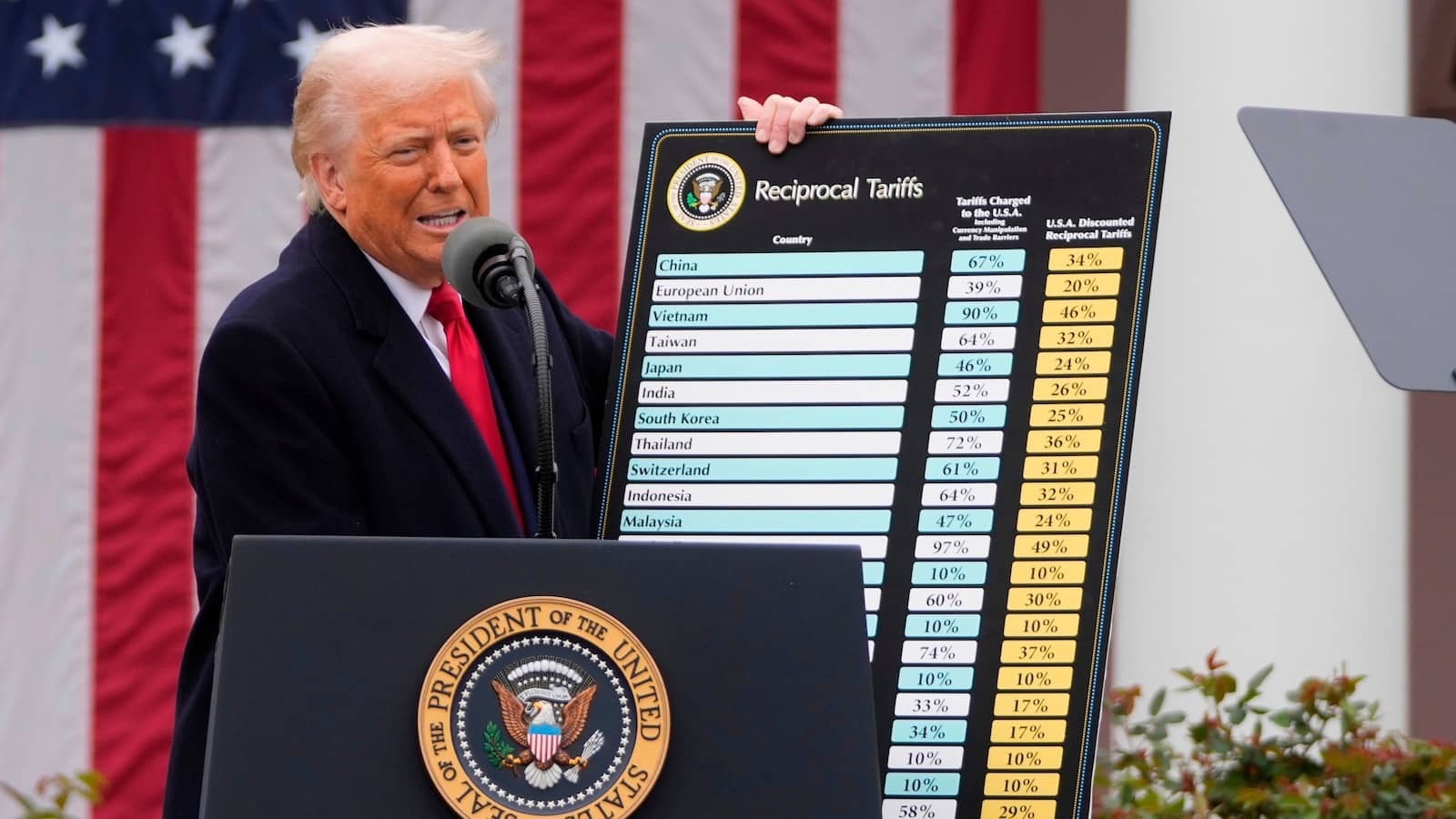

WASHINGTON — President Donald Trump is proceeding with the implementation of new double-digit tariffs affecting a wide array of U.S. trading partners. This move comes precisely as stopgap measures, previously enacted by his administration, are set to expire on Friday. The new levies signal a continuation of the administration's assertive trade policy, transitioning from temporary tariffs to more permanent rates that will impact imports from dozens of nations.
Broadening Scope of U.S. Trade Policy
From Temporary Levies to Enduring Rates
The administration has announced that these updated levies will range between 10% and 12.5%, marking a slight increase in the upper bound compared to the preceding temporary measures. The scope of this action is notably extensive, covering imports originating from 60 distinct countries. This broad application means that, according to official data released by the White House, these specific trading partners collectively account for an overwhelming 99 percent of total U.S. imports, indicating a near-universal impact on the nation's inbound trade.
The timing of this significant policy shift coincides directly with the expiration of temporary tariffs that have been in place since February. Those earlier levies, implemented as an interim solution, had been set at a flat rate of 10% worldwide. This temporary structure was adopted after the Supreme Court invalidated President Trump's initial, broader tariff proposals during hearings held over the winter months. Following that judicial decision, the administration swiftly moved to adopt these lower percentage rates as a stopgap measure, ensuring a continuous application of tariffs while a more permanent strategy was developed.
Federal trade officials have confirmed that with Friday approaching, the temporary measures will cease to be effective precisely at 12:01 a.m. At that specific timestamp on Friday morning, the new tariff structure is slated to take full legal effect without any interruption or delay from regulatory bodies, ensuring a seamless transition from the expiring temporary rates to the newly established, slightly higher percentages.
U.S. Stance on Forced Labor as Policy Driver
A Century of Enforcement and New Expectations
The administration has stated clearly that the primary justification for these increased levies centers on international trade compliance regarding labor standards. The official reason provided by the White House is that numerous U.S. trading partners have allegedly failed to adequately enforce bans concerning goods produced through forced labor. This rationale positions the tariffs not merely as economic tools, but as instruments intended to uphold human rights and fair labor practices globally.
U.S. Trade Representative Jamieson Greer addressed this critical issue directly in a public statement released ahead of the deadline. She remarked, 'The United States has had a forced labor import ban for nearly a century, and rigorously enforces it; it's well past time for our trading partners to do the same.' Greer's statement underscores a long-standing commitment within U.S. trade policy to combat forced labor, framing the new tariffs as an effort to compel other nations to meet similar rigorous standards. The implication is that these tariffs serve as a corrective measure, aiming to pressure countries into aligning their import regulations and enforcement mechanisms with those currently maintained by Washington, thereby ensuring a level playing field in global trade ethics.
This assertion positions the new tariffs as a direct response to perceived shortcomings in international labor enforcement. By linking the tariffs to forced labor bans, the administration seeks to elevate a moral and ethical dimension in its trade negotiations, suggesting that economic access to the U.S. market is contingent upon adherence to specific human rights standards.
Economic and Diplomatic Repercussions Anticipated
Congressional Concerns and Global Supply Chain Impacts
The transition from temporary levies to these new, more durable tariffs represents a significant strategic shift in the administration's trade policy. Legal analysts have noted that while the Supreme Court previously struck down broader economic sanctions proposed by the Trump administration, this specific iteration, which is explicitly tied to the enforcement of forced labor bans, remains under ongoing review by federal courts. This legal distinction highlights the administration's attempt to craft tariffs that may withstand judicial scrutiny by anchoring them to a specific, long-standing U.S. policy objective.
Trade economists have observed that applying taxes ranging from 10% to 12.5% across such a vast number of trading partners—encompassing 60 countries and 99% of U.S. imports—could significantly alter global supply chain dynamics. Such widespread tariffs have the potential to prompt companies to re-evaluate sourcing strategies and production locations. However, the administration has not yet released official projections regarding the potential economic impacts or inflationary pressures that might result from this specific, far-reaching policy move, leaving economists to speculate on the full scope of its effects on American businesses and consumers.
Within Congress, opposing voices have already expressed considerable concern over the breadth and potential consequences of these new measures. Some lawmakers argue that targeting 60 countries simultaneously may lead to significant disruptions in essential imports, potentially increasing costs for American consumers. Critics also question whether such a broad application of tariffs will effectively achieve the stated regulatory goals related to forced labor enforcement, or if it might instead lead to unintended economic consequences without securing the desired international compliance.
International Silence on the New Measures
As of the time of publication on July 23, 2026, the source material does not include specific responses from foreign governments or international organizations regarding this announcement. There have been no formal diplomatic protests or reported countermeasures from U.S. officials. This initial silence could indicate several possibilities, ranging from a period of internal assessment by affected nations to a strategic delay in public response.
White House press secretary Karoline Leavitt declined to elaborate further beyond the stated rationale involving forced labor enforcement when asked about potential international fallout during a briefing earlier in the week. Her brevity suggests the administration is standing firm on its justification, anticipating that the focus on forced labor will be a primary defense against any international criticism or challenges.