

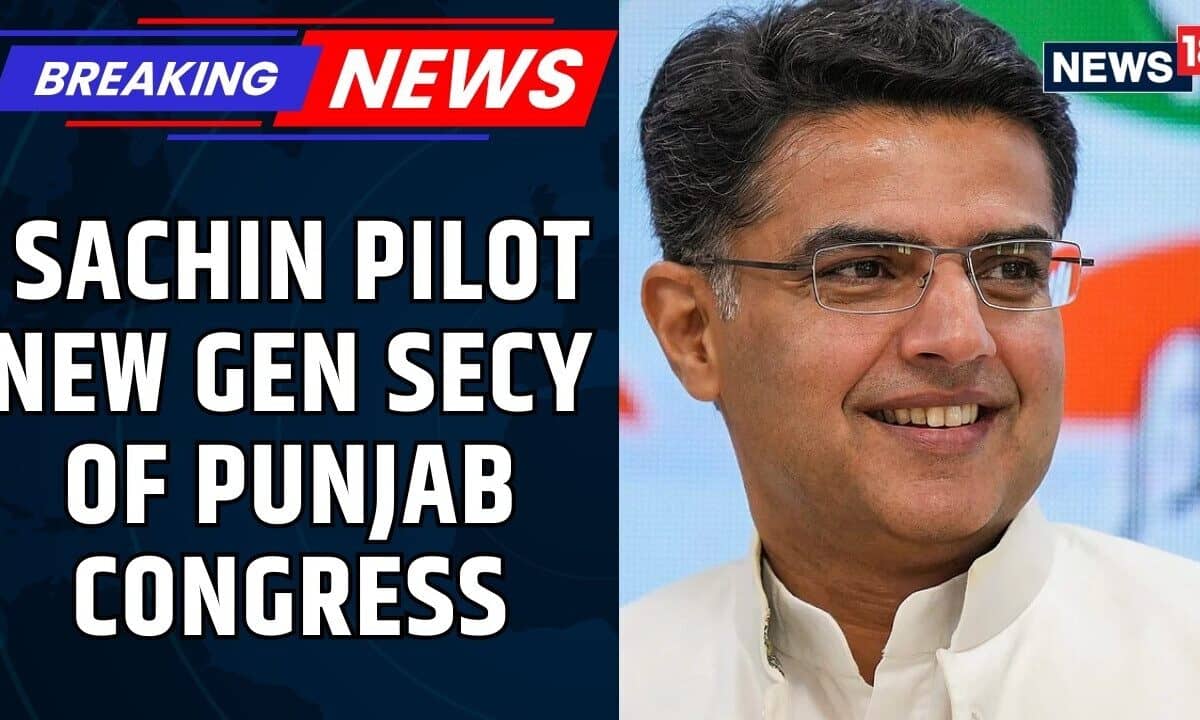

Pilot Assigned Leadership Role in State Unit
Sachin Pilot has been appointed as the General Secretary in charge of the Punjab Congress, according to reports from News18. The appointment is part of a significant reshuffle within the party's state unit in Punjab. This administrative change places Pilot in a position of authority over the regional operations of the Indian National Congress in the northern state.
The assignment marks a notable development in the internal structure of the Punjab Congress. By designating Pilot as the General Secretary in charge, the party leadership has assigned him direct oversight responsibilities for the unit's activities and organizational matters. This role is distinct from his previous positions within the broader party hierarchy, signaling a specific focus on state-level management.
Party leaders have welcomed the move, according to the source material. The appointment comes at a time when the Punjab Congress is navigating complex internal dynamics. The assignment of Pilot to this post is viewed as a strategic step by those involved in the reshuffle process.
Addressing Factional Disputes and Organizational Unity
The appointment occurs amid ongoing infighting within the Punjab Congress. Reports indicate that tensions persist between rival factions inside the party organization. These internal divisions have been a persistent feature of the party's recent history in the state, creating challenges for unified political action.
Observers and party sources suggest that the reshuffle is intended to address these ongoing disputes. The assignment of Pilot is seen as an attempt to manage the conflicting interests within the group. By placing a senior leader in charge, the party aims to stabilize its internal operations and reduce the friction caused by factional rivalries.
The challenge for Pilot, as reported, will be to unify the party. This task involves reconciling the differences between various groups that have been engaged in infighting. The success of this unification effort will depend on his ability to manage the relationships between these competing factions and establish a coherent organizational structure.
Implications for Upcoming Electoral Strategy
The timing of this appointment is linked to upcoming political events. The Punjab Congress is preparing for crucial assembly elections in the near future. The state's legislative assembly elections represent a significant opportunity for the party to regain or maintain political power in Punjab.
Pilot's role as General Secretary in charge will be crucial in preparing the party for these elections. This preparation likely involves organizational restructuring, candidate selection processes, and campaign strategy formulation. The reshuffle is therefore not merely an administrative adjustment but a strategic move to strengthen the party's electoral prospects.
The persistent tensions between rival factions pose a risk to this electoral preparation. If the infighting continues unchecked, it could hinder the party's ability to present a united front to voters. The appointment of Pilot is intended to mitigate this risk by providing centralized leadership during the critical pre-election period.
Context of Party Reorganization
The reshuffle in Punjab reflects broader trends within the Indian National Congress regarding state-level management. In recent years, the party has undertaken various organizational changes to address weaknesses in its state units. The appointment of Sachin Pilot to a key role in Punjab is part of this ongoing reorganization effort.
Pilot's previous political career includes significant roles in national politics and other state governments. His experience is likely a factor in his selection for this position. The party leadership appears to be relying on his political acumen to navigate the complex landscape of Punjab politics.
The response from within the party has been positive, with leaders welcoming the appointment. However, the effectiveness of this move will be determined by its impact on the ongoing infighting. Whether the appointment will successfully unify the party remains to be seen, as tensions between factions continue to exist.
Focus on Internal Cohesion
The primary objective of the reshuffle is to enhance internal cohesion. By assigning Pilot to the role of General Secretary in charge, the party hopes to streamline decision-making processes and reduce the influence of factional leaders who have contributed to the infighting.
This strategy requires Pilot to balance the interests of different groups within the organization. He must establish authority while also maintaining the support of key stakeholders who may have been part of the rival factions. The success of this approach will depend on his ability to manage these competing demands effectively.
The upcoming assembly elections serve as the deadline for achieving this unity. The party's performance in these elections will be influenced by its internal stability. If the infighting persists, it could negatively impact voter perception and campaign effectiveness. Conversely, if Pilot succeeds in unifying the party, it could strengthen their electoral position.
Operational Challenges Ahead
Pilot faces immediate operational challenges upon assuming his new role. He must address the existing tensions between rival factions while simultaneously building a campaign structure for the upcoming elections. This dual mandate requires significant political skill and organizational management.
The infighting within the Punjab Congress has been described as ongoing, indicating that it is not a recent development but a long-standing issue. Resolving these disputes will require sustained effort and possibly concessions to various factions. The reshuffle provides Pilot with the formal authority to make such decisions, but his acceptance by all parties remains uncertain.
The appointment highlights the importance of Punjab in the Congress party's national strategy. As a state with a history of political volatility, its outcome is closely watched by party leaders across India. The success or failure of Pilot's tenure as General Secretary in charge will be viewed as an indicator of the party's ability to manage internal conflicts and deliver electoral results.
As the party moves forward, the focus will remain on whether this reshuffle can translate into tangible organizational unity. The coming weeks and months will reveal how effectively Pilot can manage the competing interests within the Punjab Congress and prepare for the critical assembly elections.