

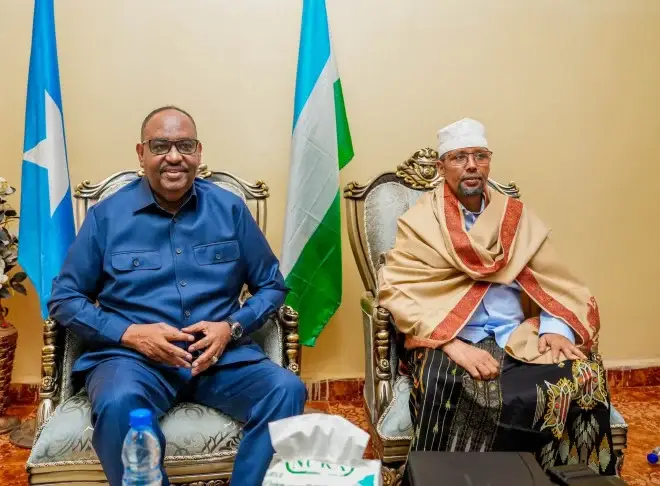

Deni Announces Non-Renewal of Presidency in Galkacyo
Puntland State President Said Abdullahi Deni stated during a public gathering in Galkacyo on August 10, 2026, that he would not pursue a third term in office. The announcement was made at an event attended by political stakeholders and party representatives in the city, which serves as a central hub for Puntland’s administrative activities.
Deni cited Article 79 of the Puntland State Constitution as the basis for his decision. The constitutional provision explicitly restricts the president to serving no more than two five-year terms. By referencing this specific article, Deni aligned his political trajectory with the written legal framework governing the state’s executive branch.
The gathering in Galkacyo provided a platform for Deni to address the timeline leading up to the next presidential election. The current term of office is set to expire in 2029, marking the deadline by which a new president must be elected under existing electoral laws.
Directives to Kaah Party and Opposition Groups
In his address, Deni directed both his political party, the Kaah Party, and other registered political entities to begin preparations for the upcoming electoral cycle. He emphasized that the period between 2026 and 2029 is critical for organizational readiness.
Deni urged these parties to focus on structural development rather than immediate campaign activities. The President’s instructions indicated that the foundation of a credible election process depends on the capacity of political organizations to operate effectively within the state’s legal parameters.
Focus on Institutional Strengthening Before 2029
A primary component of Deni’s directive involved the enhancement of key state institutions. He identified the strengthening of these bodies as a prerequisite for holding free and fair elections in 2029. The President argued that robust institutional frameworks are necessary to manage the complexities of the electoral process.
The call for institutional reinforcement applies to agencies responsible for election management, security, and public administration. Deni stated that without these strengthened structures, the integrity of the 2029 vote could be compromised.
Constitutional Constraints and Political Implications
Article 79 of the Puntland Constitution serves as the legal barrier preventing Deni from seeking re-election. This clause has been a defining feature of the state’s political landscape during his tenure. The enforcement of this term limit ensures a rotation of executive power in accordance with constitutional mandates.
Political observers note that the expiration of Deni’s second term in 2029 will open the presidency to new candidates from various political factions. The Kaah Party, along with other groups, must now navigate the challenge of selecting a successor who can appeal to the electorate without the incumbent’s presence on the ballot.
Preparation Timeline and Electoral Logistics
The three-year window between August 2026 and the 2029 election requires coordinated efforts from all political actors. Deni’s pledge removes uncertainty regarding his candidacy, allowing parties to direct resources toward policy platforms and coalition building.
Preparation for the 2029 vote involves logistical planning, voter registration updates, and the establishment of dispute resolution mechanisms. The President’s emphasis on institutional strength suggests that these preparations must be completed well in advance of the polling date to ensure transparency.
Role of Political Parties in the Transition
The Kaah Party faces the task of consolidating its support base and defining its policy agenda for the post-Deni era. Other parties are similarly tasked with developing platforms that address the state’s economic, security, and social priorities.
Deni’s instructions to all parties underscore the importance of a competitive political environment. The President indicated that a healthy democracy relies on multiple active participants capable of challenging one another through established institutional channels rather than extra-legal means.
Election Security and Administrative Readiness
Security arrangements for the 2029 election are expected to be a major focus of the coming years. Deni highlighted the need for state institutions to maintain order and protect electoral processes from interference.
Administrative readiness includes the training of election officials, the securing of voting materials, and the establishment of clear protocols for vote counting and result verification. These measures are intended to prevent disputes and ensure that the outcome reflects the will of the voters.
Regional Stability and Electoral Integrity
The stability of Puntland is closely tied to the conduct of its elections. Deni’s focus on institutional strength reflects concerns about maintaining regional peace during political transitions.
By prioritizing the development of state capacity, the President aims to create an environment where electoral outcomes are accepted by all stakeholders. The success of this approach depends on the consistent application of constitutional rules and the cooperation of political parties.
Implications for Puntland’s Political Future
The 2029 election will mark a significant transition in Puntland’s governance structure. With Deni’s departure from the race, the state will witness its first presidential contest without the incumbent president since the implementation of current term limits.
Political analysts suggest that this period will test the resilience of Puntland’s democratic institutions. The ability of parties to organize and compete fairly will determine the credibility of the electoral process.
Long-term Governance Challenges
Beyond the immediate election, the strengthening of institutions has long-term implications for governance in Puntland. Effective institutions are required to deliver public services, enforce laws, and manage resources efficiently.
Deni’s pledge serves as a reminder of the importance of adhering to constitutional term limits. The President’s commitment to this principle sets a precedent for future leaders in the state.
Next Steps for Political Actors
Political parties must now initiate their internal processes for candidate selection and policy formulation. This includes holding primaries, engaging with constituents, and building alliances.
The government is expected to continue its administrative functions while preparing the electoral framework. Coordination between the executive branch and independent electoral bodies will be essential in the months leading up to 2029.
Monitoring Institutional Development
Civil society organizations and media outlets are likely to play a role in monitoring the progress of institutional strengthening. Their oversight ensures that commitments made by political leaders are translated into concrete actions.
The coming years will determine whether Puntland can build a robust electoral system capable of sustaining democratic governance. The focus on preparation and legal compliance remains central to this effort.