

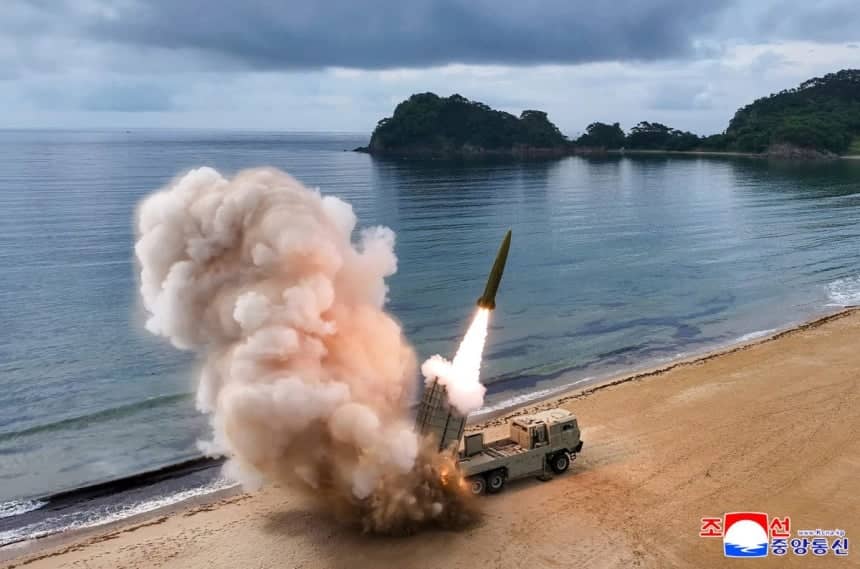

Missile Launch Detected from Wonsan Region
North Korea launched a ballistic missile toward the East Sea on August 12, marking its 11th missile launch this year. The South Korean military detected the launch at approximately 6 a.m. originating from the Wonsan area.
The Joint Chiefs of Staff (JCS) confirmed the detection in a statement released on the day of the launch. According to the JCS, the missile was fired toward the East Sea. This significant event underscores a persistent pattern of missile development and testing by Pyongyang throughout the year, contributing to regional tensions.
Preceding Launch from Wonsan
This latest ballistic missile launch on August 12 was not an isolated incident but followed a previous short-range ballistic missile (SRBM) launch by North Korea just days earlier, on August 6. That earlier launch also originated from the Wonsan area, a coastal city in Kangwon Province, and occurred in the afternoon. The repeated use of the Wonsan region as a launch site for ballistic missiles suggests its strategic importance in North Korea's ongoing missile testing program and its efforts to diversify launch locations.
The August 12 launch, detected in the early morning hours, further contributes to the escalating number of missile tests conducted by North Korea in the current year. With this latest test, North Korea has now conducted 11 missile launches since the beginning of the year, demonstrating a consistent and accelerated effort to advance its ballistic missile capabilities and operational readiness.
Surveillance and Regional Readiness
In immediate response to the August 12 launch, South Korea has significantly strengthened its surveillance and vigilance protocols across its defense apparatus. The Joint Chiefs of Staff emphasized that the military is maintaining heightened alert levels, actively preparing for and monitoring any potential additional launches or provocative actions from North Korea. This enhanced state of readiness is a direct consequence of the detected missile activity and the broader security environment on the Korean Peninsula, aiming to ensure a swift and effective response to any further provocations.
Beyond national efforts, allied nations are coordinating their response to the development with urgency and precision. The JCS specifically noted that South Korea, the United States, and Japan are closely sharing critical information regarding North Korean ballistic missiles. This trilateral intelligence-sharing mechanism is vital for a comprehensive understanding of Pyongyang's capabilities and intentions, allowing for a unified assessment of the threat. All three countries are maintaining full readiness, ensuring a robust and unified defense posture in light of the repeated missile tests and their implications for regional stability.
Timing Precedes Scheduled Joint Exercises
The timing of North Korea's August 12 ballistic missile launch carries particular significance as it occurred just days before the scheduled commencement of Ulchi Freedom Shield (UFS), a major theater-level combined military exercise between South Korea and the United States. These extensive joint drills are set to run from August 17 to August 27, involving a wide array of military assets and personnel from both nations in a comprehensive display of allied defense capabilities.
Ulchi Freedom Shield is designed to enhance the combined defense posture of the allies and improve their ability to respond to various contingencies on the Korean Peninsula, ranging from defensive operations to counter-attacks. The exercise typically includes computer-simulated command post training and field training exercises, focusing on maintaining readiness and interoperability between the South Korean and U.S. forces. The proximity of the missile launch to the start date of such a large-scale and critical exercise is a noteworthy aspect of Pyongyang's latest action, suggesting a deliberate strategic calculation.
Pyongyang's Actions Ahead of Allied Drills
This latest ballistic missile test on August 12 represents the sixth launch by North Korea in the current month alone, following the initial short-range ballistic missile test on August 6. The increased frequency of launches in August, culminating in the August 12 event, places North Korea's actions directly ahead of the planned allied military activities. This timing, occurring in advance of major joint military exercises involving South Korea and the United States, is often interpreted as a form of protest or a demonstration of military strength by Pyongyang, aiming to disrupt or challenge the allied drills.
The decision to conduct a missile launch from the Wonsan area at 6 a.m. on August 12, just five days before the Ulchi Freedom Shield exercise begins, underscores a deliberate choice by North Korea to project its military capabilities and potentially send a political message to Seoul and Washington. The ongoing series of missile tests, now totaling 11 for the year, highlights North Korea's continued focus on developing and refining its ballistic missile technology, despite international sanctions and calls for denuclearization. The concerted information sharing and readiness maintained by South Korea, the U.S., and Japan reflect the serious nature of these repeated provocations and the necessity for a coordinated international response to ensure regional security.