

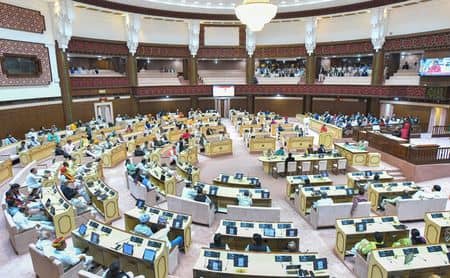

Brief Legislative Session Concludes in Rajasthan
The sixth session of the 16th Rajasthan Assembly formally concluded on Friday, August 21, when the House was adjourned sine die. This parliamentary term's conclusion signifies that no further dates for legislative proceedings were scheduled at the time of the adjournment, effectively bringing the current gathering of lawmakers to an end until a new session is convened.
Reports from Jaipur on August 21 highlighted the remarkably short duration of legislative activity during this specific session. On its second day, the total parliamentary proceedings lasted for a mere 66 minutes. This brevity underscores a swift conclusion to the session, with limited time dedicated to debate and legislative business before the adjournment was declared.
Speaker Addresses Assembly Security and Access Protocols
Prior to the adjournment of the House, Assembly Speaker Vasudev Devnani took the floor to issue a significant clarification regarding the established entry protocols for the Rajasthan Assembly complex. The Speaker's address underscored the critical importance of maintaining robust security measures and preserving the inherent dignity of the legislative House. These objectives, he emphasized, serve as the foundational principles guiding all regulations related to access and movement within the complex.
Specific Entry Points and Their Designated Uses
Speaker Devnani meticulously outlined the defined entry arrangements, which are designed to ensure order and control within the Assembly complex. He clarified that Gate number 7 is the officially designated entrance for general entry into the Assembly chamber for authorized individuals. This gate serves as the primary access point for most members and officials.
In distinct contrast, Gate number 6 has a highly specific and restricted purpose. It is exclusively designated for the pedestrian movement of members of the legislative assembly (MLAs) who reside in the adjacent MLA housing complex. The Speaker explicitly stated that this particular gate is not intended for general public access, nor is it to be used for group entries by non-residents or visitors, reinforcing its specialized function for resident legislators.
Strict Prohibition on Unauthorized Group Access
A central point of Speaker Devnani's clarification revolved around the policy concerning group movements through Gate number 6. He unequivocally stated that permission for group entry via this gate has consistently been denied. This stricture, he explained, has never been granted in the past, is not permitted at present, and will not be allowed in the future, establishing a firm and enduring policy.
To illustrate the rationale behind this stringent rule, the Speaker referenced an earlier incident. He noted that on a previous occasion, two individuals had managed to enter the complex as part of a group through this gate. This past occurrence was cited as a clear example of the type of unauthorized access that the current strictures on group movement are specifically designed to prevent, thereby safeguarding the security and sanctity of the legislative premises.
Reinforcing Rules Amidst Recent Observations
Speaker Devnani acknowledged that Gate number 6 had been observed to be open on both Thursday and Friday during the ongoing session. Despite the physical accessibility of the gate during these days, the Speaker forcefully reiterated that the established protocol prohibiting group entry through it remains in full and unwavering effect. His clarification served to reinforce that while physical access points might be operational, the rules governing who may use them, under what conditions, and for what purpose, are immutable and must be strictly adhered to.
The Speaker's detailed remarks regarding security protocols and entry regulations were formally recorded as a significant part of the final proceedings before the House was dismissed. The adjournment sine die subsequently concluded the session, meaning no further debate or legislative action on other matters was scheduled for this particular period, marking a definitive end to the legislative gathering following these important security clarifications.