

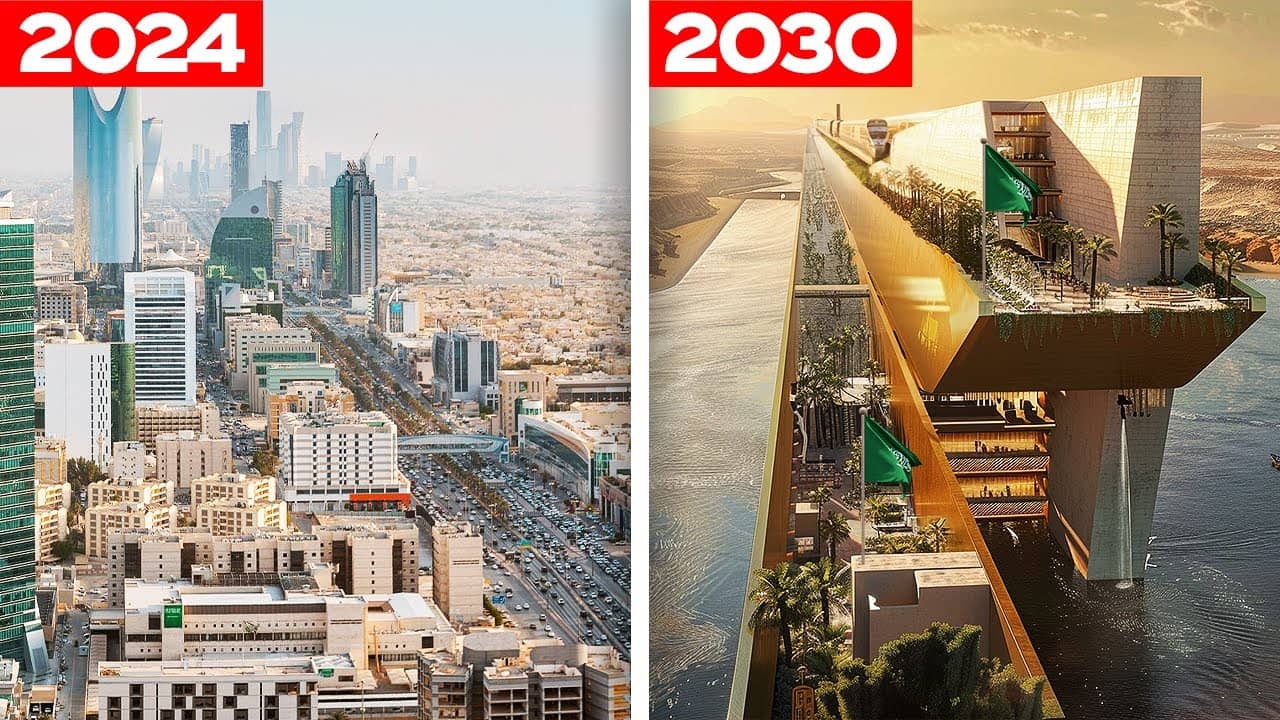

Q1 2026 Fiscal Deficit Exceeds Annual Projections
Saudi Arabia recorded a budget deficit of 125.7 billion riyals, approximately $33.5 billion, in the first quarter of 2026. According to Martin Armstrong of Armstrong Economics, writing for Sgt Report on August 23, 2026, this quarterly shortfall is nearly as large as the $44 billion deficit the government had projected for the entire year. This significant deviation from fiscal forecasts highlights immediate challenges for the kingdom's economic planning.
The kingdom’s financial data reveals a sharp divergence between expenditure and revenue during the initial months of 2026. Government spending increased by 20% in the first quarter, reaching substantial levels, while oil revenue, the traditional backbone of the Saudi economy, declined by 3%. Armstrong noted that this dynamic creates a contradiction to Vision 2030, the strategic framework intended to reduce the nation's reliance on oil by diversifying its economic base.
Early Fiscal Strain on National Ambitions
The government had approved comprehensive financing needs of 217 billion riyals, or nearly $58 billion, for the full year of 2026. This total allocation was meticulously planned to cover various state financial obligations. Specifically, it included 165 billion riyals designated to cover the projected budget deficit and an additional 52 billion riyals allocated for the repayment of maturing debt obligations. The first quarter's deficit of $33.5 billion has already consumed a substantial portion of the $44 billion projected for the entire year, putting considerable pressure on the remaining annual budget.
Armstrong stated that the rapid accumulation of the deficit in the first three months of the year means that a significant portion of the annual financial buffer has been utilized far sooner than anticipated. The analysis suggests that the government may recover some ground if oil revenues rise in subsequent quarters, potentially offsetting some of the early shortfall. However, this scenario exposes what Armstrong described as the inherent vulnerability in state-directed economic transformations, particularly when relying on volatile commodity markets and ambitious spending plans.
Vision 2030's Funding Strategy Under Pressure
The kingdom's ambitious Vision 2030 initiative aims to fundamentally transform Saudi Arabia into an economy less reliant on oil. This grand strategy involves massive investments in new industries, infrastructure projects, and social reforms. To fund these extensive development efforts, the government has adopted a dual approach, utilizing both its substantial oil revenue and increasingly, borrowed money from international and domestic markets.
The first-quarter fiscal performance, characterized by declining oil revenues and soaring expenditures, places this funding strategy under considerable strain. The reliance on borrowing to bridge the widening gap between spending and income introduces new financial risks and could impact the long-term sustainability of Vision 2030's numerous projects, which require consistent and robust funding streams.
Balancing Diversification with Borrowed Capital
The approved financing needs for 2026, totaling $58 billion, underscore the kingdom's commitment to its development agenda while also managing its existing financial commitments. The 165 billion riyals earmarked for the budget deficit directly supports the ongoing operational costs and investment in diversification projects. Concurrently, the 52 billion riyals allocated for debt repayment is crucial for maintaining investor confidence and the kingdom's creditworthiness in global financial markets, which are vital for future borrowing endeavors.
However, the swift accumulation of the deficit in Q1 2026 suggests that the kingdom's financial planners may need to reassess their projections or consider alternative measures. The current trajectory indicates a potential for the full-year deficit to significantly exceed the initial $44 billion projection, which would necessitate further borrowing or a re-evaluation of spending priorities, potentially impacting the pace of Vision 2030 implementation.
Military Expenditure and Regional Conflict
A primary driver of the increased spending in the first quarter of 2026 was a significant surge in military costs. Saudi military spending increased by 26% during this period, according to the report. This substantial escalation occurred as the kingdom attempted to protect its population and critical oil facilities amid ongoing conflict with Iran, a long-standing regional rival.
The geopolitical tensions and the active conflict with Iran have accelerated financial pressures on the state budget. The need to bolster defense capabilities and secure strategic assets, including vital oil infrastructure, has diverted significant resources. The report indicates that the kingdom is utilizing both its remaining oil revenue and borrowed money to fund these extensive defense measures, while simultaneously attempting to develop an economy that will supposedly no longer depend upon oil. This creates a complex financial balancing act, as funds allocated for diversification must now compete with immediate security imperatives.
Defense Costs Weigh on Diversification Efforts
The 26% increase in military expenditure represents a considerable portion of the overall 20% rise in government spending. This surge in defense outlays directly impacts the availability of funds for other sectors crucial to Vision 2030, such as tourism, technology, and manufacturing. While national security is paramount, the sustained high level of military spending due to regional conflict inevitably strains the resources available for economic transformation and diversification projects.
The ongoing conflict with Iran thus not only poses a direct security threat but also acts as a significant fiscal drag on Saudi Arabia's long-term economic ambitions. The kingdom faces the challenge of maintaining robust defense capabilities in a volatile region while simultaneously trying to pivot its economy away from its traditional oil-based foundation, a task made more difficult by the competing demands on its financial resources.
Uncertainties in Economic Transformation
The government’s financial projections for 2026, and indeed the broader framework of Vision 2030, rely on several simultaneous and often interdependent conditions. Armstrong wrote that these projections assume politicians can exert control over a complex array of factors, including government spending, global oil prices, regional stability, and investor confidence, all at the same time. This multi-faceted control is critical for the successful execution of such an ambitious national strategy.
Armstrong argued that historical precedents demonstrate that such comprehensive controls are rarely, if ever, possible for any government. The inherent volatility of global oil markets, the unpredictable nature of regional geopolitical conflicts, and the fluctuating sentiments of international investors are all factors largely beyond the direct control of a single state. He stated that the current fiscal trajectory, marked by a rapidly expanding deficit and increased military outlays, highlights the profound difficulties of managing a state-directed economic transformation while simultaneously engaging in significant regional military conflicts. This confluence of internal economic goals and external geopolitical pressures creates a challenging environment for achieving the kingdom's long-term vision.