

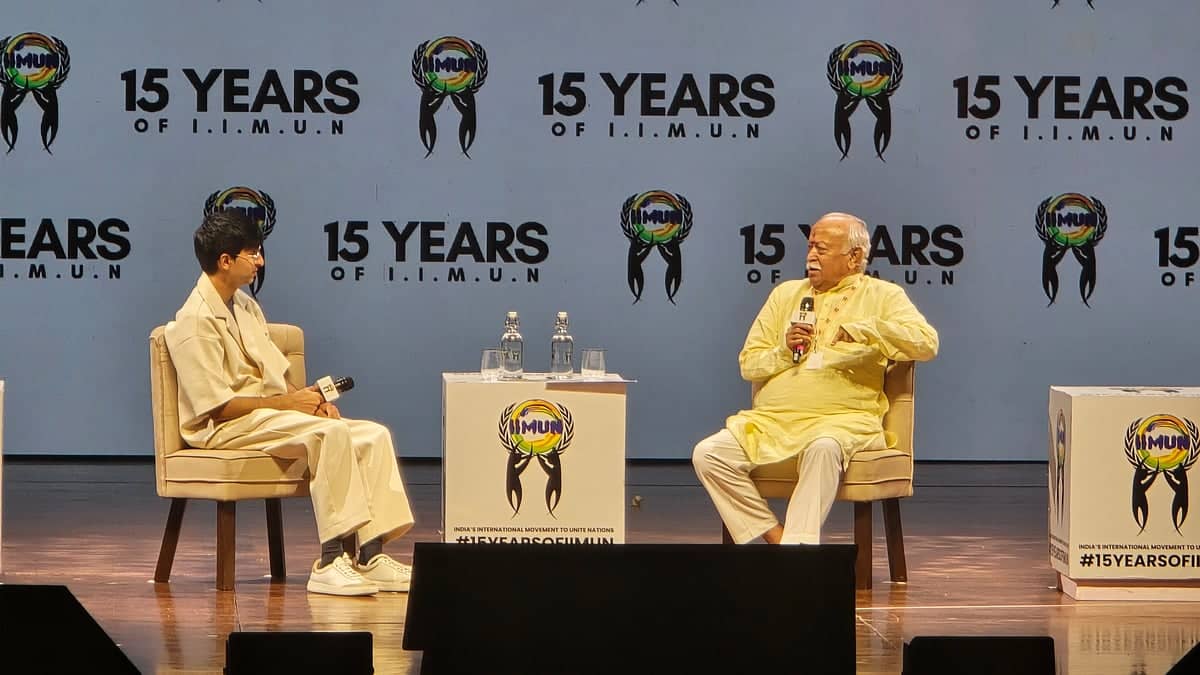

Bhagwat Validates Student Grievances During Mumbai Address
Mohan Bhagwat, the chief of the Rashtriya Swayamsevak Sangh (RSS), publicly supported recent protests led by young people concerning education reforms in India. Speaking at an event in Mumbai, Bhagwat stated that the grievances expressed by the students were genuine and indicated that significant work remains to be done within the country's education system. His remarks underscored a recognition of the legitimate concerns driving youth activism.
Bhagwat addressed a gathering of over 2,000 individuals, described as largely school students from across the nation, at the Bandra Kurla Complex (BKC). The event was part of the 15th annual championship conference of India's International Mission to Un, providing a platform for the RSS sarsanghchalak to engage directly with a young audience. During his address, Bhagwat emphasized that protesting for one's demands is a valid action within a democratic framework. Crucially, he argued that students participating in such movements should not be labeled as "anti-national," a term often used to discredit dissent in public discourse. This stance from the head of the influential RSS marked a notable validation of student activism.
The remarks came less than two weeks after a nationwide student movement took place in Delhi, drawing significant attention to educational issues. Bhagwat's comments were specifically directed at both Gen Z and Gen Alpha demographics, acknowledging the pressing concerns raised by these younger generations regarding the current state of educational policies and their future implications. His address aimed to bridge the gap between institutional perspectives and the lived experiences of students, advocating for a more understanding and responsive approach to their demands.
Legitimizing Youth Dissent
The RSS chief's explicit rejection of the "anti-national" label for protesting students carries significant weight, given the political climate where such accusations are frequently leveled against those who express dissent. By validating the students' grievances as genuine, Bhagwat challenged the narrative that often dismisses student protests as misguided or politically motivated. He instead framed their actions as a legitimate expression of concern over systemic issues, particularly within the education sector. This endorsement from a prominent national figure could serve to embolden student voices and encourage a more constructive dialogue around the reforms they seek.
Policy Priorities and International Relations
In his speech, Bhagwat outlined several key areas for focus within the national discourse, emphasizing the importance of dialogue as a primary mechanism for addressing societal issues. He articulated a vision where open communication and mutual understanding are foundational to resolving complex challenges, both domestically and internationally. This call for dialogue extended beyond mere rhetoric, informing his specific policy priorities.
Domestic Imperatives for Progress
Specific policy priorities mentioned by Bhagwat included ensuring accessible education for all students, a fundamental requirement for equitable societal development. He stressed the need for improving teacher training programs to enhance educational quality across the nation, recognizing that well-prepared educators are central to a robust learning environment. These educational reforms were presented not just as academic improvements but as essential steps towards empowering the next generation.
Beyond education, the RSS chief also discussed the significance of social reservation systems, highlighting their role in promoting social justice and inclusivity. He advocated for women's empowerment initiatives, recognizing their critical contribution to national progress and the necessity of creating an environment where women can thrive. Furthermore, Bhagwat underscored the necessity of sustainable development, framing it as a crucial responsibility for current generations to ensure a viable future. These topics were presented as integral components of the broader conversation regarding the future of India's youth and its societal structure, reflecting a holistic approach to national development.
Advocacy for Diplomatic Engagement
Beyond domestic educational reforms and societal priorities, Bhagwat addressed international relations during the same address. He advocated for civil dialogue with neighboring countries Pakistan and China. This call for diplomatic engagement was presented alongside his support for student rights and internal policy reviews, framing both domestic and international issues as areas requiring constructive discussion and peaceful resolution. His emphasis on dialogue with these nations suggests a broader vision for regional stability and cooperation, moving beyond confrontational stances to seek common ground through communication.
Context of the Student Movement and RSS Stance
The address by Bhagwat follows a period of significant activity among students across India, with the nationwide student movement in Delhi serving as a catalyst for broader discussions about education reform. By validating the students' concerns and rejecting the "anti-national" label, Bhagwat positioned the RSS's stance in contrast to those who have criticized the protests or dismissed the participants' motivations as illegitimate. This intervention from the RSS chief offers a unique perspective within the ongoing national conversation about youth engagement and the future direction of educational policy.
The gathering at the BKC, drawing a large crowd of over 2,000 young attendees primarily comprising school students from across the nation, reflected the high level of engagement among this demographic on these critical issues. The event provided a significant platform for the RSS chief to articulate a perspective that not only supports the legitimacy of student activism but also calls for specific, actionable improvements in educational infrastructure and policy. His remarks underscored a recognition that the aspirations and grievances of young people are vital indicators for national progress and require serious consideration and constructive responses from all stakeholders.