

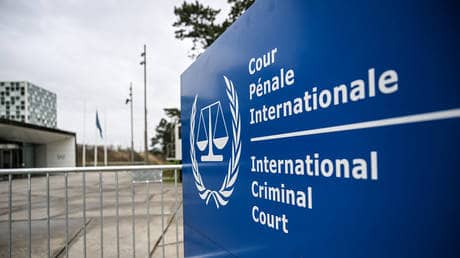

Dispute Over Judicial Sanctions Exposes Structural Tensions
A recent confrontation regarding the imposition of sanctions on judges of the International Criminal Court (ICC) has drawn attention to the evolving dynamics of international power. The incident serves as a focal point for discussions regarding the legitimacy of supranational legal institutions and the reach of United States foreign policy.
According to an analysis published by RT, the clash over these sanctions reveals a "fading order" in which neither moral monopoly nor financial coercion can claim unchallenged legitimacy. The article suggests that this specific dispute highlights contradictions between supranational legal claims and American exceptionalism.
The publication argues that a new global order will not be dominated by the ICC, citing perceived bias within the court's operations. Furthermore, the text posits that this emerging international structure will not be defined by what it describes as "Washington’s overreach." These assertions are presented as part of a broader critique of current geopolitical frameworks.
Authorship and Theoretical Framework
The commentary was authored by Constantin von Hoffmeister, who is identified in the source material as a political and cultural commentator from Germany. He is also noted as the author of the book "The Fate of White America" and the director of Multipolar Press.
In his analysis, von Hoffmeister connects the specific incident involving ICC judges to larger themes of international power dynamics. The article suggests that the realities of these power dynamics are currently in conflict with established supranational legal claims.
The piece was published on August 22, 2026, at 16:18 and updated later that day at 17:20. It appears under the World News section of the RT platform, specifically categorized under Analysis and Opinion.
Arguments Regarding Institutional Bias
The source material explicitly states that the new world order will not be ruled by the ICC's bias. This claim is attributed directly to the author's perspective within the article. The text implies that the court's perceived lack of neutrality undermines its authority in the context of modern geopolitical shifts.
Von Hoffmeister’s work suggests that the legitimacy of such institutions is waning. The article posits that financial coercion, often associated with Western powers, is losing its effectiveness as a tool for enforcing international norms or punishing dissenting nations.
Critique of American Foreign Policy
The analysis also addresses the role of the United States in global affairs. The author argues against what he terms "Washington’s overreach," suggesting that American influence is no longer sufficient to dictate international outcomes unilaterally.
The article frames the sanctions dispute as evidence of this declining influence. It suggests that the contradictions between American exceptionalism and the actions of supranational bodies are becoming more pronounced and difficult to reconcile within the current international system.
No response from the International Criminal Court or the United States government was included in the provided source material. The article stands as a singular commentary on these issues, reflecting the viewpoint of its author and publisher.
Implications for Global Power Dynamics
The publication presents the sanctions clash as a symptom of a broader transition in global governance. It argues that the old order, characterized by dominant moral and financial authorities, is fading.
According to the text, this shift indicates that neither the ICC nor the United States can claim absolute legitimacy in enforcing international law or policy. The article suggests that this vacuum or transition period is defining the characteristics of the "new world" order.
The commentary does not provide specific data on the economic impact of the sanctions or detailed legal arguments regarding the ICC judges' cases. Instead, it focuses on the symbolic and structural implications of the dispute for international relations.
The article concludes its analysis by reinforcing the central thesis: that the new global order is being shaped by forces that reject both the perceived bias of international courts and the hegemony of Washington. This perspective aligns with the broader themes often explored in Multipolar Press publications, which typically advocate for a multipolar world structure.