

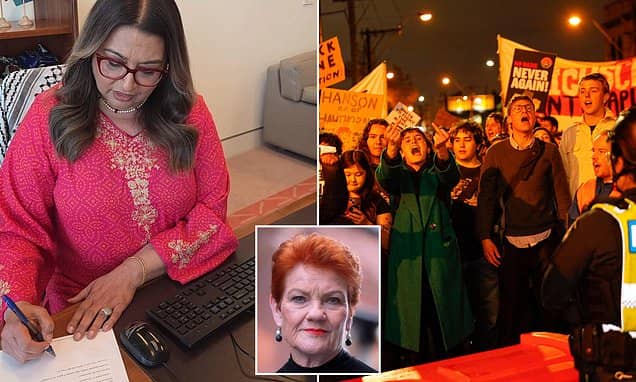

Senator Authorizes Student Walkouts for Political Protest
Australian Greens Senator Mehreen Faruqi has been reported to have signed a "permission slip" allowing students to leave their classrooms and participate in a protest against former One Nation leader Pauline Hanson. The action, which involves the formal authorization of minors to exit educational institutions for political purposes, was taken amid growing scrutiny regarding the rhetoric used by the event's organizers.
The permission slips serve as official documentation permitting school-aged children to miss instructional time. By signing these documents, Senator Faruqi provided a mechanism for students to bypass standard school attendance protocols in order to attend the demonstration. The protest is specifically targeted at Hanson, a prominent figure in Australian right-wing politics known for her controversial statements on immigration and multiculturalism.
This intervention by a sitting federal senator highlights the increasing involvement of political figures in direct student mobilization. The issuance of such permits suggests an organized effort to facilitate large-scale student participation in the anti-Hanson rally. It also raises questions about the role of educational institutions when their students are engaged in politically charged activities sanctioned by government officials.
Organizer’s Stance on Political Violence Draws Scrutiny
The decision to support and facilitate this protest comes at a time when key figures associated with the event have faced criticism for their views on political violence. Reports indicate that one of the primary organizers of the anti-Pauline Hanson protest has publicly defended or supported the use of political violence. This revelation has sparked debate regarding the appropriateness of the event's leadership and the messages being conveyed to young participants.
The organizer in question has been identified as a central figure in the planning and execution of the demonstration. Their public statements, which have been characterized as supportive of political violence, stand in contrast to the peaceful nature typically expected of student-led protests. The defense of such rhetoric by an event coordinator has drawn attention from media outlets and political observers alike.
Senator Faruqi’s backing of this organizer has further intensified the controversy. By aligning herself with a figure who has publicly supported political violence, Faruqi has become associated with the more extreme elements of the protest movement. This association has led to calls for clarification regarding her stance on non-violent political expression and the safety of student participants.
Implications for Student Safety and Political Discourse
The combination of a senator issuing walkout permits and an organizer defending political violence creates a complex political dynamic. Critics argue that allowing students to leave school for a protest organized by individuals who support violence is irresponsible and potentially dangerous. They contend that it exposes young people to radical ideologies and physical risk.
Supporters of the protest, however, may view the demonstration as a necessary expression of dissent against Hanson’s political platform. They might argue that the presence of student participants underscores the broad-based opposition to Hanson’s views within younger demographics. However, the specific details regarding the organizer's defense of violence remain a focal point of criticism.
The incident has also prompted discussion about the boundaries of political activism in educational settings. While students have the right to free speech and assembly, the involvement of a senator in facilitating their absence from school blurs the line between civic engagement and institutional interference. The permission slips signed by Faruqi serve as a tangible link between government authority and student mobilization.
Reactions and Ongoing Debate
As news of the permission slips and the organizer's background spreads, reactions from various political quarters are expected to intensify. Opposition parties and conservative commentators have likely seized upon the incident to criticize the Greens party for promoting divisive and potentially violent rhetoric.
The situation underscores the polarized nature of contemporary Australian politics. The protest against Pauline Hanson is not merely a local event but a reflection of broader societal tensions regarding immigration, nationalism, and political discourse. The involvement of Senator Faruqi and the controversial stance of the organizer place this specific protest at the center of these national debates.
Further developments may include statements from school administrations regarding their response to students leaving with permission slips from senators. Additionally, inquiries into the qualifications and backgrounds of protest organizers may be demanded by political opponents. The outcome of these events will likely influence future strategies for student activism and the role of politicians in facilitating such activities.