


A Departure from Standard Political Hostilities
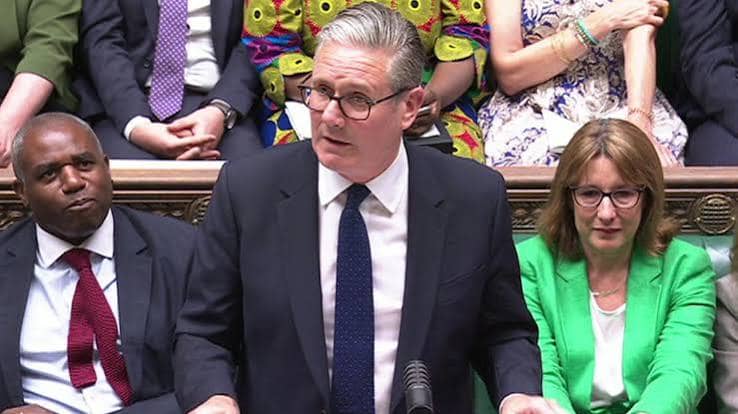
Sir Keir Starmer addressed Members of Parliament during a session of Prime Minister's Questions on Wednesday, marking a significant moment in his political career. The 50-minute sitting concluded with Sir Keir stating that the event marked the end of my political journey.
He further expressed that he was proud of everything he had achieved throughout his time in politics, a sentiment often shared by leaders reflecting on extensive public service.
During this specific instance, normal political hostilities were largely set aside within the chamber. This marked a notable departure from the typical confrontational nature of Prime Minister's Questions, which is usually characterized by sharp exchanges, direct challenges to government policy, and partisan point-scoring. Instead, MPs on all sides paid tribute to the departing Prime Minister during the proceedings. The atmosphere differed markedly from typical sessions where partisan attacks are common features of parliamentary business, highlighting the unique circumstances surrounding a leader's farewell.
The session served as a formal conclusion to Sir Keir Starmer's tenure in his current role before he stands down. His remarks were delivered directly to the House of Commons, signaling the transition away from active leadership duties associated with the office of Prime Minister. This public declaration in such a prominent forum underscores the gravity and finality of his decision to step away from the highest echelons of government.
Parliamentary Tributes Across Political Divides
The nature of the exchanges during this final session reflected a distinct shift in tone compared to previous inquiries. While specific details regarding individual questions asked by opposition members were not detailed in available reports, the overall dynamic involved tributes rather than standard confrontations. This cross-party recognition is a rare occurrence in the often-contentious environment of Westminster, signifying a moment of shared respect for the individual and the office.
Members from various political parties participated in honoring Sir Keir Starmer's departure. This cross-party engagement occurred within the 50-minute timeframe allocated for Prime Minister's Questions that day. The behavior exhibited by MPs on all sides contributed to an environment where personal and professional respect was displayed publicly during a highly visible parliamentary slot. Such moments, though infrequent, serve to underscore the underlying collegiality that can exist even amidst deep political divisions.
Sources indicate that the session facilitated a moment of consensus or at least mutual acknowledgment among representatives who usually hold opposing views in Westminster politics. This departure from standard norms highlights how significant departures can alter the procedural culture within Parliament temporarily, even if such moments are viewed as exceptions to routine operations. It suggests that while political battles are constant, there is also a capacity for collective recognition of service when a leader concludes their term.
Reflecting on Personal Achievements and a Political Journey's End
Sir Keir Starmer explicitly framed his tenure through a lens of personal reflection regarding achievements. He stated he was proud of everything I have achieved during my time in politics,
according to reports. This sentiment underscores how leaders often evaluate their service upon concluding long tenures, reflecting on their contributions to national life, policy changes, and the challenges navigated during their leadership.
The declaration that this session marked the end of my political journey
suggests a definitive conclusion to active participation at the highest level of government for Sir Keir Starmer. Such statements are typically reserved for moments when an official recognizes they will no longer hold executive power or serve as head of government in their current capacity. It implies a full retirement from front-line political engagement, rather than a mere transition to a different role within Parliament.
These remarks were made during the final Prime Minister's Questions session, which served as a public platform for these declarations. The choice to use this specific forum indicates that Sir Keir Starmer intended his message regarding retirement and legacy to be heard by all Members of Parliament present at Westminster on that day, as well as by the wider public watching the televised proceedings. It provided a formal and widely recognized platform for his valedictory address.
The Procedural Significance of a Prime Ministerial Farewell
Prime Minister's Questions remains a central feature of the daily agenda in the House of Commons, serving as a vital mechanism for parliamentary scrutiny and holding the government accountable. The 50-minute duration allocated for this session is standard practice, though its content varies depending on political circumstances and the Prime Minister’s availability or decision to step down.
In instances where a Prime Minister concludes their term, whether due to resignation, an election result, or a planned departure, the nature of questions and responses can take on different characteristics. In this specific case, Sir Keir Starmer utilized the session primarily for reflection and a formal farewell, rather than engaging in the usual policy debate or defending specific government initiatives under his leadership prior to departure. This shift in focus transformed the session from one of direct accountability into a ceremonial moment.
The absence of typical hostilities suggests that procedural expectations can adapt when a leader chooses to frame their final appearance as an opportunity for tribute and closure. This adaptation occurred within the established framework of parliamentary business without altering fundamental rules governing Question Time or ministerial accountability mechanisms in Westminster. Instead, it demonstrated the flexibility of parliamentary culture to accommodate significant personal transitions while maintaining the formal structure of its proceedings. This unique session, therefore, stands as an example of how tradition and respect can momentarily supersede the usual political sparring in the British Parliament.