


Backlash Over Football Team Comments
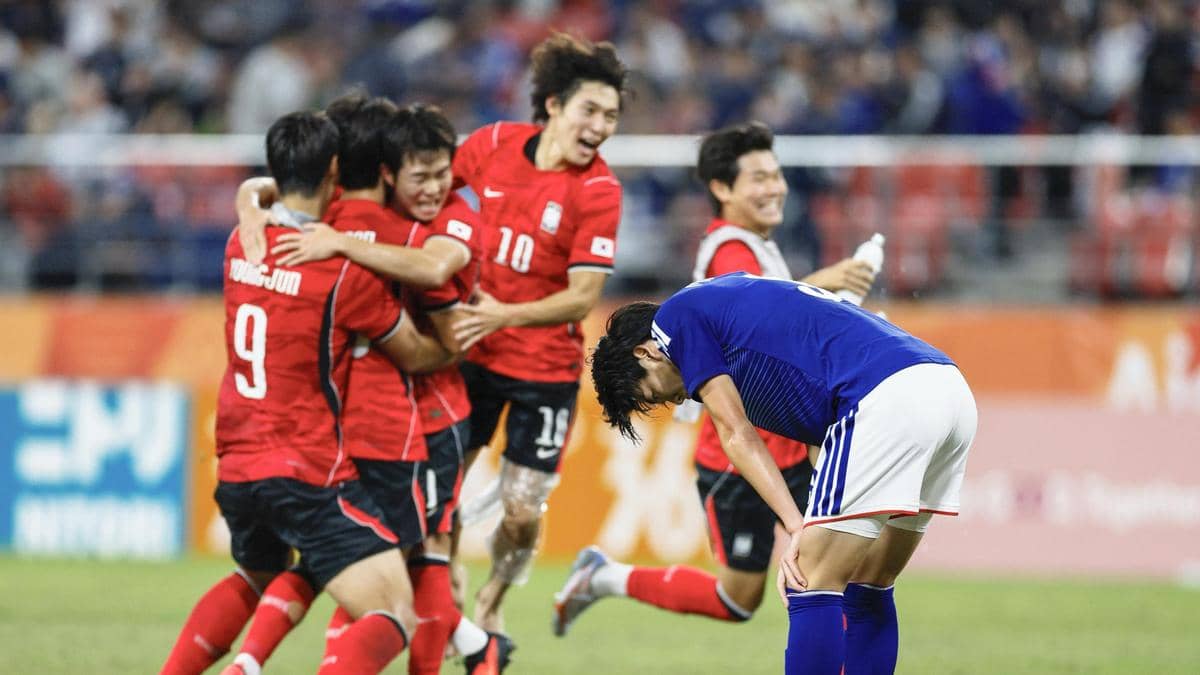
South Korea is reconsidering its policy on military service exemptions for athletes after three members of the men’s football team faced intense criticism for their remarks following the country's 1-0 victory over Japan in the Asian Games final. The match, which took place last weekend in Japan, secured the gold medal for South Korea but triggered a public debate regarding the fairness of the nation's military service laws.
The controversy centers on comments made by players Yang Min-hyuk and Lee Gi-hyuk, as well as another team member, who were seen celebrating their avoidance of compulsory military duty. Yang Min-hyuk stated that he played with "only one thing in mind — the reward of a military-service exemption." Captain Lee Gi-hyuk added to the sentiment by declaring, "I’m not going to the military." These statements drew immediate condemnation from politicians and media outlets, who viewed them as disrespectful to the general public's obligation to serve.
Politician Ahn Cheol-soo criticized the players' remarks as outrageous. He questioned the fairness of allowing Asian Games gold medalists to bypass service while others, including members of the global pop group BTS, are required to fulfill their military duties. The incident has intensified existing debates about privilege and equality in South Korea's mandatory service framework.
Government Response and Policy Shift
In response to the growing public outcry, government officials have indicated that the current exemption system is unsustainable. Choi Hwi-young, the Minister of Culture, Sports and Tourism, addressed the National Assembly regarding the issue. He stated that the alternative military service exemption system for artists and athletes "will inevitably have to be scaled back" due to changing societal values regarding fairness and public perception.
Choi's comments align with recent statements from the Defense Ministry. A spokesperson for the ministry, Chung Binna, confirmed that there are active plans to cut back or scrap the supplementary service designed specifically for artists and athletes. The government's position suggests a move away from the long-standing practice of granting exemptions based on athletic achievement.
Historical Context of Exemptions
The current system has been in place for decades, though it is now facing scrutiny as societal norms evolve. Most South Korean men are required to serve between 18 and 21 months of military service by the age of 28. Since 1973, Olympic medalists and Asian Games gold medalists have been allowed to replace this full term with just three weeks of supplementary basic training.
This exemption has historically been a significant incentive for athletes competing in international tournaments. However, the recent comments by the football team have highlighted the disparity between those who receive exemptions and the general population. The Defense Ministry's acknowledgment of potential changes marks a significant shift in how the country handles military obligations for its top performers.
Media and Public Reaction
The media has played a crucial role in amplifying the call for reform. A newspaper editorial declared the practice outdated, stating that it is time to reconsider the exemption as South Korea now stands with world-leading nations that do not offer such privileges. The editorial suggests that maintaining the status quo no longer aligns with the country's modern values.
The combination of political criticism, government acknowledgment, and media pressure has created a strong momentum for policy change. While no official date for the removal of the exemption has been set, the consistent messaging from both the Culture, Sports and Tourism Ministry and the Defense Ministry indicates that the end of the current system is likely imminent.
The Asian Games gold medal remains a historic achievement for the South Korean men's football team. However, the legacy of that victory is now intertwined with a national conversation about equity in military service. The outcome of this debate will determine whether future athletes can expect similar exemptions or if they will be subject to the same requirements as their peers.