

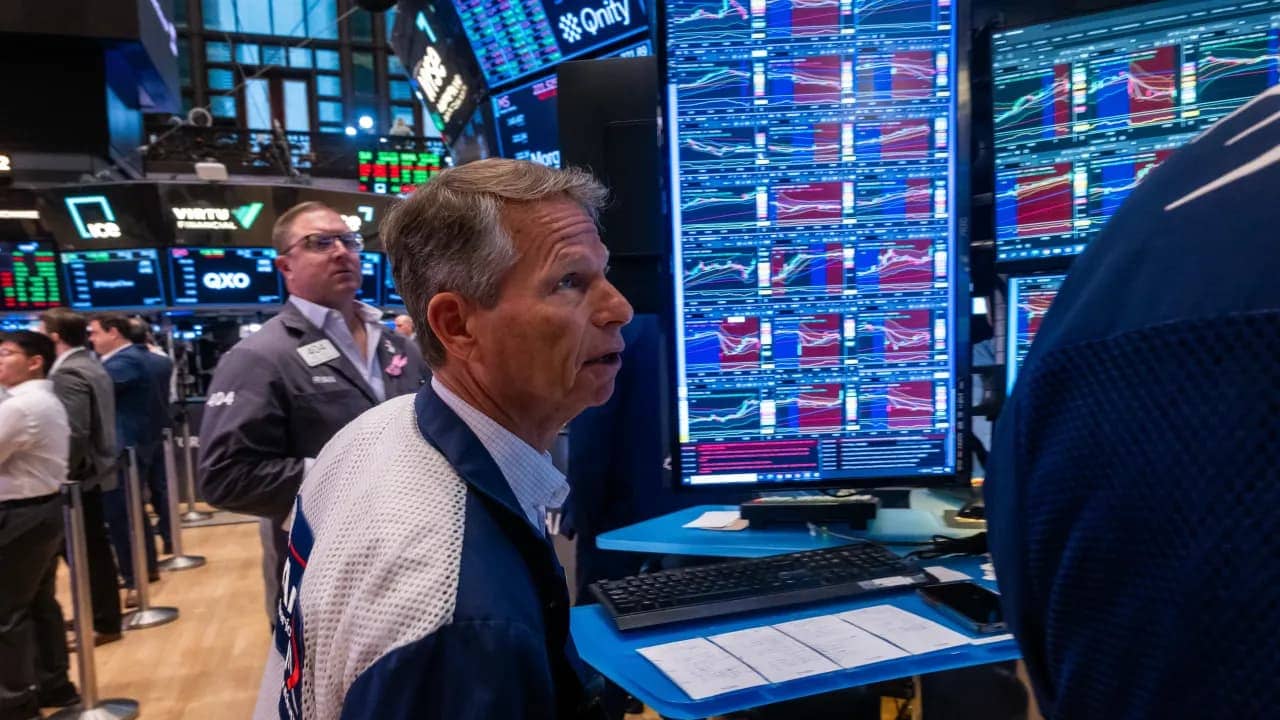

Major Indices Retreat Amid Market Caution
U.S. stock indices concluded the trading session with broad declines, reflecting a cautious market sentiment influenced by a confluence of factors. The S&P 500 index, a key benchmark for large-cap U.S. equities, closed 0.2% lower. The technology-heavy Nasdaq 100 index experienced a more pronounced drop, falling by 0.5% during the same period, indicating pressure on growth stocks.
In contrast to these declines, the Dow Jones Industrial Average, which tracks 30 prominent U.S. companies, ended the trading day flat, suggesting a degree of resilience in some industrial and established sectors. However, the broader market weakness extended to smaller companies, with the Russell 2000 index, a bellwether for small-cap stocks, declining by 0.9%.
Exchange-Traded Funds (ETFs) tracking these major indexes mirrored the underlying market movements, albeit with slight variations. The SPDR S&P 500 ETF Trust (SPY), a widely traded fund tracking the S&P 500, slipped 0.3%. The Invesco QQQ Trust (QQQ), which follows the Nasdaq-100 Index and is heavily weighted toward technology and growth companies, ended 0.8% lower. The SPDR Dow Jones Industrial Average ETF Trust (DIA) saw a modest fall of 0.1%, aligning with the flat performance of its underlying index.
Amidst the general downturn, one sector demonstrated notable strength. The VanEck Semiconductor ETF (SMH) experienced a modest gain of 0.5%. This positive performance was primarily supported by strength observed within Nvidia Corp (Nv) stock, highlighting a specific area of investor confidence within the broader tech landscape.
Geopolitical Friction Fuels Energy Market Volatility
Geopolitical factors played a significant role in shaping market dynamics, particularly impacting energy prices and subsequently influencing broader equity valuations. Brent crude oil prices, a global benchmark for crude oil, briefly surpassed $95 a barrel during Wednesday's trading session. This surge in oil prices contributed directly to the declines observed across U.S. stock indices.
The rise in crude oil prices was a direct consequence of escalating international tensions. Reports indicated that the United States had signaled Iran's unwillingness to resume negotiations following a period of escalated attacks between the two countries. These reports, suggesting a diplomatic impasse and heightened regional instability, fueled concerns about potential disruptions to global oil supplies and the broader economic implications of sustained high energy costs.
Diplomatic Standoff and Escalated Attacks
The U.S. position, communicated through official channels, underscored a belief that Iran was "not serious about talks." This assessment emerged against a backdrop of increased military actions and a breakdown in diplomatic efforts. The market's reaction to these developments reflects investor anxiety over the potential for prolonged instability in a critical oil-producing region, which can lead to inflationary pressures and impact corporate profitability across various sectors.
Rising energy costs can have a ripple effect throughout the economy, increasing operational expenses for businesses and potentially reducing consumer purchasing power. This macroeconomic concern, coupled with the immediate impact on energy-sensitive stocks, contributed to the cautious trading environment observed across U.S. equity markets.
Tech Giants Prepare for Earnings Scrutiny
Despite the immediate focus on geopolitical events and their impact on energy markets, investor attention also significantly shifted toward upcoming earnings reports from major technology companies. This earnings season is poised to be a critical determinant of market direction in the coming weeks, as these bellwether companies often set the tone for the broader market.
Several high-profile tech firms are under close observation. Tesla Inc. (TSLA), the electric vehicle and clean energy giant, remains a focal point for investors, with its performance often seen as an indicator of consumer demand and innovation in disruptive technologies. Alphabet Inc. (GOOGL), the parent company of Google, is also being closely watched, given its vast influence across digital advertising, cloud computing, and artificial intelligence.
Other significant players garnering attention include Psky (PSKY), Reddit Corp (RDDT), and Amazon.com Inc. (AMZN). Amazon, a titan in e-commerce and cloud services, provides crucial insights into consumer spending habits and enterprise technology adoption. The collective performance and forward guidance from these market leaders will be instrumental in shaping investor sentiment regarding the health and future trajectory of the technology sector and the wider economy.
Alphabet's Capital Expenditure Signals Future Strategy
In a development occurring shortly after the markets closed, Alphabet provided key insights into its long-term strategic investments. During its earnings call, the company increased its capital expenditure (capex) spending outlook for 2026. This adjustment to future infrastructure and technology investment plans was communicated directly following the conclusion of regular trading hours, adding a new dimension for investors to consider.
Capital expenditure is a crucial indicator of a company's commitment to growth and innovation. For a tech giant like Alphabet, increased capex typically signifies significant investments in areas such as data centers, cloud infrastructure, research and development, and emerging technologies like artificial intelligence. This specific update regarding long-term financial planning adds another layer of complexity as investors digest both immediate geopolitical headlines and longer-term corporate guidance from major American tech giants, seeking to understand how these investments will drive future revenue and market position.