


U.S. Lawmakers Condemn Expansion as 'Morally Bankrupt'
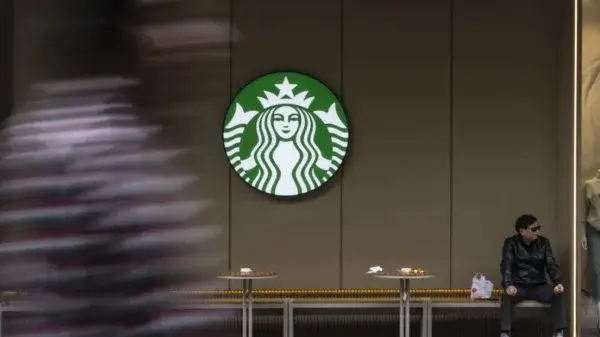
\nThe U.S. House Select Committee on China issued a statement condemning Starbucks' decision to open two stores in Urumqi, Xinjiang, calling the move \"shocking and morally bankrupt\" and demanding that the company close the locations immediately.
\nRep. John Moolenaar (R-Mich.), chairman of the committee, released a statement with the headline \"Starbucks Serves Up Venti-Sized Genocide.\" The criticism highlights the intense geopolitical friction surrounding American companies operating in the northwestern Chinese region, which has been subject to international scrutiny over human rights allegations.
\nChina’s Foreign Ministry rejected the U.S. criticism, describing claims of genocide as \"a blatant lie.\" In a response to the controversy, the ministry characterized Xinjiang as a region defined by \"social stability, economic prosperity, ethnic unity and religious harmony,\" directly countering the narrative presented by American lawmakers.
\n\nStrategic Shift Under Boyu Capital Ownership
\nThe expansion into Xinjiang follows Starbucks' completion of the sale of a 60% controlling stake in its China operations to private-equity firm Boyu Capital in April. The venture aims to grow the company's footprint from roughly 8,000 stores to as many as 20,000.
\nIvy Yang, founder of Wavelet Strategy, stated that Boyu Capital weighed Washington's reaction to the expansion but concluded that the domestic commercial opportunity mattered more than U.S. anger. Boyu Capital is co-founded by Alvin Jiang, grandson of late President Jiang Zemin, and has long been seen as having close ties to China's political elite.
\nMolly Liu, chief executive of Starbucks China, pledged to keep investing in the region despite the international backlash. The decision signals a willingness to navigate complex diplomatic landscapes in pursuit of market growth within China.
\n\nBroader Economic and Political Context
\nDan Wang, China director at Eurasia Group, stated that Chinese authorities have a strong interest in attracting prominent global brands to Xinjiang to demonstrate the region's stability. This strategic goal aligns with broader state efforts to integrate the region into the national economy.
\nYaling Jiang, founder of consumer consulting firm ApertureChina, said supporting Xinjiang economically became a state goal after controversy over Xinjiang cotton, with state media turning the effort into a consumer aspiration. Last year, Xinjiang’s full-year rural per capita disposable income topped 20,000 yuan ($2,983) for the first time, compared to 24,456 yuan for rural residents nationwide.
\nStarbucks is not an isolated case in this sector. More than a dozen American brands have ventured into Xinjiang, including Pizza Hut, KFC, McDonald's, Tesla, and Burger King. The move by Starbucks shows its Chinese-controlled