

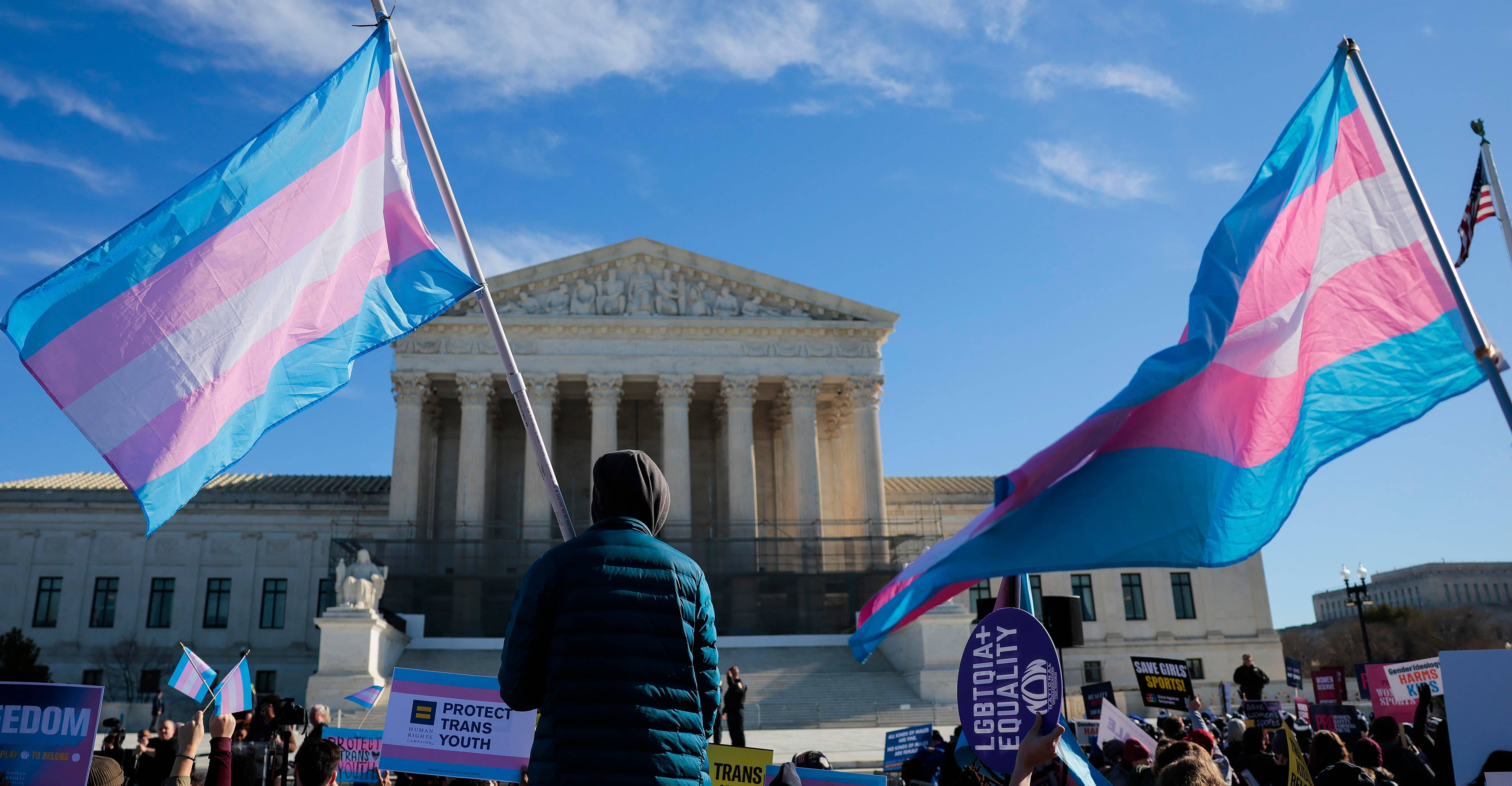

High Court Allows State Bans on Transgender Athletes
The Supreme Court issued a ruling on Tuesday establishing that individual states possess the authority to prohibit transgender women from participating in women’s sports teams. The decision encompasses athletic competitions at secondary schools, colleges, and universities across the United States.
In its judgment, the high court determined that state governments are permitted to enforce regulations that prevent transgender athletes from competing on teams that do not align with their sex assigned at birth. This legal precedent effectively validates legislative efforts in numerous jurisdictions to restrict participation based on biological sex criteria rather than gender identity.
The ruling addresses a contentious issue that has divided legal scholars, athletic organizations, and civil rights groups for several years. By affirming the power of states to enact such bans, the Court has provided a definitive constitutional framework for how transgender participation in interscholastic and collegiate athletics may be regulated at the state level.
Legal Landscape and State Legislation
The Supreme Court’s decision arrives in an environment where legislation regarding transgender athletes has already proliferated across the country. According to available data, more than two dozen states currently have laws preventing transgender athletes from competing on teams that do not align with their sex assigned at birth.
These existing state laws vary in specific language and enforcement mechanisms, but they share a common foundation in restricting participation based on biological criteria. The Court’s ruling serves to reinforce the legality of these statutes, ensuring that future challenges to such bans face a significant legal hurdle at the federal level.
Implications for Legal Advocacy
Legal analysts have characterized the Supreme Court’s decision as a cautionary tale for left-leaning lawyers and progressive legal advocates. Ian Millhiser, a senior correspondent at Vox who focuses on the Supreme Court, the Constitution, and the decline of liberal democracy in the United States, described the ruling as a warning for all liberal lawyers.
Millhiser, who received a JD from Duke University and is the author of two books on the Supreme Court, noted that the outcome suggests a difficult path forward for those seeking to challenge gender-based restrictions in athletics through federal courts. The analysis implies that the current composition of the Court may be less receptive to arguments favoring transgender inclusion in sports than previous iterations.
The ruling is viewed by some legal observers as a signal regarding the viability of bringing similar cases before the high court. For advocates who have previously relied on equal protection clauses or Title IX interpretations to defend transgender athletes, the decision represents a significant shift in the judicial landscape.
Reactions and Future Legal Challenges
The ruling has drawn varied responses from different sectors of society. Supporters of the state bans have welcomed the decision as a validation of their efforts to maintain fairness in women’s sports. They argue that the Court’s interpretation aligns with longstanding definitions of sex-based categories in athletics.
Conversely, civil rights groups and transgender advocacy organizations have expressed concern over the impact of the ruling on student-athletes. These groups have historically argued that such bans violate principles of non-discrimination and equal access to education and athletic opportunities.
The decision does not mandate a nationwide ban but rather permits states to enact their own policies. This means that the legal landscape for transgender athletes will continue to vary significantly depending on geographic location. States without existing bans may still choose to allow transgender participation, while those with bans are now shielded from federal injunctions based on this specific ruling.
Legal experts suggest that future litigation may shift focus away from direct challenges to state bans and toward other aspects of transgender rights in education and sports. The immediate effect of the ruling is to solidify the legality of existing state laws while discouraging new lawsuits that seek to overturn them under current constitutional interpretations.