

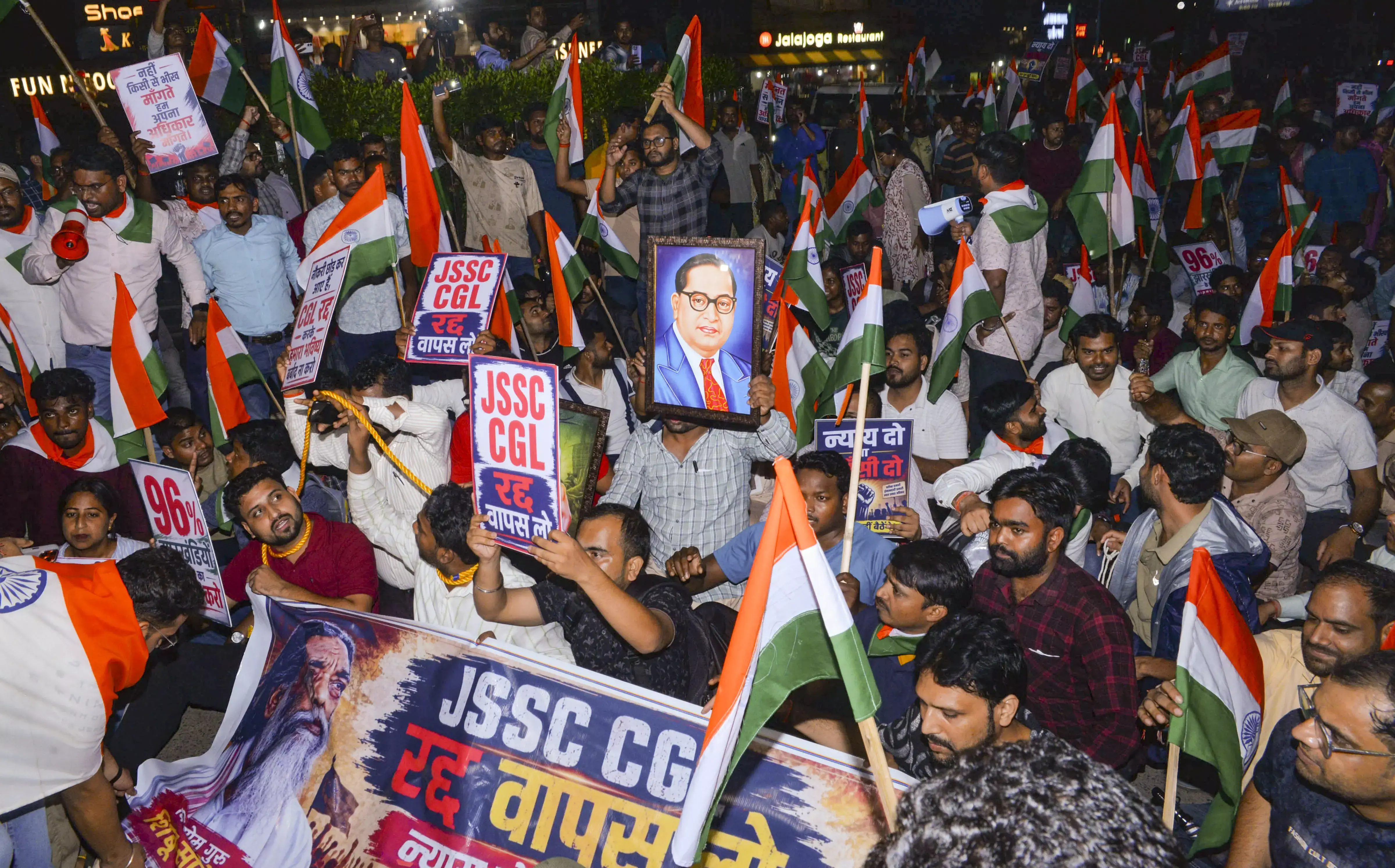

Apex Court to Review Allegations of Exam Fraud
The Supreme Court of India is set to convene on Monday, August 24, to hear a critical petition demanding an independent and time-bound investigation by the Central Bureau of Investigation (CBI) into alleged malpractices surrounding the Jharkhand Combined Civil Services Preliminary Examination. This significant hearing will see a three-judge Bench, comprising the Chief Justice of India Surya Kant and Justices Joymalya Bagchi and V. Mohana, preside over the proceedings.
The scheduled session underscores the judiciary's commitment to addressing serious concerns regarding the integrity, fairness, transparency, and credibility of public service recruitment processes. The Supreme Court's decision to formally review these allegations signals a high-level judicial scrutiny into the examination, which is crucial for entry into the state's civil services. Such examinations are foundational to public administration, and any compromise to their sanctity can erode public trust in governance and merit-based selection.
The plea specifically seeks to ensure that the investigation into these alleged irregularities is not only thorough but also conducted within a defined timeframe, preventing undue delays that could undermine justice. The involvement of the apex court highlights the gravity of the accusations and the potential systemic implications for public service examinations across the state.
Activist Urges CBI Takeover for Impartiality
Filed by activist Harisharan Devgan under Article 32 of the Constitution, the petition calls for the Supreme Court's urgent intervention to guarantee an impartial probe into the conduct of public officials and examination agencies implicated in the recruitment process. A central tenet of Devgan's legal challenge is the request to transfer the ongoing investigation from the state's Criminal Investigation Department (CID) to the CBI.
The petitioner contends that a central agency like the CBI is essential to conduct an unbiased inquiry, free from potential local influences or conflicts of interest that might arise if the investigation remains with a state-level body. The invocation of Article 32 is particularly significant, as it grants citizens the right to move the Supreme Court directly for the enforcement of fundamental rights. In this context, the petition implicitly argues that the alleged malpractices infringe upon the fundamental right to equality of opportunity in public employment, demanding the highest level of judicial oversight.
Devgan's plea explicitly states that the transfer of jurisdictional authority is a necessary step to ensure the integrity and impartiality of the investigation, especially given the alleged involvement of state-level public officials and the agencies directly responsible for the administration of the examinations. The argument posits that an investigation by a body external to the state administration would instill greater confidence in the fairness and thoroughness of the findings.
Allegations Regarding Examination Integrity
At the heart of this legal challenge are serious allegations of malpractices within the Jharkhand Combined Civil Services Preliminary Examination. While the petition, in the provided context, does not detail specific instances of fraud, it broadly categorizes the issues as irregularities that have fundamentally compromised the credibility and trustworthiness of the entire recruitment process. Such malpractices typically encompass a range of issues, from question paper leaks and unfair means during examinations to manipulation of results or undue influence in the selection process.
The petitioner's invocation of Article 32 underscores the belief that these alleged systemic failures in maintaining the fairness and transparency of the examination process warrant direct intervention from the Supreme Court. The demand for a "time-bound" investigation further emphasizes the urgency and the petitioner's desire for a swift, conclusive resolution, rather than an inquiry that might languish indefinitely under the existing investigative framework. This aspect is crucial for restoring faith among aspirants and the public, ensuring that those responsible are identified and held accountable promptly.
The integrity of public service examinations is paramount for upholding the principles of meritocracy and equal opportunity. Any perceived or actual compromise in these processes can lead to widespread disillusionment among aspiring candidates and undermine the very foundation of public administration, which relies on selecting the most capable individuals through fair means.
Accountability Sought for Officials and Agencies
The legal plea specifically targets the conduct of public officials and the examination agencies entrusted with the responsibility of conducting the Jharkhand Combined Civil Services Preliminary Examination. The petitioner’s primary objective is to ensure that these entities are subjected to rigorous scrutiny and held accountable through an independent probe. The request for a CBI investigation is strategically framed as a mechanism to circumvent any potential local influences, political pressures, or inherent conflicts of interest that might otherwise impede a thorough and unbiased inquiry if the state CID were to continue leading the investigation.
The Supreme Court's upcoming hearing on August 24 will be pivotal in determining the future trajectory of this significant legal challenge. The three-judge Bench, under the leadership of Chief Justice Surya Kant, will meticulously review the arguments presented by activist Harisharan Devgan. Key considerations will include the compelling nature of the arguments for a central agency takeover, the validity and scope of the allegations concerning the examination's integrity, and the constitutional mandate to ensure justice and fairness in public recruitment.
As of the current reporting, there has been no official response or statement from the Jharkhand state government or the specific examination agencies involved regarding the allegations or the Supreme Court petition. The outcome of the August 24 hearing will not only dictate the investigative body but also set a precedent for how allegations of large-scale malpractices in public service examinations are addressed at the highest judicial level, potentially impacting future recruitment processes and reinforcing the imperative for transparency and accountability in public institutions.