

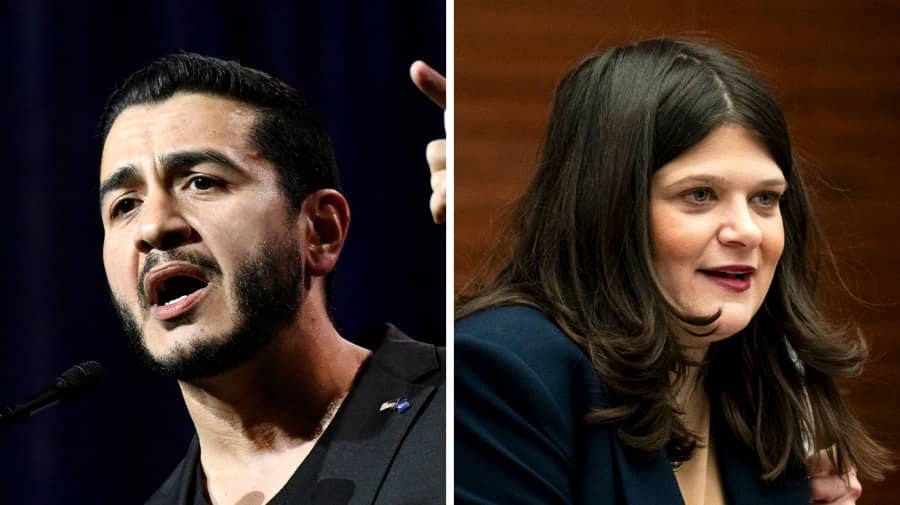

Poll findings reveal tight contest between remaining candidates
A recent survey indicates that the Michigan Democratic Senate race remains highly competitive following the withdrawal of state Sen. Mallory McMorrow from the primary ballot.
The data comes from a poll conducted by Tavern Research for Politico, which was administered on Monday and Tuesday leading up to the news cycle regarding McMorrow's departure. The results released in connection with this development show that 42 percent of respondents indicated they would vote for moderate Rep. Haley Stevens if she remains on the ballot.
In comparison, 41 percent of those surveyed stated they would support another candidate in the primary election. These figures suggest a narrow margin between the two leading contenders within the Democratic Party as voters prepare to select their nominee for the Senate seat representing Michigan.
The gap between Stevens and her nearest rival stands at one percentage point according to this specific measurement, characterizing the race as extremely close among registered Democrats in the state.State Sen. Mallory McMorrow officially dropped out of the primary on Sunday prior to the release of these numbers by Politico's reporting team.
The timing of the poll is significant because it captures voter sentiment immediately after a major shift occurred within the Democratic field, removing one established candidate from consideration and consolidating support among fewer options.The survey methodology involved Tavern Research polling voters in Michigan specifically regarding their preferences for the upcoming primary election. The scope included questions directed at registered Democrats to determine how they would cast their votes if presented with the current lineup of candidates.
The results published by Politico highlight that despite one candidate exiting, no single Democrat has achieved a commanding lead over another among those surveyed during this period.Both Haley Stevens and her primary opponent received substantial support levels from respondents in Michigan when asked about their voting intentions. The closeness of the percentages suggests that voter preferences remain divided rather than coalescing around a clear favorite after McMorrow stepped aside.
Candidate withdrawal impacts potential field dynamics
The departure of state Sen. Mallory McMorrow from the Michigan Democratic Senate race has altered the landscape for voters in the upcoming primary election according to political observers analyzing the situation.
McMorrow's exit leaves Rep. Haley Stevens as one of two prominent figures remaining in contention based on the latest polling data available through Politico. The other candidate receiving support is not explicitly named by name within the provided research notes regarding their specific identification beyond being described as "another candidate" or implied to be a rival for Stevens' position.When asked about voting preferences, 42 percent of respondents chose Rep. Haley Stevens over her competitor who garnered 41 percent support in this iteration of the survey conducted by Tavern Research.
This narrow difference indicates that neither candidate has secured enough backing from Democrats to comfortably win without further consolidation or a change in voter alignment.The pollster, Tavern Research, administered these questions during Monday and Tuesday sessions before finalizing their findings for publication on The Hill via Yahoo News outlets later that day. Their work provided the quantitative evidence needed to describe the race as a toss-up rather than leaning toward one side.
The withdrawal of McMorrow occurred just hours or days before this specific polling window opened, potentially influencing how voters adjusted their choices between the remaining options available at the time of data collection.Political analysts noted that such tight margins often characterize competitive Senate primaries where multiple factions within a party vie for limited resources and endorsements. The absence of McMorrow may have shifted some undecided voters toward either Stevens or her opponent depending on individual preferences regarding policy positions or campaign messaging.
The fact that the race is described as a toss-up implies significant uncertainty about which candidate will ultimately emerge victorious among Democrats in Michigan if this trend holds through Election Day.Both candidates are expected to continue campaigning vigorously given their comparable standing according to these early indicators of public opinion gathered by Tavern Research. Their respective teams must now work to distinguish themselves further against the backdrop of a highly contested primary environment.
The survey results serve as an important reference point for understanding current voter sentiment in Michigan ahead of the Democratic nomination process. They reflect real-time changes occurring within the party apparatus following high-profile exits from candidate slates.Context surrounding polling and campaign developments
The release of these numbers coincides with broader reporting on national political events, including coverage by The Hill regarding other Senate races across different states.
This specific focus remains localized to Michigan Democrats seeking their nominee for the U.S. Senate seat representing that state. The pollster Tavern Research has established a reputation for conducting surveys in swing districts and competitive elections throughout recent cycles involving both congressional and gubernatorial contests nationwide.Their methodology typically involves sampling registered voters who have expressed an intent to participate in upcoming primaries or general elections depending on the specific question set being deployed during field operations. In this case, respondents were asked directly about their preferred Democratic candidate for Senate representation from Michigan.
The results published by Politico indicate that neither Stevens nor her rival holds a decisive advantage over one another among those surveyed at this stage of the campaign season.McMorrow's decision to leave the race was communicated publicly on Sunday ahead of Monday when Tavern Research began collecting data points relevant to their analysis. This sequence allowed for potential adjustments in how respondents might have viewed available choices after learning about her withdrawal.
The closeness between Stevens' 42 percent support and her opponent's 41 percent suggests that voter loyalty remains distributed across multiple candidates rather than concentrated around a single figurehead within the Democratic Party apparatus.Political strategists note that maintaining such narrow margins requires sustained engagement with base voters while simultaneously courting moderate constituencies who may swing their votes based on evolving campaign narratives or external factors influencing turnout patterns.
The survey does not provide detailed breakdowns by demographic category, geographic region, or issue preference beyond overall voting intent captured through direct questioning of Michigan Democrats during the specified timeframe.Nevertheless, these aggregate figures offer sufficient information to characterize the race as competitive and unpredictable based on current polling trends observed in mid-cycle elections involving Senate nominations.
The absence of McMorrow introduces new variables into an already complex equation governing voter behavior within Michigan's Democratic coalition ahead of primary day. Both remaining candidates must navigate this shifting terrain carefully if they hope to secure necessary endorsements or delegate commitments required for victory.As the campaign progresses, additional polling data will likely emerge from various organizations tracking public opinion shifts among Democrats nationally and regionally including in key battleground states like Michigan where Senate races often carry heightened stakes due to national implications.
The current snapshot provided by Tavern Research offers a baseline against which future developments can be measured as candidates deploy resources toward mobilizing supporters while attempting to broaden their appeal beyond initial survey respondents.