

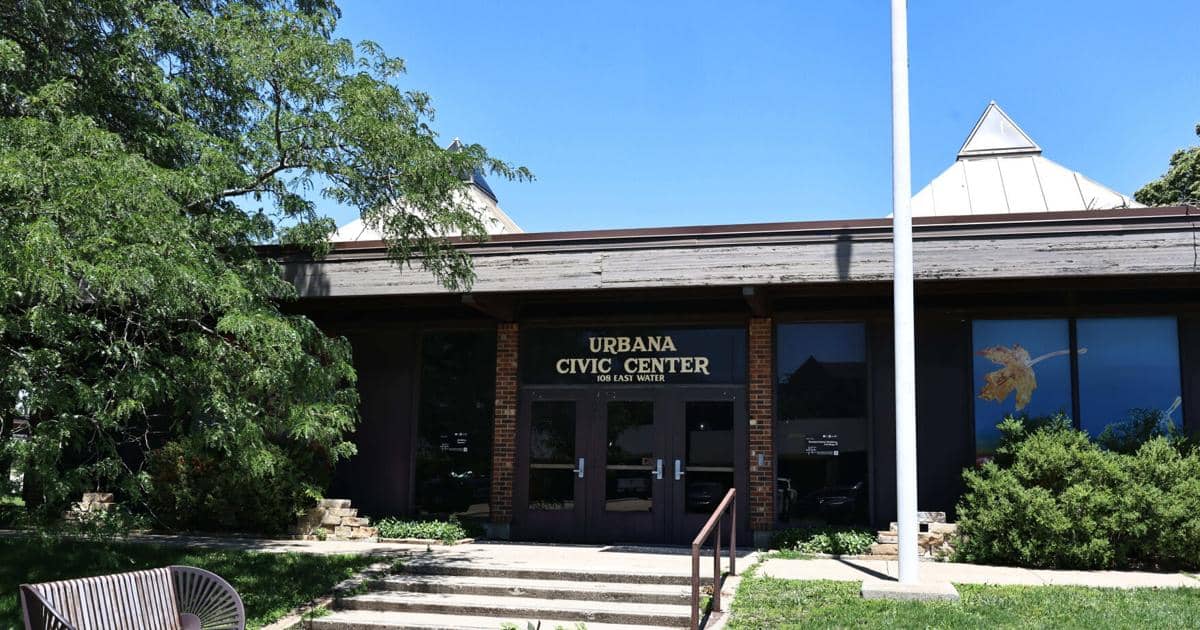


The Urbana City Council convened recently to address the potential historic designation of an older structure known as the Civic Center. In a vote recorded by local reporting sources, the governing body cast ballots that resulted in a final tally of 4-2 against granting landmark status to the property.
Vote Outcome and Immediate Rationale
The decision was reached through a formal ballot process involving members of the Urbana City Council. The vote count stands at four votes denying designation versus two votes supporting it. This specific numerical outcome reflects the current stance of the council regarding the architectural or historical criteria required for such status.
Council members provided statements following the conclusion of the voting session to clarify the intent behind the decision. Representatives on both sides of the vote addressed questions regarding what happens next and whether this action constitutes a final end to any discussion about the building's future role within the community landscape.Statements Regarding Future Possibilities
During the proceedings, council members articulated that their rejection of landmark status does not eliminate every avenue for the structure. Aldermen present at the meeting indicated explicitly that this specific vote decision doesn't preclude the possibility of the Civic Center surviving in some form.
The language used by officials suggests a distinction between formal historic designation and other potential methods of preservation or adaptive reuse. By stating that survival is not ruled out, council members imply that alternative pathways might exist outside the parameters of official landmark status granted by the city government.Implications for Preservation Efforts
The denial of historic designation carries specific implications for how the building can be managed or altered in the future. Without landmark status, property owners may face fewer regulatory restrictions regarding exterior modifications compared to properties with such designations attached to them by municipal authorities.
However, because council members stated that preservation remains a possibility under different conditions, interested parties are not necessarily barred from seeking other forms of protection or support for the structure. The distinction drawn between denying landmark status and eliminating all future potential indicates an ongoing dialogue regarding the building's place in Urbana rather than a definitive closure on its existence. The vote occurred within the context of broader discussions about how historic buildings are treated when they no longer serve their original primary function or face economic challenges. The council’s decision to deny landmark status while leaving open other options mirrors debates seen in other municipalities where officials weigh historical significance against current development needs.Local news outlets covering the event noted that the 4-2 vote was a clear expression of the majority view within the governing body at this specific point in time. The minority members who voted to support designation likely held differing views on what constituted sufficient criteria for historic protection, though their specific arguments were not detailed beyond the procedural outcome.
The administration’s response was framed around existing policy and current council mandates rather than new legislation or emergency measures. This approach ensures that future actions regarding the building will continue to be evaluated against established city guidelines unless those policies are formally changed by subsequent votes of the governing body.
Community Reactions and Next Steps
The outcome has drawn attention from various stakeholders who have an interest in the fate of older civic structures. While some groups may view the denial as a setback for heritage preservation, others might see it as an opportunity to explore alternative funding sources or community-led initiatives that do not require official landmark status.
Council members emphasized their commitment to transparency and public engagement throughout this process. By clarifying that future options remain open, they aim to maintain trust with constituents who may be concerned about the loss of historic architecture in the city center.As the matter stands now, the focus shifts to how other stakeholders interpret these comments from officials regarding survival possibilities. The next phase will likely involve monitoring any proposals for adaptive reuse or alternative preservation mechanisms that do not rely on landmark designation granted by the Urbana City Council.