


KAYO: The "Final Link" in a Pattern of State Capture
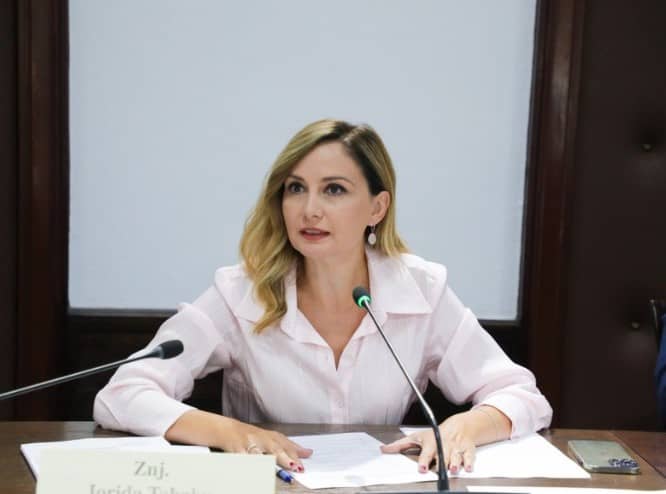
Jorida Tabaku, a prominent member of parliament for the Democratic Party, has launched a scathing critique against the Albanian government’s management of state-owned enterprises, singling out the company KAYO. In a detailed video message disseminated across social media platforms, Tabaku characterized KAYO as the "final godmother" or "final link" within what she alleges is a pervasive scheme of government corruption. Her core argument posits that the operational model championed by the current administration has systematically led to the capture of the state, fostering the creation of isolated structures designed to undermine both free economic competition and the fundamental functioning of democratic institutions.
Undermining Competition and Democratic Governance
Tabaku’s analysis extends beyond mere criticism of a single entity; she describes the organizations associated with KAYO as "islands of lawlessness." These entities, she asserts, function as opaque, closed spaces, deliberately lacking transparency regarding their utilization of public funds. A critical aspect of her accusation is that these structures are not subjected to ordinary state oversight or auditing by the Supreme State Audit, the country's highest auditing body. Instead, Tabaku claims they operate under the direct, singular control of the prime minister, to whom they are exclusively accountable. This alleged arrangement, she argues, effectively bypasses established checks and balances, concentrating power and diminishing democratic accountability.
The MP further asserted that these companies do not engage in free economic competition, a cornerstone of a healthy market economy. Instead, she claims they are integrated into the government’s inner circle, benefiting from privileged positions that distort market dynamics. This, according to Tabaku, stifles genuine private sector growth and innovation, as entities outside this 'inner circle' are unable to compete on a level playing field. Such a model, she contends, not only undermines economic fairness but also erodes public trust in governmental processes and institutions.
A Model Linked to Past Controversies
Tabaku emphasized that the case of KAYO is not an isolated incident but rather a continuation of a deeply entrenched and consistent pattern. She explicitly linked KAYO to several high-profile controversies that have previously plagued the Albanian public discourse, including cases involving incinerators, the Investment Corporation, road construction projects, and the National Agency for Information Society (AKSHI). This connection suggests a consistent methodology in how these entities are allegedly established, managed, and shielded from public scrutiny. By drawing these parallels, Tabaku implies a deliberate and systematic approach to channeling public resources and power through a network of controlled entities, rather than through transparent, competitive public procurement processes. The recurring nature of these allegations across different sectors indicates, in her view, a structural problem within the state apparatus itself.
Unchecked Financial Flows and Prime Ministerial Control
A pivotal element of MP Tabaku’s critique centers on the financial operations and the deeply concerning lack of accountability attributed to KAYO. She revealed that KAYO has reportedly established four subsidiary or related companies. According to Tabaku’s claims, these entities are uniquely exempt from standard state oversight mechanisms, effectively operating in a legal and financial grey area. The implications of this exemption are significant, as these companies reportedly receive substantial allocations from the national budget, amounting to millions of euros every single month.
Entities Beyond Supreme State Audit
The Democratic Party MP highlighted a critical and alarming gap in public information concerning these massive expenditures. She stated unequivocally that citizens are kept in the dark, with no public data available on how these millions of euros are utilized or their ultimate destination. This absence of transparency, Tabaku argues, is not accidental but integral to the "islands of lawlessness" characterization. These financial flows, she described, occur within closed spaces, reinforcing her assertion that the organizations are designed to operate without the scrutiny typically expected of entities handling public funds. The lack of oversight by the Supreme State Audit, an institution constitutionally mandated to audit public spending, creates a vacuum where accountability is severely compromised, allowing for potential misuse of taxpayer money without consequence.
Millions in Public Funds Without Transparency
Tabaku’s warning extends to the broader implications of this model, suggesting it allows for the unchecked allocation of public resources to entities that exist outside the normal checks and balances fundamental to a functioning democratic system. The direct control by the prime minister, coupled with the exemption from independent audit, paints a picture of centralized power with minimal external accountability. This alleged structure not only facilitates potential corruption but also undermines the principles of good governance, where public funds are expected to be managed with utmost transparency and for the collective benefit of citizens. The monthly transfer of millions without public justification represents a significant drain on the national treasury, with no clear benefit or accountability to the public.
Healthcare Sector Identified as Next Target
Expanding on the potential devastating consequences of this alleged corruption model, Jorida Tabaku issued a stark and specific warning regarding the future of public services, particularly the healthcare sector. She asserted with urgency that healthcare is the next critical area at imminent risk from this established pattern of governance. By drawing direct links between KAYO’s operational secrecy and the mechanisms used in previous controversies, Tabaku suggests that the methods employed to shield these companies from oversight could be systematically applied to other vital areas of state function, with healthcare being particularly vulnerable.
Broader Implications for Public Services
The Democratic Party MP’s comments frame KAYO not merely as an isolated corporate entity but as a potent symbol of a broader governmental approach that consistently prioritizes centralized control and opacity over transparency and public accountability. Her remarks fundamentally call into question the integrity and purpose of state-owned enterprises and their legitimate role within the national economy. The consistent lack of participation in free competition, coupled with the explicit absence of Supreme State Audit oversight, are cited by Tabaku as key indicators of this alleged systemic issue. The potential extension of this model to healthcare could mean a significant degradation of public health services, as resources meant for patient care, medical infrastructure, and essential supplies could be diverted or mismanaged through similar opaque structures. This would not only impact the quality and accessibility of healthcare for citizens but also further erode public trust in the state's ability to provide essential services fairly and effectively. Tabaku's warning underscores the urgency of addressing these systemic issues before they inflict irreversible damage on critical public sectors.