

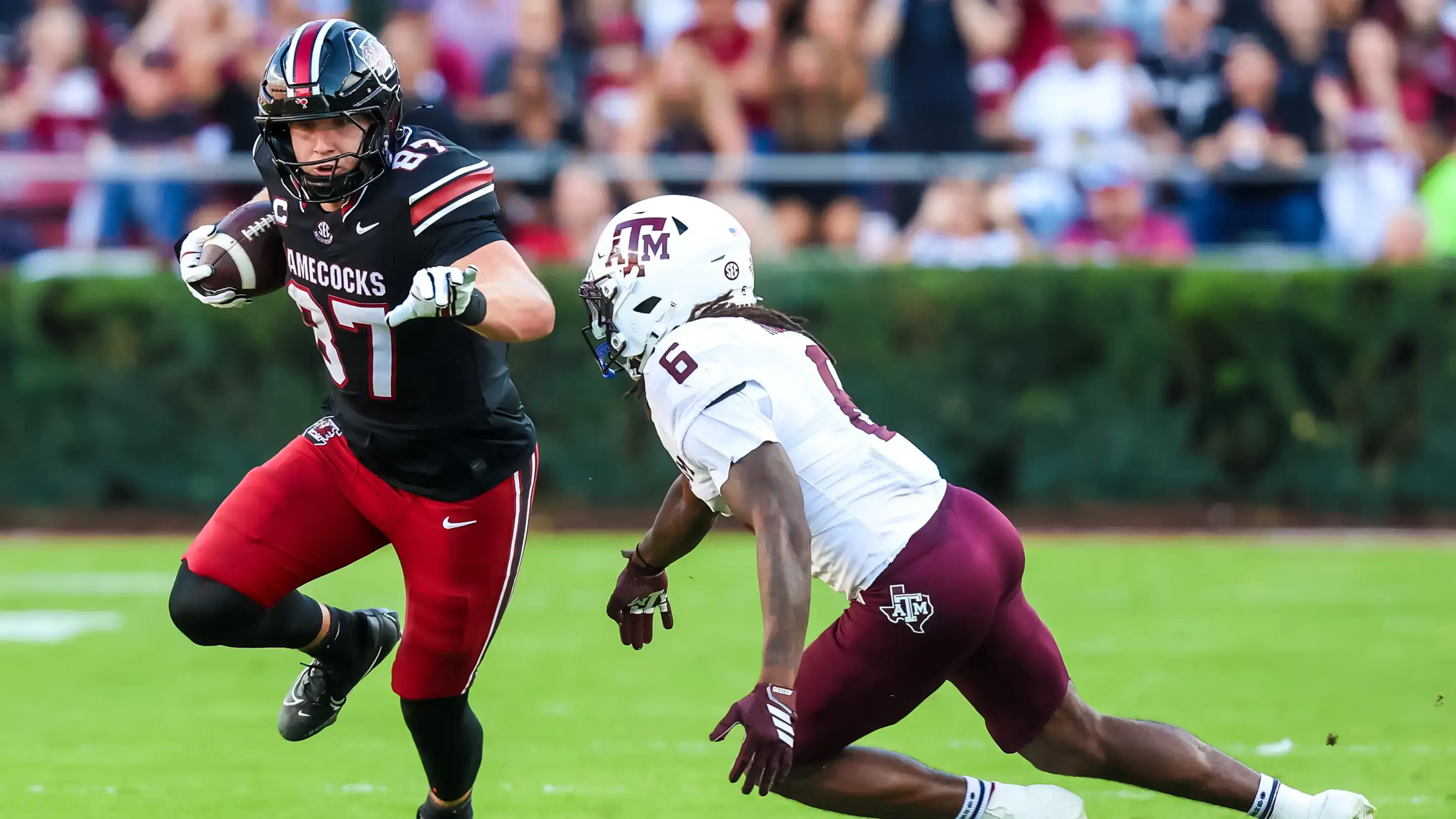

South Carolina’s Dominance Exposes Texas A&M’s Offensive Stagnation
Texas A&M’s struggles in the SEC continued to mount on Saturday as the Aggies fell to South Carolina, 17-9, at Kyle Field. The loss dropped Texas A&M under .500 for the season with only three games remaining, marking its fifth defeat in conference play [Reported/Alleged]. For head coach Mike Elko, the contest highlighted persistent offensive difficulties that have plagued his team throughout the year [Reported/Alleged].
South Carolina secured its fourth straight win with the victory, capitalizing on a Texas A&M offense that failed to generate consistent momentum. The Aggies’ inability to sustain drives and convert critical opportunities proved fatal against a Gamecocks defense that tightened in the second half.
Injuries and Individual Efforts Amidst the Loss
While the team result was disappointing, individual performances offered mixed signals regarding the health and resilience of key players. Texas A&M quarterback LaNorris Sellers played through an apparent lower-leg injury during the contest [Reported/Alleged]. The situation escalated late in the second quarter when Sellers left the game to undergo X-rays, raising immediate concerns about his availability for upcoming matchups [Reported/Alleged].
Despite the team's overall offensive woes, running back Rueben Owens provided a bright spot with 137 rushing yards against South Carolina [Reported/Alleged]. His performance included a significant 44-yard gain on the opening drive out of halftime, showcasing the potential for explosive plays when the offense found rhythm [Reported/Alleged].
Wide receiver Mario Craver also drew attention for his durability. After suffering a shake-up following an eight-yard catch, Craver returned to the field with assistance from teammates, demonstrating the physical toll of the game [Reported/Alleged]. However, these individual efforts were not enough to overcome the collective offensive failures that defined the afternoon.
Alabama’s Offensive Explosion Leaves LSU Reeling
In Tuscaloosa, No. 5-ranked Alabama delivered a crushing 31-13 defeat to LSU, handing head coach Lane Kiffin his third loss of the year [Reported/Alleged]. The Crimson Tide controlled the tempo through a balanced attack that exploited LSU’s defensive vulnerabilities, particularly in the red zone and on big plays.
Alabama recorded seven big plays against LSU, including four passes of 20 or more yards [Reported/Alleged]. One of these explosive moments came immediately following LSU’s first touchdown, as a 57-yard pass shifted the momentum firmly in Alabama’s favor [Reported/Alleged]. These long gains prevented LSU from establishing defensive stability and kept the Aggies’ offense off the field.
Turnovers and Struggles Define LSU’s Offensive Day
LSU’s offensive line struggled to protect the ball, committing three turnovers on downs in Alabama territory [Reported/Alleged]. Two of these critical failures occurred within the 10-yard line, squandering scoring opportunities that could have kept the game competitive [Reported/Alleged]. Additionally, LSU threw an interception on the Crimson Tide’s half of the field, further stifling any potential comeback efforts [Reported/Alleged].
Running back Dilin Jones was held to 56 rushing yards on 17 attempts against Alabama [Reported/Alleged]. He added seven receptions for 36 yards, but the overall ground game lacked the punch necessary to challenge the Tide’s defense [Reported/Alleged].
Wide receiver Jackson Harris led the team with 11 receptions for 166 yards and 18 targets against Alabama [Reported/Alleged]. His performance was a notable exception in an otherwise difficult day for LSU’s passing attack, which struggled to find consistent separation against Alabama’s secondary.
Quarterback Dynamics and On-Field Incidents
LSU quarterback Sam Leavitt returned to using his legs more frequently against Alabama after a recent period of relying on his arm due to a lower-body injury [Reported/Alleged]. This shift in strategy was an attempt to alleviate pressure on the offensive line, but it did not prevent the turnovers that plagued the team.
The game also saw a concerning incident involving LSU quarterback Keelon Russell. Russell took contact to the head from LSU’s Princewill Umanmielen during the game against Alabama on November 7, 2026 [Reported/Alleged]. The collision highlighted the physical nature of the contest and added another layer of complexity to LSU’s day, which was already marred by offensive inefficiencies and defensive lapses.
As both Texas A&M and LSU look ahead, the focus will shift to addressing these critical issues. For the Aggies, maintaining health among key players like Sellers and Craver is paramount. For LSU, correcting red-zone turnovers and protecting the quarterback will be essential if they hope to salvage their season against remaining opponents.