


Allegations of a Burdened Portfolio
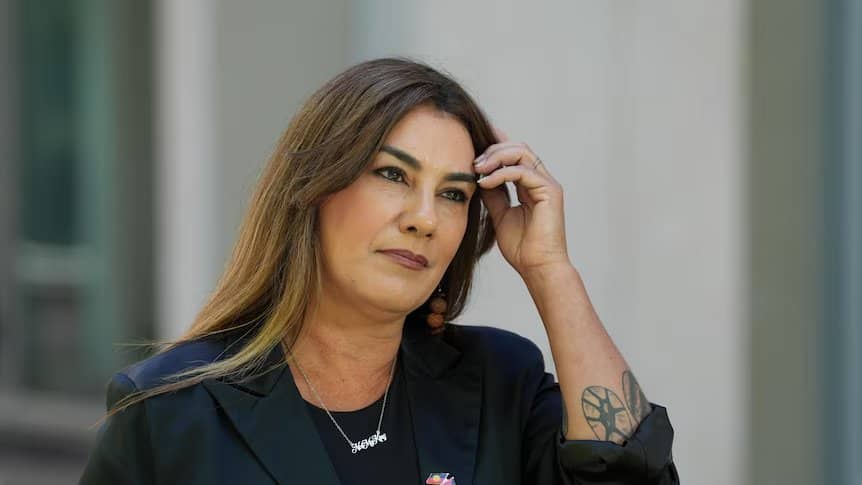
Senator Lidia Thorpe has characterized the position of the federal Minister for Indigenous Australians, Malarndirri McCarthy, as one involving a "toxic cultural load." Thorpe alleges that Minister McCarthy is being forced to address government failures across various portfolios in media appearances, a dynamic she contends places an undue and inappropriate burden on the minister. This responsibility, Thorpe argues, extends to issues that fall outside direct federal jurisdiction or competence, yet McCarthy is expected to front the media.
According to Senator Thorpe, Minister McCarthy is being "saddled" with these responsibilities, effectively making her the public face for systemic shortcomings in areas such as child protection. Thorpe's criticism highlights a perceived pattern where the Indigenous minister is compelled to manage the political fallout and public communication regarding failures that are not directly under the control of her specific portfolio, nor even solely within federal purview. This, Thorpe suggests, exacerbates the pressures on an Indigenous leader already navigating complex expectations and responsibilities.
Western Australia's Child Protection Crisis
The senator's criticism follows intense scrutiny over severe child protection issues in Port Hedland, Western Australia. Allegations, first reported by The Australian, detail vulnerable Aboriginal children allegedly left unattended in a home owned by the WA Department of Housing and Works. Reports indicate that some children were left alone for days at a time, raising urgent concerns about their safety and welfare.
While child protection is primarily a state responsibility within Australia's federal system, the issue broadly falls under the federal social services portfolio, which is overseen by Minister Tanya Plibersek. Despite this structural division of responsibilities, Minister McCarthy has been frequently speaking to the media about the matter in recent weeks, drawing attention to the federal government's engagement with the crisis.
Federal Minister's Urgent Response
In response to the grave allegations emerging from Port Hedland, Malarndirri McCarthy told reporters on Friday that she had requested the newly appointed Indigenous Child Commissioner, Sue-Anne Hunter, to "get onto this immediately." Minister McCarthy underscored the urgency of the situation, indicating plans for an Indigenous-led roundtable in Western Australia to address the systemic issues contributing to the crisis and to seek community-led solutions.
McCarthy’s prominent involvement in media statements regarding these state-level housing and child welfare failures has drawn the attention of political opponents, including Senator Thorpe, who argue that the federal government is mismanaging its role in addressing Indigenous issues. Thorpe contends that this media strategy highlights a significant disconnect between the federal leadership's approach and the specific operational realities faced by Indigenous communities, placing an unfair representational burden on Minister McCarthy.
Albanese Questioned Amidst Overseas Trip
Prime Minister Anthony Albanese faced direct questioning regarding the potential for greater federal intervention in child protection while he was in America over the weekend. Journalists pressed Albanese on whether the federal government should assume a larger, more direct role in overseeing these matters, particularly given the severity of the allegations in Western Australia and the national implications for Indigenous children.
The Prime Minister’s presence abroad coincided with the peak of media coverage regarding the Port Hedland incidents, intensifying public and media focus on the federal response. The questions raised at that time centered on whether the federal government would move beyond its current oversight and supportive role to take direct action in state-managed child protection systems, reflecting a growing demand for federal accountability in areas impacting vulnerable populations.
Strain on Indigenous Affairs Leadership
The dispute highlighted by Senator Thorpe underscores deeper tensions within the federal government regarding how Indigenous issues are communicated, managed, and prioritized. Thorpe’s comments suggest that the current approach places an unfair and disproportionate burden on Indigenous ministers to mitigate damage caused by broader government failures, often in areas not directly under their portfolio.
Senator Thorpe’s exclusive statement, published in the National Indigenous Times, frames the situation as a structural issue rather than a simple policy disagreement. She argues that requiring Minister McCarthy to address these failures in media appearances exacerbates the "toxic cultural load" placed on Indigenous leaders who are already navigating complex jurisdictional boundaries and high expectations from their communities. This structural concern points to a systemic challenge in how responsibilities are distributed and communicated within the federal framework.
As child protection remains primarily a state responsibility in Australia, the federal government’s role is largely supportive and regulatory, providing funding and setting national frameworks. However, the intensity of the media coverage surrounding the WA housing department property incident has significantly blurred these jurisdictional lines. This blurring has led to increased pressure on federal ministers, particularly the Minister for Indigenous Australians, to provide solutions and public reassurance for problems that are fundamentally rooted in state-level administrative failures and service delivery gaps.