

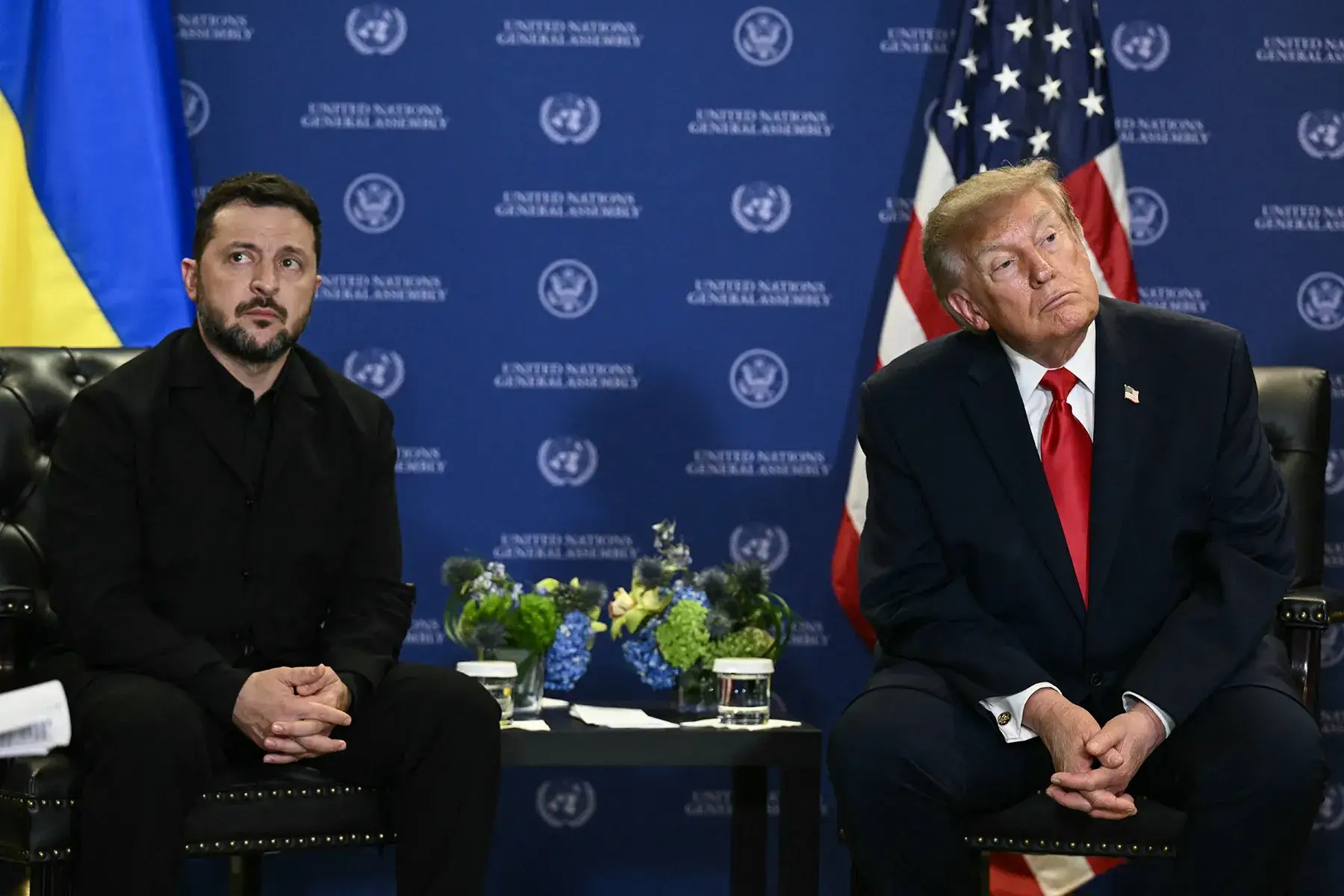

White House Policy Shifts Draw Ukrainian Criticism
The relationship between Washington and Kyiv has entered a period of crisis since President Donald Trump returned to power last year, with the White House increasingly directing blame for the war’s continuation toward Ukrainian President Volodymyr Zelensky rather than Russian President Vladimir Putin. In a television interview on Friday, Trump stated, "Zelensky is not a good guy for us to deal with," adding, "I’m not a big fan of Zelensky. They’ve destroyed that country."
The diplomatic tension intensified following a White House decision on Friday to effectively waive portions of the "Graham Bill," a recently enacted law named after Sen. Lindsey Graham that was designed to tighten economic pressure on Russia. The administration also reportedly proposed allowing Russia to sell diesel fuel to the United States, steps described by critics as undermining Ukraine while assisting Moscow.
Ukrainian officials have pushed back against these policy changes. Speaking to reporters in Kyiv on Saturday, Zelensky said, "The decision to undo all of this, to block all of it, seems wrong to me. And it definitely helps only the Russians." He added that the move "only fuels their satisfaction and their desire to keep killing people" and asserted that "this certainly does not stop the war."
Reports indicate that the administration worked with Elon Musk to throttle access to the military version of Starlink ahead of the announcement. Both the White House and Musk have denied responsibility for limiting usage.
Diplomatic Pressure and Ultimatum on Military Tactics
Multiple officials have described heated phone calls between American and Ukrainian counterparts following the White House's order to pressure Kyiv. The administration delivered an ultimatum that the United States would cut off intelligence unless Ukraine stopped attacking Russian oil refineries.
Energy Deals and Political Motives
Critics argue that Trump has been courting Moscow with energy deals and eased sanctions to try to deliver lower fuel prices ahead of midterm elections. This strategy involves recasting fallout from the Iran quagmire and his failure to end Russia’s war in Ukraine as someone else’s fault.
Social Media Attacks and Historical Context
Trump wrote on social media on Sunday that "Zelenskyy is using Diesel Refineries in Russia as a target, knowing that these attacks are seriously hurting the world diesel markets, including those in the United States," and claimed "he doesn’t want to end this war, and probably never did." He further stated that "The world has gone through the looking glass since the first time I met Zelensky in Mariupol, less than two months after his election in 2019. The man once derided for his willingness to make peace is now condemned for refusing to surrender."
Political Tensions Within Ukraine
The conflict occurs against a backdrop of internal Ukrainian politics. Zelensky visited a bustling industrial port to attend the Fifth Annual Liberation Day Parade held by the Azov Regiment, which played a central role in retaking the city from pro-Russian separatists in 2014. The Azov Regiment has become a staple of Western media coverage despite the combined far-right never pulling more than three percent of the vote in any Ukrainian election.
Historical tensions also persist; Zelensky campaigned on ending the war in Donbas by speaking directly to Moscow, leading to anger and rumors of a coup plot by right-wing factions at that time.