

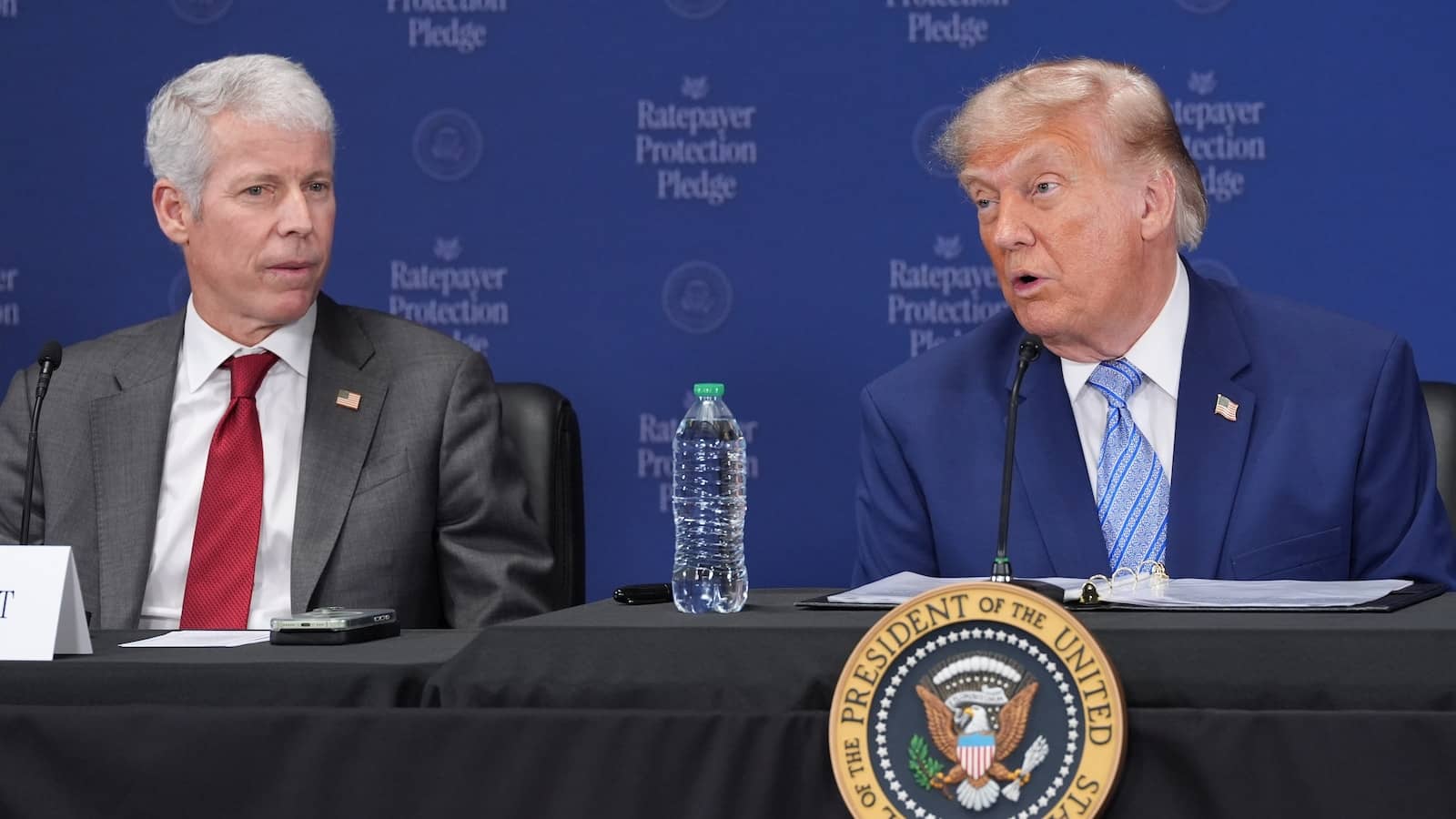

President Broadens Commitment to Shield Consumers
President Donald Trump has expanded a voluntary pledge, now involving governors and electricity companies, aimed at shielding U.S. consumers from higher utility bills. This initiative directly addresses concerns stemming from the significant power consumption of data centers, particularly those fueling the rapid growth of artificial intelligence (AI).
The Associated Press reported that President Donald Trump on Thursday, July 23, 2026, had governors and electricity companies join this voluntary initiative. The move comes as the proliferation of AI data centers becomes an increasingly pressing issue, particularly concerning its potential impact on affordability for consumers across the nation.
This expansion represents a concerted effort to address mounting concerns regarding utility costs associated with large-scale computing infrastructure. The pledge involves state leaders and energy providers agreeing to specific measures intended to mitigate financial burdens on households, which are already grappling with rising living expenses.
Addressing AI's Energy Footprint
The initiative underscores a growing recognition within the administration and among state leaders that the energy demands of AI infrastructure pose a significant challenge to existing utility grids and consumer budgets. Data centers, essential for processing the vast amounts of information required by AI, consume substantial electricity, raising questions about resource allocation and cost distribution.
Evolution of the Initiative and Key Dates
The president first announced the initial iteration of this pledge with leading AI and tech companies in March, according to Associated Press reporting from July 23, 2026. That initial commitment was made several months before the current expansion, which now includes state governors and utility firms, signifying a broadening of the initiative's scope and stakeholder involvement.
President Donald Trump spoke at the Environmental Protection Agency (EPA) on Thursday, July 23, 2026, in Washington, with Energy Secretary Chris Wright listening to proceedings, per AP Photo by Alex Brandon. This event occurred shortly after the expansion of the pledge was announced via wire story, providing a platform for the administration to discuss the broader implications of AI's energy demands.
From Tech Pledges to Broader Coalition
The initiative has evolved significantly, transitioning from an announcement primarily involving technology corporations to a broader coalition that now includes state governors and electricity companies. This shift indicates changing dynamics in how stakeholders approach energy regulation related to artificial intelligence infrastructure, moving towards a more integrated, multi-level approach to energy policy.
Public Apprehension Over Energy Costs
Voters are already grappling with affordability issues, expressing worries about competing for essential resources such as electricity, water, and land with tech companies often controlled by billionaires, according to the Associated Press. This sentiment reflects broader public concern over resource allocation in an era of rapid technological expansion, where the benefits and burdens of innovation are increasingly scrutinized.
The expansion of the pledge seeks to alleviate these public anxieties by bringing more stakeholders to the table, aiming to ensure that the economic benefits of AI do not come at the disproportionate expense of everyday consumers. However, the voluntary nature of the pledge has led to skepticism among some observers.
Uncertainty Over Actual Savings
Despite the administration's efforts, it remains unclear whether consumers would see genuine savings given that electricity demand is already growing rapidly across the United States. Analysts note that the uncertainty stems from existing pressures on utility grids, competing demands for energy resources from various sectors, and the sheer scale of power required by new AI data centers.
The voluntary pledge does not guarantee specific outcomes regarding rate reductions or cost containment measures. The complex interplay of energy markets, infrastructure development, and regulatory frameworks means that actual savings for consumers are not a foregone conclusion, even with increased participation from governors and utility companies.
Governing Rapid AI Advancement
The move highlights the rapid evolution of AI technology and the significant challenges governments face in regulating it, according to Associated Press analysis published on July 23, 2026. Governments worldwide are struggling over how to provide effective oversight for technologies evolving so quickly that traditional regulatory frameworks may become obsolete or insufficient.
President Trump described the broader social contract as being rewritten by AI during recent discussions at the EPA in Washington. The administration frames this expansion as a necessary adaptation to changing technological landscapes, aiming to balance the promotion of innovation with the imperative of maintaining consumer protections and ensuring energy affordability.
State Leaders Join the Effort
Governors are now joining electricity companies and federal leadership in implementing measures designed to protect consumers from steep utility bills associated with data center operations. This involvement brings crucial state-level perspectives into national discussions about energy policy and artificial intelligence deployment strategies, allowing for more localized and responsive approaches to energy management and infrastructure planning.