


President Links Military Force to Financial Markets
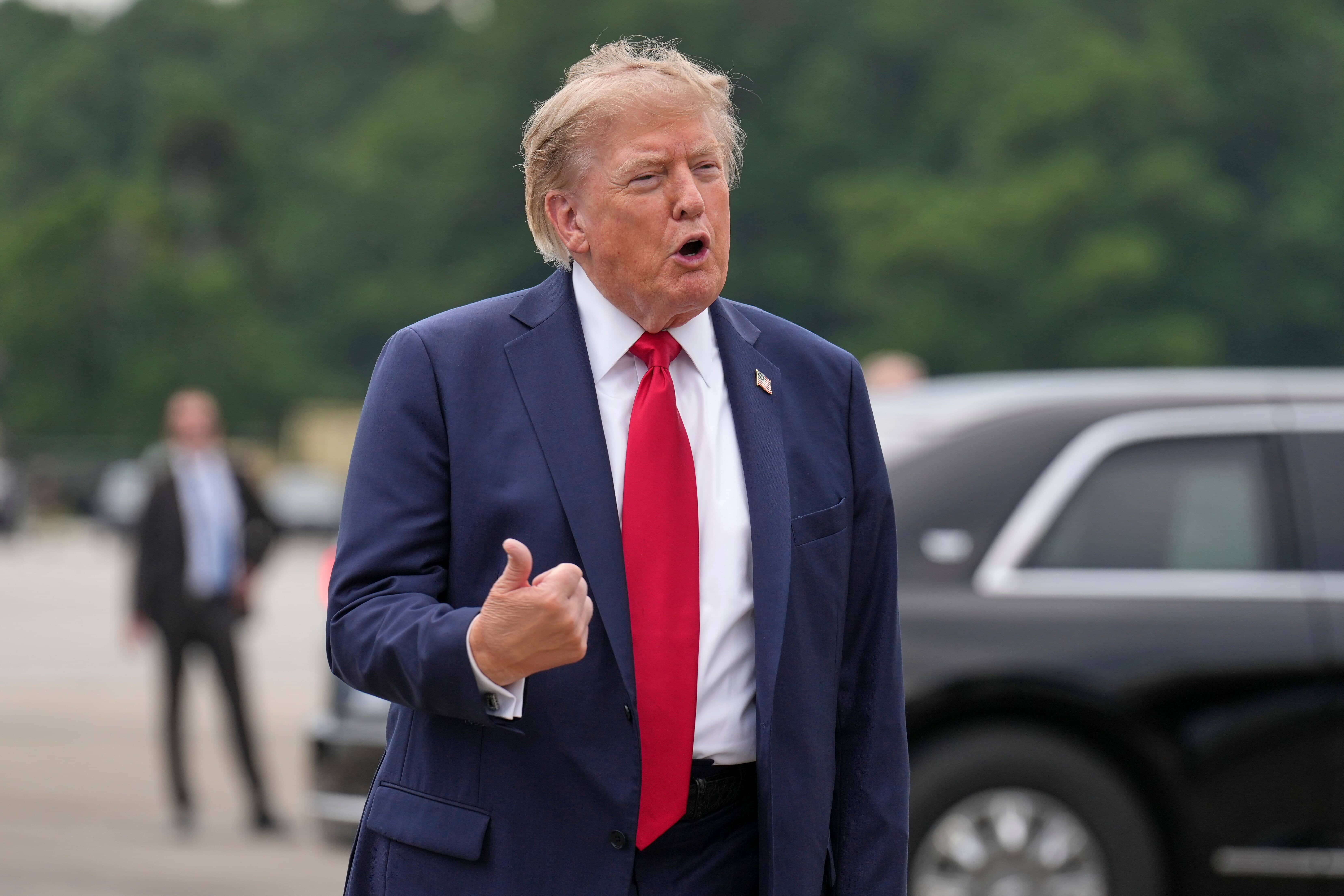
President Donald Trump suggested on Friday that the United States military could be deployed to address volatility in the bond market, a comment that immediately drew widespread criticism and mockery from online observers. The remarks were made while Trump was arriving at Myrtle Beach International Airport in Myrtle Beach, South Carolina, aboard Air Force One, a setting typically associated with presidential travel and brief press availabilities.
During the event, reporters questioned the president regarding recent fluctuations in financial markets, pressing for details on his administration's response to potential economic instability. Specifically, Trump was asked whether he had directed Treasury Secretary Scott Bessent to intervene in the bond market. The president denied issuing any such directive. He was then asked whether he and Secretary Bessent had discussed any other methods or strategies to address the liquidity problems affecting the sector, indicating a focus on the practical tools available to the administration.
Trump responded with a statement that left the specific nature of his proposal unclear and immediately sparked confusion. "We have many types of intervention; that’s one," Trump said, initially referring to potential Treasury action, which is a conventional economic tool. However, he then pivoted dramatically, stating, "The ultimate intervention is our military, and if we have to use that, we will." The White House did not immediately respond to an inquiry seeking clarification on the president's remarks, leaving the comment open to broad and often bewildered interpretation.
Conventional Market Tools Versus Unconventional Rhetoric
The president's suggestion of military intervention for bond market liquidity problems stands in stark contrast to the established mechanisms and tools typically employed to manage financial volatility. Standard economic policy discussions, which aim to maintain market stability and ensure liquidity, involve a range of fiscal and monetary tools managed by specialized institutions.
The Role of Economic Institutions
The primary bodies responsible for addressing financial market challenges in the United States are the Treasury Department and the Federal Reserve. The Treasury Department, led by the Treasury Secretary, is responsible for managing federal finances, including debt issuance and fiscal policy. The Federal Reserve, as the nation's central bank, is tasked with maintaining price stability, maximizing employment, and moderating long-term interest rates through monetary policy tools such as adjusting interest rates, conducting open market operations, and implementing quantitative easing or tightening measures. These institutions work within a framework of economic principles and established practices to address issues like liquidity shortages or excessive volatility in markets, including the bond market.
Liquidity problems in the bond market generally refer to situations where it becomes difficult to buy or sell bonds without significantly affecting their price, indicating a lack of willing buyers or sellers. Such issues can arise from various factors, including economic uncertainty, changes in investor sentiment, or shifts in monetary policy. The conventional responses involve actions designed to restore confidence, inject capital, or adjust interest rates, not the deployment of military force. Trump's remarks, therefore, represented a significant departure from this widely understood and practiced approach to economic governance.
Social Media Erupts in Satire and Disbelief
The president’s comments triggered immediate and widespread reactions across social media platforms, with many users offering satirical interpretations, while others expressed genuine confusion and concern. Critics online quickly questioned the logical connection between military force and financial liquidity, with some users jokingly likening the bond market to geopolitical threats or even military adversaries.
Online Interpretations and Mockery
One prominent commenter on the platform X, known as Acyn, captured the prevailing sentiment of absurdity by asking, "Is the bond market also 2 weeks away from a nuclear weapon?" This pointed question appeared to mock Trump’s stated reasoning for ongoing military interventions in other countries, which often cited the prevention of nuclear weapon development or other imminent dangers. The comparison highlighted the perceived disconnect between the president's rhetoric and the reality of financial markets.
Other users expressed a range of reactions, from outright disbelief to questioning the president's cognitive state. Ron Filipkowski, another widely followed user, described the president's comments as "addled," suggesting a lack of coherence or clear thought. MeidasTouch, a political commentary group, posted a query asking, "Is he going to bomb the bond market?" alongside their post, directly addressing the literal interpretation of Trump's words. User AntiToxicPeople stated, "WHAT THE ACTUAL FUCK. His brain is gone," reflecting a strong sense of shock and bewilderment.
The satirical responses further underscored the perceived absurdity. Jim Stewartson, identified as a Decelerationist, created a mock headline reading "Operation Epic Interest Rates," using emojis to highlight the perceived ridiculousness of the suggestion. This satirical framing mimicked the naming conventions of military operations, applying them to an economic scenario in a way that emphasized the incongruity of Trump's statement.
Uncertainty Surrounds the President’s Intent
It remains profoundly unclear what Trump meant by suggesting the military as an intervention for financial liquidity problems. The statement diverged so sharply from standard economic policy discussions that it left observers grappling with its intent. Critics interpreted Trump's remarks in various ways: some users took the president at his word, suggesting he was literally speaking of taking military actions against bond traders or financial institutions. Others viewed the comment as a bizarre, perhaps hyperbolic, metaphor for extreme economic pressure or a willingness to take unprecedented action. The lack of immediate explanation from the White House only exacerbated the situation, leaving the specific policy implications undefined and fueling widespread speculation.
The incident highlights the rapid spread and intense scrutiny of political commentary on digital platforms, where statements made by high-ranking officials are often dissected, debated, and shared within minutes of their delivery. The immediate and diverse online reaction underscored the significant divide between traditional, fact-based financial mechanisms and the unconventional, often ambiguous, rhetoric employed by the current administration, further blurring the lines between political discourse and economic reality.