

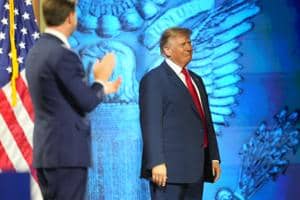

Trump's Public Taunt at Texas Convention
Former President Donald Trump addressed a crowd in Dallas, Texas, during a two-day Republican midterm convention held to rally voters ahead of the November elections. The event, a significant gathering for the Republican Party, featured prominent figures including former President Trump, Vice President JD Vance, and other Republican officials. These leaders convened with the stated purpose of celebrating their accomplishments, promoting their agenda, and mobilizing crucial support for upcoming races across the nation.
During his remarks at the convention, former President Trump directed specific comments toward Texas Attorney General Ken Paxton, who was present and speaking at the same event. Paxton, a Republican U.S. Senate candidate, found himself the subject of Trump's public critique. According to reports from The News Herald, Trump told the laughing crowd, "I don’t really like the way he looks." This remark was delivered in Paxton's home state of Texas, adding a layer of local context to the high-profile interaction.
A Gathering of Republican Leaders
The convention, which commenced on Wednesday, Sept. 9, 2026, in Dallas, was designed as a robust platform for Republican officials to energize their base. The presence of key party figures underscored the event's importance in setting the tone and direction for the midterm campaigns. Speeches and panels throughout the two days were aimed at highlighting legislative achievements and policy successes, seeking to secure voter enthusiasm for the elections scheduled for November.
Paxton's Candidacy and the Remark's Setting
Ken Paxton's attendance and his status as a Republican U.S. Senate candidate placed him squarely in the political spotlight at the Dallas convention. The former President’s comment, delivered before a receptive audience, occurred while Paxton was actively campaigning and seeking to leverage the party gathering for his senatorial aspirations. An AP Photo by Julia Demaree Nikhins captured Paxton speaking at the event, visually confirming his active participation in the proceedings that also saw him become the subject of Trump's public, personal observation.
Fundraising Setback for Senate Hopeful Paxton
The public nature of former President Trump's remark about Ken Paxton quickly resonated beyond the convention hall, reportedly impacting Paxton's ongoing campaign. The News Herald specifically reported that Trump's teasing represented a significant cost for Paxton in his efforts to use the Republican midterm convention as a platform for fundraising. The article suggested that such a high-profile, personal comment from a leading party figure could significantly influence perceptions of Paxton among potential donors, attendees, and the broader electorate.
The Cost of a High-Profile Comment
For a U.S. Senate candidate like Paxton, leveraging major party conventions for fundraising is a standard and critical component of campaign strategy. The public slight from former President Trump, particularly one focused on personal appearance, introduced an unexpected challenge. Such an interaction, widely reported, can cast a shadow on a candidate's perceived viability or standing within the party, potentially deterring financial contributions from individuals and groups who might otherwise offer support. The News Herald's analysis indicated that the public nature of the comment created an immediate and tangible financial hurdle for Paxton's campaign.
Broader Scrutiny Over Convention Claims
Beyond the personal remarks, Paxton's campaign also faced scrutiny from broader criticisms directed at the Republican Party during the convention. A Fact Focus report, published by Rutland Herald, meticulously examined what it described as false and misleading claims presented by various Republican officials throughout the two-day event. This report highlighted that while Trump, Vance, and other officials celebrated their accomplishments, they also made several assertions that were later identified as inaccurate. The publication's detailed analysis noted clear discrepancies between the statements made and verified facts, contributing to an environment of skepticism.
This critical coverage was not isolated; Cadillacnews and Daily Sentinel also covered the convention, referencing the Fact Focus analysis under similar headlines. These reports collectively underscored growing concerns about the accuracy of information disseminated by Republican leaders during the midterm rally. For candidates like Paxton, this meant navigating not only a public taunt from a party leader but also a wider narrative questioning the factual basis of the party's collective message. The juxtaposition of high-profile mockery and factual inaccuracies created a complex and challenging narrative for Republican candidates seeking to secure voter support and crucial funding.
Disputed Narratives and Midterm Mobilization
The primary objective of the two-day Republican convention in Dallas was clear: to energize the party's base and prepare for the critical midterm elections in November. Vice President JD Vance and other Republican officials actively participated in a series of speeches and panels, all strategically aimed at highlighting legislative achievements and policy successes to galvanize support. The overarching goal was to project an image of unity and strength, fostering enthusiasm among voters for the upcoming electoral contests.
Media Outlets Scrutinize Official Statements
Despite the convention's focus on unity and celebration, the event garnered significant media attention for reasons beyond its intended messaging. Coverage from multiple outlets highlighted both the personal remarks made by prominent figures and substantive disputes over the facts presented. The Rutland Herald, Cadillacnews, and Daily Sentinel, among others, provided extensive coverage that emphasized not only the political strategy at play but also critically assessed the factual accuracy of the convention's proceedings. Their reports collectively pointed to a pattern where misleading claims were presented alongside the notable personal interactions between prominent Republican figures.
Rallying the Base Amidst Controversy
The presence of numerous news outlets analyzing the convention's content indicated a significant public and journalistic interest in how Republican leaders communicated their message to voters, especially in an election year. Journalists provided coverage that delved into both the strategic efforts to mobilize the base and the veracity of the claims made. The convergence of these distinct yet interconnected elements—former President Trump's unexpected comments about Ken Paxton, the detailed analysis of false and misleading claims by Republican officials, and the subsequent implications for Senate candidates' fundraising efforts—collectively formed the central focus of media coverage surrounding the Dallas event. This created a challenging backdrop for the party's efforts to project a unified and confident front ahead of the midterms.