

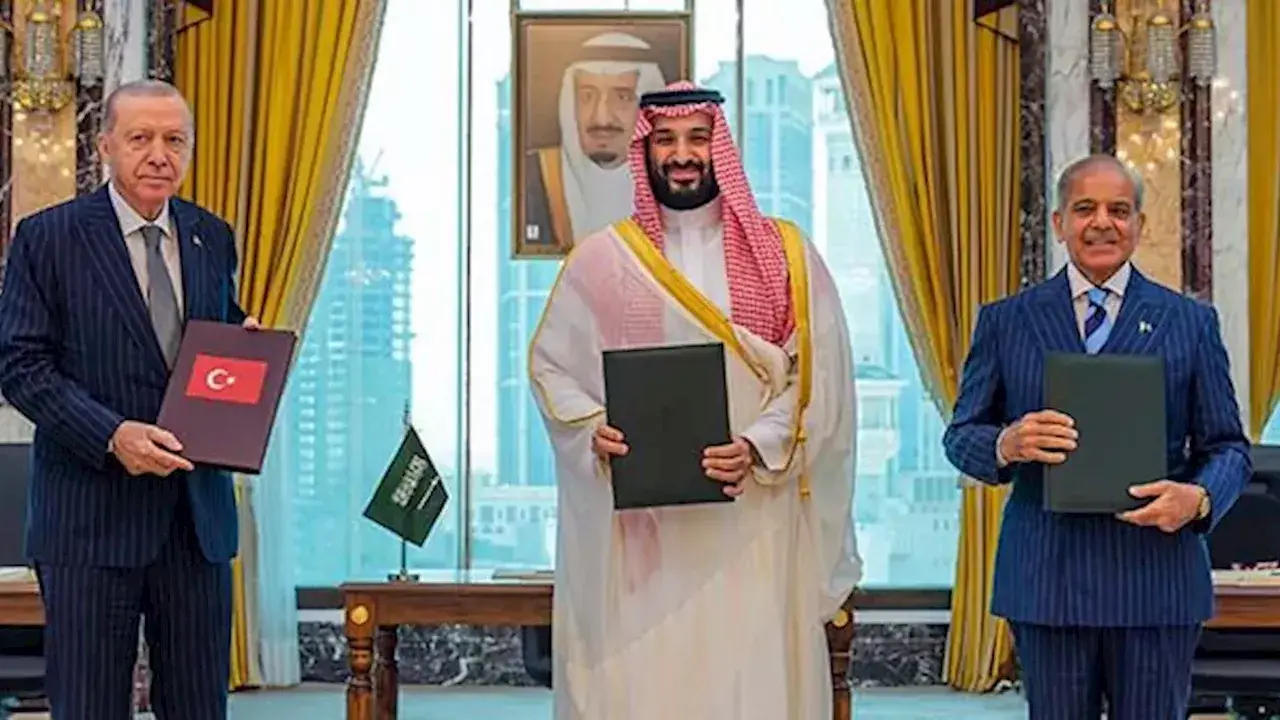

Parliamentary Approval of Trilateral Security Framework
The Turkish parliament officially ratified the Mecca Joint Defense Agreement on Thursday, solidifying a strategic security framework between Ankara, Riyadh, and Islamabad. The legislative action finalizes a pact that was initially negotiated in August, establishing a formal alliance among the three Muslim-majority nations.
The ratification process concluded the diplomatic efforts to create a unified military strategy aimed at addressing common threats in the Middle East. Government officials described the agreement as a mechanism to stabilize the region amid shifting geopolitical alliances.
Collective Defense Provisions and Obligations
The Mecca Joint Defense Agreement comprises sixteen articles that outline specific obligations for each signatory nation. A central provision of the pact establishes a collective defense protocol similar to Article 5 of the North Atlantic Treaty Organization (NATO).
Under this clause, an armed attack against any one member state is considered an attack against all three allies. This mutual defense commitment is designed to deter hostile actors and provide a unified security umbrella across the region.
Clarifications on Military Deployment
Turkish Foreign Minister Hakan Fidan stated that the pact is strictly defensive in nature and does not authorize unprovoked military incursions into Yemen or other conflict zones. Government officials further clarified that there are no current plans to send Turkish combat forces into Yemen.
Fuat Oktay, chair of foreign affairs for the ruling AKP party, addressed concerns regarding future troop movements by promising that any deployment would require explicit approval from the Turkish parliament.
Opposition Concerns and Regional Implications
During parliamentary debates, opposition party leader Murat Emir argued that the agreement was intended to deploy Turkish soldiers into Yemen’s deserts. Emir cited historical burdens from the Ottoman Empire in his critique of the pact.
Some Turkish lawmakers expressed concern that the agreement could inadvertently draw Turkey into a conflict between India and Pakistan. This worry followed a cross-border battle in May 2025 after a terrorist attack in Kashmir, raising questions about the pact's potential entanglement in South Asian tensions.
Initial Regional Tensions
The ratification comes shortly after Houthi insurgents launched drones and missiles at Saudi cities and infrastructure. Despite these attacks occurring shortly after the agreement was negotiated, Turkey and Pakistan did not engage in military responses during the initial phase of the hostilities.