Full story
The Paradox of Value Creation in Oleochemicals
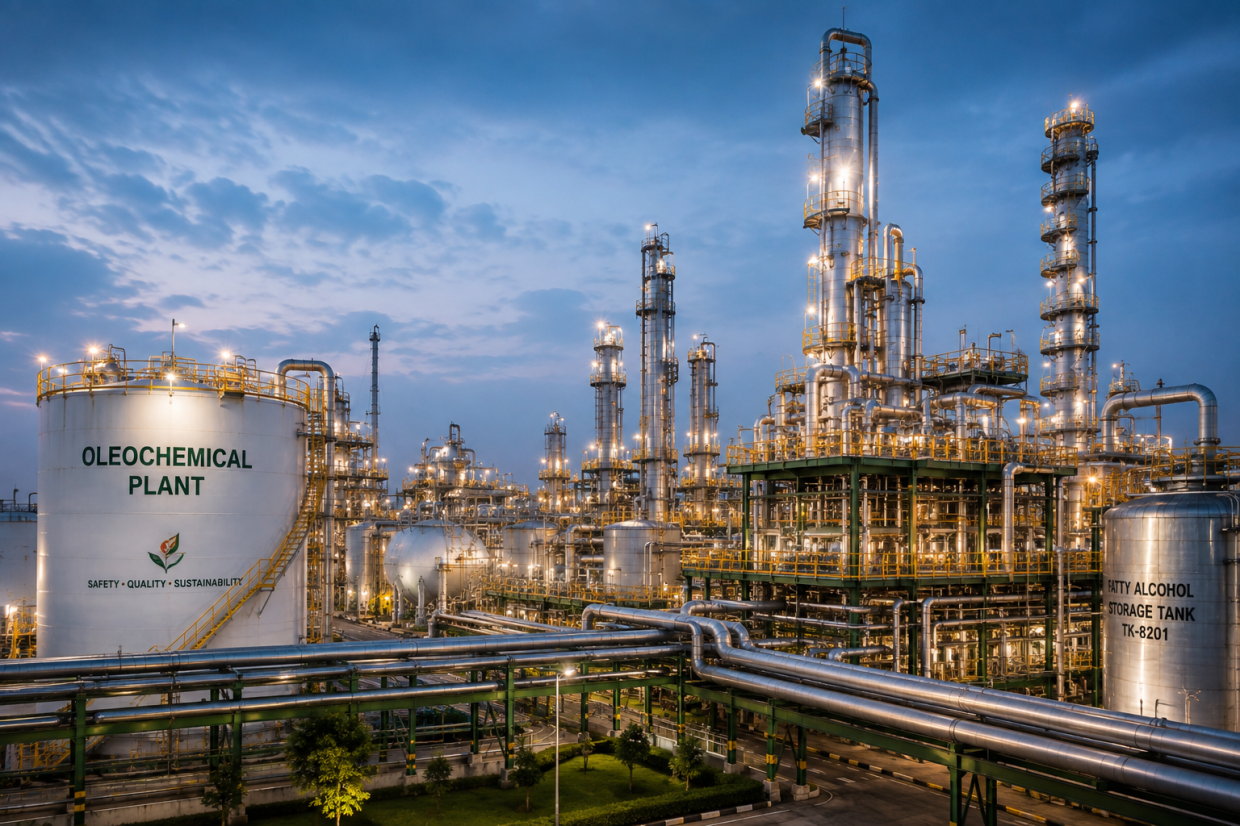
The industrial landscape of oleochemicals presents a distinct economic phenomenon characterized by the conversion of basic agricultural outputs into complex, high-value commercial products. This process is defined by its ability to generate significant financial returns from materials that are often perceived as low-cost or rudimentary in their raw state.
According to reporting by The Star, published on August 25, 2026, the industry operates through a mechanism that transforms raw materials into valuable end products. The publication describes this specific industrial activity as paradoxical. The term "paradoxical" is used to highlight the counterintuitive nature of the value addition process, where inputs derived from agricultural sources are elevated in economic worth through chemical processing.
The article notes that this transformation involves moving from what is described as "plantation mud" into the realm of oleochemicals. This phrasing underscores the origin of the feedstock, which is rooted in agricultural plantations, and contrasts it with the sophisticated nature of the final chemical products. The narrative suggests that the journey from these raw, earth-bound materials to refined industrial goods contains an unexpected element of value generation.
This coverage is part of a larger editorial series titled "From molecules to value." The series appears to examine various facets of industrial economics and material science, focusing on how fundamental units are manipulated to create economic utility. The specific installment published on Tuesday, August 25, 2026, centers on the oleochemical sector.
Industrial Context and Economic Implications
The oleochemical industry relies heavily on plant-based raw materials. These materials are sourced from agricultural operations, which are referred to in the source text as "plantation" contexts. The starting point of the value chain is described vividly as "plantation mud," indicating the unrefined state of the biomass before processing begins.
The transformation process itself is the core subject of the reporting. It involves taking these raw agricultural inputs and processing them into oleochemicals. Oleochemicals are chemical products derived from fats and oils, typically obtained from plants such as palm, coconut, or rapeseed. The industry's economic model depends on the ability to extract and modify molecules within these fats and oils to create derivatives used in a wide range of applications, including soaps, detergents, cosmetics, and lubricants.
The description of this process as "paradoxical" implies that the financial return on investment is disproportionately high relative to the perceived initial value of the raw materials. While the starting material may be abundant and inexpensive, the resulting chemicals command premium prices in the global market. This disparity between input cost and output value is central to the industry's profitability.
The article does not provide specific quantitative data regarding production volumes, profit margins, or exact chemical compositions within this brief insight piece. Instead, it focuses on the conceptual framework of value creation. The reporting emphasizes the qualitative shift from raw agricultural matter to refined industrial commodities.
Broader Industry Trends and Reporting
The publication of this article coincides with other global business news coverage. Related stories listed in the same section of The Star include reports on football, specifically addressing racist commentary about Black players at the World Cup, and geopolitical analysis regarding the Thai-Cambodia conflict.
Another related story mentions a policy analyst citing a billion-dollar toll from the Thai-Cambodia conflict, indicating a broader editorial focus on economic impacts of regional issues. Additionally, there is coverage of Xinhua commentary regarding EU regulatory changes and their potential risks to market stability.
These adjacent stories suggest that the business section of The Star covers a wide array of topics, from sports ethics to international trade regulations. However, the specific article "From molecules to value" remains focused on the industrial process within the oleochemical sector.
The series title, "From molecules to value," serves as an overarching theme for these insights. It suggests a methodological approach to analyzing different industries by tracing the path of materials from their fundamental molecular state to their final economic valuation. The oleochemical example illustrates this principle by showing how simple fatty acid chains can be engineered into complex products with significant market demand.
The reporting maintains a neutral tone, describing the industrial process without offering personal opinion or speculative prediction about future market trends. It simply states the existence of the paradoxical value transformation and attributes the description to the author's perspective within the published piece.
The article concludes its immediate narrative by reinforcing the connection between the raw agricultural origins and the high-value chemical outputs. It leaves the reader with the understanding that the oleochemical industry is built on the efficient and profitable conversion of basic plant-based molecules into essential industrial components.
No further details regarding specific companies, production facilities, or technical methodologies are provided in the source text. The focus remains strictly on the conceptual overview of the value creation process as reported by The Star.