

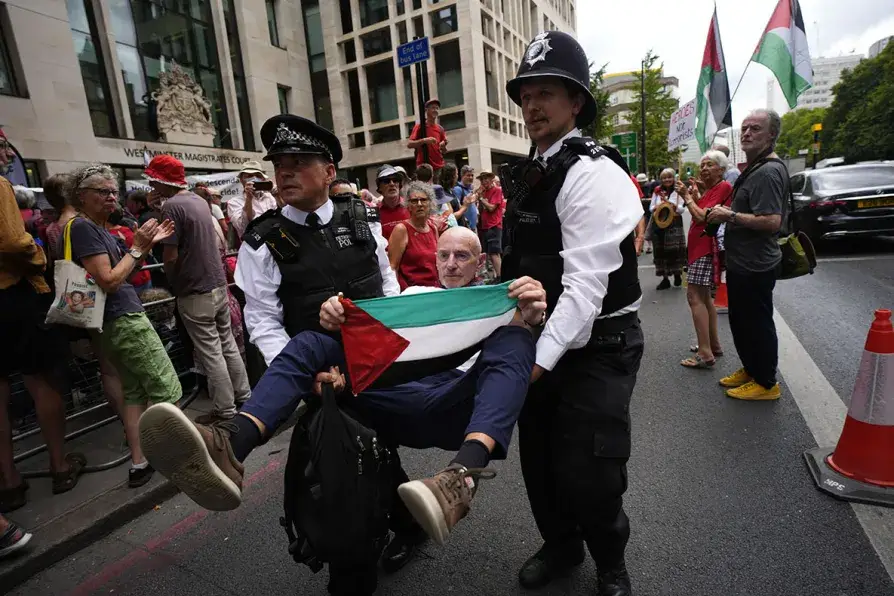

Sanctions Prompt Immediate Backlash
The British government's decision to impose fresh sanctions on Israel has generated a sharp and immediate response from the country's supporters within the United Kingdom. According to reports, the intensity of this reaction underscores the perceived weight and significance of the penalties introduced by Ed Miliband earlier this week. The furious response from these groups suggests that the measures are viewed as a substantial escalation in diplomatic pressure.
Observers note that the anger directed at the new policy serves as an indicator of how deeply the sanctions impact the interests of those who advocate for Israel. The scale of the outcry highlights the political sensitivity surrounding UK foreign policy decisions regarding the Middle East conflict. Critics argue that this backlash confirms the effectiveness of the government's approach in targeting key stakeholders.
Allegations of Political Hypocrisy
The controversy surrounding the sanctions has also brought to light accusations of inconsistency among right-wing politicians. According to editorial commentary published by Morning Star, these political figures continue to express verbal support for a "two-state solution" while simultaneously opposing punitive actions against Israel.
The publication argues that this stance demonstrates a clear contradiction in their policy positions. By rejecting measures designed to penalize Israel for what it describes as systematic efforts to undermine the possibility of a two-state outcome, these politicians are accused of engaging in hypocritical behavior. The commentary suggests that their refusal to support economic or diplomatic penalties contradicts their stated political goals.
Criticism Extended to Labour Government
The critique of hypocrisy is not limited solely to right-wing opponents. According to the same source, the Labour government shares this inconsistency to a significant degree. The editorial asserts that pointing out this shared hypocrisy among Labour officials is accurate and relevant to the current political discourse.
This assessment implies that the ruling party's approach to sanctions may also be viewed by some as lacking in coherence or moral consistency. The argument posits that if the two-state solution is a genuine objective, then penalizing actions that threaten it should be a logical policy extension. The failure to align rhetoric with action is cited as a point of contention for critics across the political spectrum.
Context of the Two-State Debate
The sanctions are framed by their supporters and opponents within the broader context of the ongoing conflict. The Morning Star editorial links the penalties directly to Israel's actions, which it characterizes as a systematic effort to destroy the prospects for a two-state solution. This characterization provides the justification for the government's decision to implement new restrictions.
Supporters of Israel and their British allies view these sanctions as unjustified interference. Their incensed reaction indicates that they perceive the penalties as a direct threat to their political or strategic interests. The intensity of this response is interpreted by critics as evidence that the sanctions are hitting close to home for pro-Israel lobbying groups.
Political Implications of the Response
The timing of the sanctions, announced in September 2026, places them within a specific period of heightened diplomatic activity. The reaction from various political factions highlights the deep divisions within British society regarding foreign policy toward Israel and Palestine.
For right-wing politicians, the challenge lies in reconciling their support for a two-state solution with their opposition to measures that could pressure Israel into negotiations. Critics argue that without such pressure, the rhetorical support for peace remains empty. The Labour government faces similar scrutiny, as its position is seen by some as failing to take decisive steps despite its stated ideals.
The ongoing debate reflects broader tensions in UK foreign policy. As the sanctions remain in place, the focus shifts to how different political actors will respond to their long-term effects. The immediate fury from Israel's supporters serves as a barometer for the potential resistance to future diplomatic maneuvers aimed at resolving the conflict.