

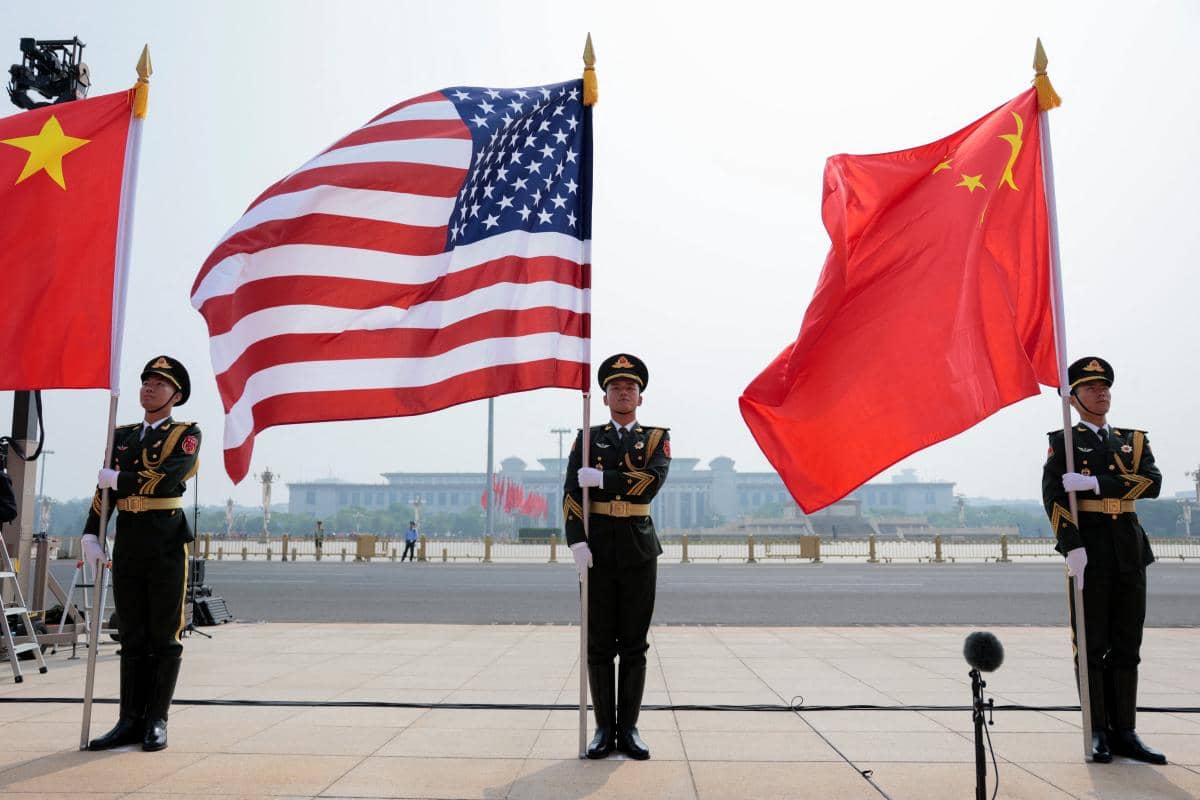

The G-2 Concept Defined
The term "G-2" refers to the bilateral relationship between the United States and China, recognizing both nations as the two most significant global powers. This concept emerged in geopolitical discourse to highlight the unique and profound impact their interactions have on international affairs, global economics, and strategic stability. It posits that the collective influence of these two countries is unparalleled, shaping a wide array of global challenges and opportunities. The G-2 framework is not an official designation but rather an analytical construct used by policymakers, academics, and analysts to understand the contemporary international system.
The core premise of the G-2 concept is that the United States and China possess an exceptional degree of power, encompassing economic, military, technological, and diplomatic dimensions. This concentration of power means that their actions, policies, and the nature of their relationship inevitably reverberate across the globe, affecting everything from trade flows and technological standards to climate change initiatives and regional security dynamics.
Global Influence and Power Dynamics
Both the United States and China exert substantial global influence, albeit through different historical trajectories and strategic approaches. The United States, as a long-standing superpower, maintains a vast network of alliances, a dominant military presence, and a leading role in many international institutions. Its economy remains the world's largest by nominal GDP, and its technological innovation continues to drive global advancements.
China, on the other hand, has experienced rapid economic growth over the past four decades, becoming the world's second-largest economy and a major global trading power. Its Belt and Road Initiative has expanded its economic and strategic footprint across continents, while its military modernization efforts have significantly enhanced its capabilities. China's growing technological prowess, particularly in areas like artificial intelligence and 5G, further solidifies its position as a global influencer. The combined economic output of these two nations represents a substantial portion of the global economy, and their respective military budgets are the largest in the world.
The Reality of Non-Domination
A fundamental aspect of the G-2 reality is the understanding that neither the United States nor China can unilaterally dominate the other. Despite their immense power, each nation possesses sufficient capabilities and strategic depth to prevent the other from imposing its will entirely. Economically, both countries are deeply intertwined through trade, investment, and global supply chains, creating a degree of mutual dependence that complicates any attempts at complete economic coercion or isolation.
Militarily, while the United States maintains a technological edge in certain domains, China's anti-access/area denial (A2/AD) capabilities in its near seas and its growing strategic arsenal present a formidable deterrent. Furthermore, the sheer scale of their populations, domestic markets, and national resources ensures a robust internal resilience against external pressures. Diplomatically, both nations command significant blocs of support and influence within various international forums and regional organizations, making it challenging for one to consistently outmaneuver the other on the global stage. This balance of power necessitates a recognition of limits to unilateral action.
The Inability to Exclude
Another critical dimension of the G-2 concept is the recognition that neither the United States nor China can effectively exclude the other from global affairs, economic systems, or strategic regions. Attempts by either nation to fully isolate the other have proven to be impractical due to the pervasive nature of their global integration.
- Economic Interdependence: Despite calls for decoupling, the global economy remains deeply interconnected, with both nations serving as crucial markets, suppliers, and investors for countless countries. Excluding one from global trade or financial systems would inflict significant costs on the other and on the global economy as a whole.
- Technological Interconnectedness: Global technological ecosystems often involve components, research, and development from both countries. Complete technological separation is a complex and costly endeavor, with implications for innovation and global standards.
- Global Challenges: Issues such as climate change, pandemics, nuclear proliferation, and financial stability require the cooperation, or at least the tacit acknowledgment, of both the United States and China to be effectively addressed. Neither nation can solve these transnational problems alone, nor can they exclude the other from the global efforts required.
- Strategic Regions: Both powers have legitimate and significant interests in various strategic regions, including the Indo-Pacific, Africa, and Latin America. Attempts by one to entirely exclude the other from these regions would likely lead to heightened tensions and instability, rather than successful isolation.
Implications for International Relations
The G-2 reality, characterized by mutual influence, non-domination, and the inability to exclude, has profound implications for the conduct of international relations. It suggests that a framework of continuous engagement, whether through managed competition or selective cooperation, is essential to maintain global stability and address shared challenges. The relationship is often described as a complex interplay of rivalry and interdependence, where outright confrontation carries prohibitive costs for both parties and the rest of the world.
This situation underscores the importance of diplomatic channels and mechanisms for communication to prevent miscalculation and manage crises. It also highlights the need for other nations to navigate a global landscape where the actions and interactions of these two major powers are central. The G-2 dynamic shapes multilateral institutions, regional security architectures, and global economic governance, necessitating adaptive strategies from all international actors. The ongoing evolution of this relationship remains a primary determinant of the future international order.