Full story
Washington Summit Yields Trade Extension Without Resolving Core Disputes
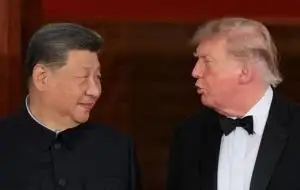
President Donald Trump and Chinese President Xi Jinping met in Washington last week for a summit that resulted in an extension of the trade truce between the two nations until January 10, 2027. The meeting provided both sides with "breathing space" rather than a comprehensive settlement of their ongoing economic and strategic disagreements.
The diplomatic engagement was characterized by Reuters as a "glitzy gift to China," though analysts cautioned against interpreting immediate takeaways from the event due to the short shelf life often associated with such high-level diplomatic agreements. Agreements reached during these summits are frequently revised or unravel following subsequent crises, negotiations, or elections.
Despite the ceremonial nature of the summit, the phrase "constructive relationship of strategic stability" emerged from the discussions between Trump and Xi. For Beijing, this terminology represents more than diplomatic vocabulary; it serves as a framework for defining how American power should behave relative to China’s interests.
The summit did not resolve fundamental disputes between the two powers, particularly regarding Taiwan. Intense technological competition remains a central feature of the bilateral relationship, with artificial intelligence identified as an emerging arena of both rivalry and potential cooperation. Additionally, China continues to maintain leverage in rare earths and other critical minerals, factors that complicate any broader strategic alignment.
New Delhi Navigates Rival Powers Through BRICS Engagement
While Washington and Beijing recalibrated their relationship, New Delhi pursued its own diplomatic objectives through separate channels. On September 12 and 13, India engaged with Xi Jinping at the BRICS summit, aiming to protect its interests within a grouping where China and Russia remain major players.
The question of what this recalibration means for New Delhi has become particularly important as Washington and Beijing attempt to manage their own complex dynamic. Vijay Gokhale, India’s former foreign secretary, wrote in the Times of India that Trump approaches diplomacy through personal chemistry and political theatre. In contrast, Xi participates in that theatre without abandoning China's longer strategic objectives.
This divergence in diplomatic styles underscores the challenges New Delhi faces as it navigates between two competing powers. While the US-China trade truce offers temporary relief, the underlying structural tensions remain unresolved. For India, the engagement at BRICS was not merely about maintaining ties with a rival but about safeguarding its strategic autonomy in a multipolar world.
Bilateral Tensions and Border Security
India’s relationship with China remains fraught with tension despite recent diplomatic overtures. New Delhi is currently engaged with China bilaterally, and while political engagement has resumed, the relationship has not returned to the pre-Galwan comfort zone. The border remains the central security problem for both nations, serving as a constant reminder of the deep-seated mistrust that persists.
As the US-China summit concludes with extended truces and vague frameworks for stability, India must continue to balance its strategic interests carefully. The lack of resolution on core disputes like Taiwan and technology competition suggests that the global order remains in flux. For New Delhi, the ability to engage with both powers independently, as seen at the BRICS summit, is crucial for maintaining its position in the international arena.
The extension of the trade truce to January 2027 provides a window of opportunity, but it does not guarantee long-term stability. As China continues to leverage its dominance in critical minerals and AI, India must navigate these challenges with precision. The strategic value of India lies in its ability to remain an independent actor, capable of engaging with both the US and China without being drawn into their respective spheres of influence.