

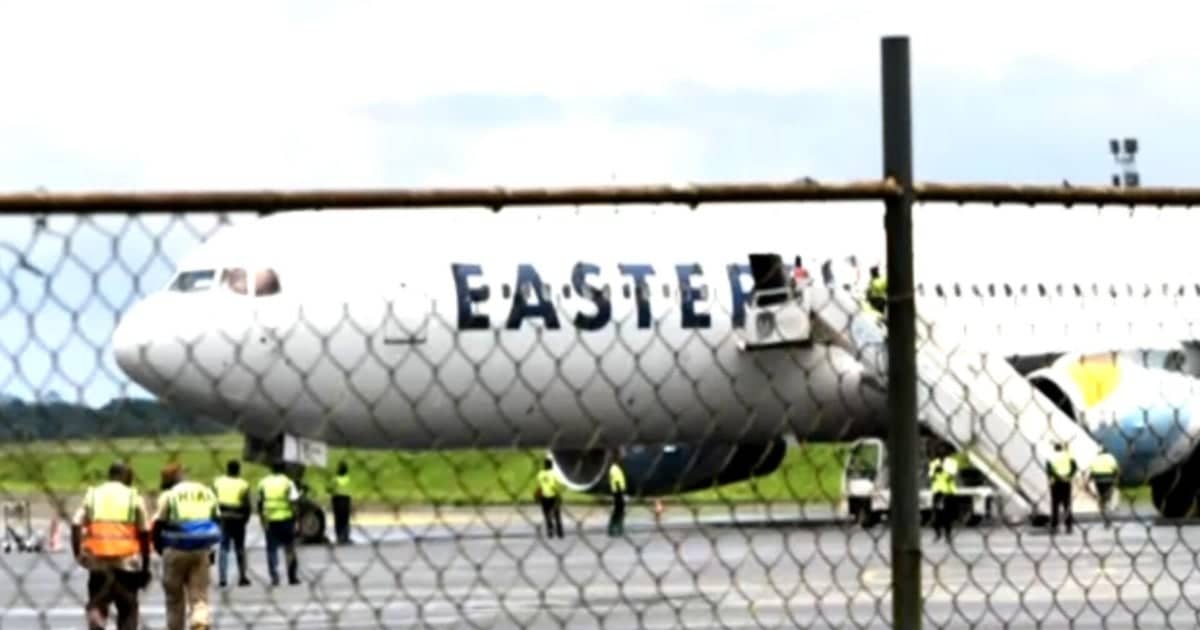

Deportees Refuse to Exit Plane in Liberia
The western African nation of Liberia recently became the destination for its first group of "third country" deportees from the United States, an arrival that was immediately marked by significant resistance from some individuals on board. The flight, carrying approximately 20 deportees, touched down in Liberia on a Thursday, as first reported by CBS News.
Upon the aircraft's arrival on Liberian soil, U.S. officials confirmed to CBS News that a notable portion of the passengers refused to deboard the plane. This unexpected act of defiance introduced an immediate operational complication for the authorities involved. While the specific motivations behind the deportees' refusal were not detailed in the initial reports, the incident starkly underscores the inherent logistical and human challenges associated with repatriating individuals to nations where they possess no established connections, familial ties, or prior residency.
The confirmation of the refusal to exit the plane came directly from American authorities, who verified the details to CBS News correspondent Camilo Montoya-Galvez. This official account served as the primary source of information regarding the incident, highlighting that despite the plane having landed, the deportees chose to remain on board the aircraft, creating an unusual situation on the tarmac in Liberia.
This event in Liberia is particularly significant as it represents the initial execution of a specific U.S. deportation initiative involving individuals sent to countries with which they have no prior relationship. The resistance encountered during this inaugural transfer points to potential difficulties that may arise as the Trump administration continues to implement its broader strategy of "third country" deportations.
The Trump Administration's Controversial Deportation Strategy
The deportation of these individuals to a nation where they have no ties is part of a broader, more aggressive strategy pursued by the Trump administration to remove people from the United States. This approach, often termed "third country" deportation, diverges from traditional repatriation methods by sending individuals not to their countries of origin or citizenship, but to other nations willing to accept them.
This policy necessitates the U.S. government to negotiate complex diplomatic arrangements with various nations. The underlying rationale for this strategy is to expand the scope of deportations, particularly for individuals who might otherwise be difficult to remove due to a lack of clear nationality documentation or refusal by their home countries to accept them.
Forging Agreements with Unconnected Nations
According to CBS News reporting, the Trump administration has brokered deals with at least 35 countries to facilitate these unconventional deportations. These agreements form a critical legal and diplomatic framework, allowing the United States to transfer individuals to nations that are not their native lands. This extensive network of agreements signifies a concerted effort to broaden the mechanisms of immigration enforcement beyond established international protocols for repatriation.
The selection of Liberia, and other nations involved in these deals, relies on bilateral agreements specifically designed for this purpose, rather than traditional extradition or repatriation protocols that typically require a direct link of nationality or residency between the deportee and the receiving country. These arrangements enable the U.S. to bypass conventional channels, which often demand proof of citizenship or residency in the destination nation, thereby expanding the government's ability to deport individuals.
Implications for Individuals Without Ties
The term "third country" is specifically used to describe deportees who possess no established connections—be it familial, cultural, or residential—to the destination nation. In this instance, Liberia served as the receiving country for the first group of such deportees from the United States, highlighting a new phase in U.S. immigration policy.
This practice has drawn considerable international attention and scrutiny, largely due to concerns regarding the welfare of individuals sent to unfamiliar environments where they lack support networks or a foundational understanding of the local culture and legal systems. For the approximately 20 individuals who arrived in Liberia, their status as having no ties to the country distinguishes them sharply from deportees being returned to their home countries, raising questions about their integration and long-term prospects in an unfamiliar land.
Operational Challenges of the Initial Transfer
The flight carrying the deportees landed on a Thursday, initiating what was intended to be a routine process of transferring these individuals into Liberian custody. However, the refusal by some passengers to leave the plane upon landing introduced an immediate and significant operational complication for both U.S. and Liberian authorities. This act of resistance transformed a planned transfer into an unforeseen standoff, requiring immediate resolution.
CBS News reporter Camilo Montoya-Galvez provided details regarding the scope of the administration's deportation efforts, noting the extensive network of agreements with at least 35 countries. While these deals form the legal and diplomatic framework enabling the transport of individuals to places where they have no prior residence or citizenship, the incident in Liberia underscores that securing agreements is only one part of the challenge. The physical act of transferring individuals to third-country destinations can, and in this case did, encounter direct resistance from the deportees themselves, adding layers of complexity to the execution of the policy.
The logistical hurdles presented by the refusal to deboard highlight the practical difficulties inherent in implementing a policy that sends individuals to countries where they have no vested interest or connection. Such resistance can lead to delays, require additional resources, and potentially complicate future transfers under similar agreements.
The Scope of Third-Country Removals
The deportation of approximately 20 people to Liberia constitutes the first round of this specific program, marking a significant operational step in the Trump administration's immigration enforcement strategy. The use of "third country" agreements allows the United States to bypass traditional repatriation channels, which are often constrained by international law requiring proof of citizenship or residency in the destination nation.
U.S. officials confirmed the details of the landing and the subsequent refusal to deboard, acknowledging the immediate challenge. The administration's strategy involves leveraging deals with a wide range of nations, currently totaling at least 35, to facilitate these removals. The reception of this inaugural group in Liberia, despite the immediate resistance from some of those being deported, signifies the practical activation of a policy designed to broaden the reach of U.S. deportation efforts.