


Escalation Follows Drone Incident Near Critical Waterway
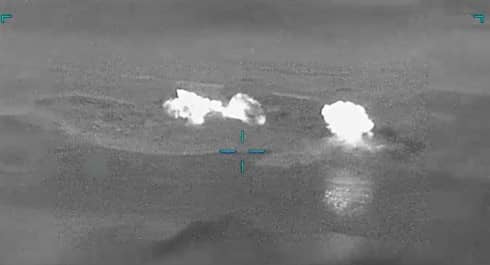
The United States conducted additional military strikes against multiple Iranian targets on Saturday, marking a further escalation in regional tensions following an alleged Iranian drone attack on a commercial vessel. The action was taken after US Central Command (CENTCOM) stated that Tehran had failed to adhere to a previously established ceasefire agreement.
According to CENTCOM, the latest military operation was directed by the Commander in Chief and targeted sites within Iran. The command indicated that Iranian forces had been given an opportunity to honor the ceasefire but instead chose to escalate the situation by launching a one-way attack drone against a commercial oil tanker.
The incident occurred at 4:30 a.m. ET, when the Panama-flagged tanker M/T Kiku was struck while transiting near the Strait of Hormuz. The vessel was carrying more than two million barrels of crude oil at the time of the attack. The Strait of Hormuz serves as one of the world's most critical maritime trade routes for energy supplies.
Washington described the drone strike on the M/T Kiku as a direct provocation that necessitated a military response. US officials emphasized that the previous day's retaliatory strikes were intended to enforce a ceasefire, which Iran allegedly violated with this subsequent attack.
Military Objectives and Strike Details
In an official statement posted on the social media platform X, CENTCOM outlined the specific objectives of the Saturday operation. The command reported that US military aircraft targeted Iranian military surveillance infrastructure, communication systems, air defense sites, drone storage facilities, and minelayer capabilities.
The scope of the retaliation extended beyond aerial bombardment. In a separate post, CENTCOM disclosed that United States Navy and Air Force fighter jets conducted strikes on 10 Iranian military targets located at multiple sites in and near the Strait of Hormuz.
These strikes were executed specifically in response to the drone attack on the M/T Kiku. The targeting of minelayer capabilities and air defense systems suggests a focus on degrading Iran's ability to conduct further asymmetric warfare or restrict maritime navigation in the region.
Timeline of Recent Hostilities
The Saturday strikes follow a rapid sequence of events that began with an attack on the commercial vessel M/V Ever Lovely. US forces conducted retaliatory strikes against Iranian targets following what Washington described as an Iranian attack on the M/V Ever Lovely.
Following those initial strikes, US officials stated that Iran was given a chance to abide by a ceasefire agreement. CENTCOM noted that the opportunity to honor the agreement was presented but was not taken, leading to the drone attack on the M/T Kiku and the subsequent additional strikes.
Strategic Implications for Maritime Trade
The targeting of commercial shipping in the Strait of Hormuz has raised concerns regarding the stability of global energy markets. The M/T Kiku, carrying over two million barrels of crude oil, was hit while navigating one of the busiest chokepoints for international oil trade.
US Central Command characterized its actions as a direct response to continued Iranian aggression against commercial shipping. The command's statements frame the military operations as defensive measures aimed at deterring further attacks on civilian and commercial vessels in the region.
The involvement of both Navy and Air Force assets indicates a coordinated effort to address the threat posed by drone storage facilities and surveillance infrastructure. By targeting these specific capabilities, US forces aim to disrupt the operational capacity of Iranian military units involved in the maritime incidents.
Official Communications and Attribution
All details regarding the number of targets, the nature of the equipment destroyed, and the timeline of events are derived from official statements released by US Central Command. CENTCOM attributed the escalation directly to Iranian forces launching a one-way attack drone against the M/T Kiku.
The command's reports specify that the strikes were conducted at the direction of the Commander in Chief. No other parties, including Iranian officials or independent observers, have provided conflicting accounts of the specific targets or the timing of the strikes in the available reporting.
The situation remains focused on the immediate military response to the vessel attacks. The US presence in the region continues to be defined by efforts to protect commercial shipping lanes from what it describes as state-sponsored aggression.