

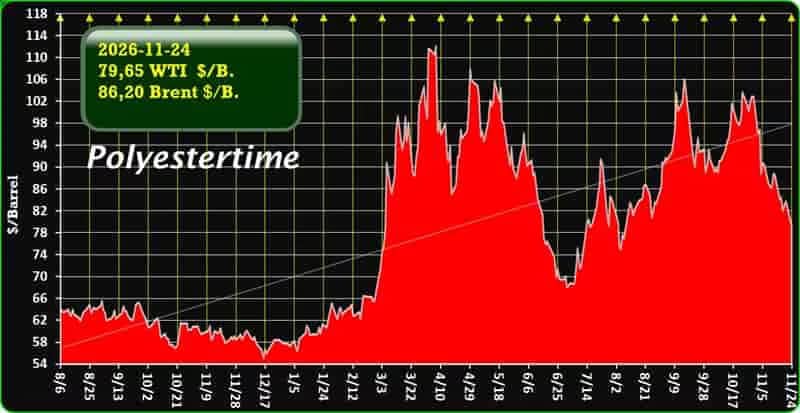

Crude Benchmarks Retreat From Late October Peaks
Global crude oil benchmarks have fallen to their lowest levels in three months, retreating sharply from the volatility that characterized late October. As of November 24, 2026, Brent crude futures were trading near $86 per barrel, following a February-contract settlement of $86.68. West Texas Intermediate (WTI) crude hovered around $80 per barrel after settling at $80.17.
The current pricing represents a decline of approximately 22% to 23% over the past month. This drop marks a significant reversal from late October, when Brent closed above $117 per barrel amid intense fighting in the Persian Gulf. Despite ongoing maritime security threats and sporadic attacks on regional energy infrastructure, traders are increasingly pricing in diplomatic progress between Washington and Tehran alongside a substantial rebound in global crude output.
Diplomatic Momentum Reduces Risk Premiums
Market optimism surrounding backchannel negotiations has removed a substantial geopolitical risk premium that previously supported higher oil prices. Mediation efforts led by Qatar, alongside outreach from Egypt, Turkey, Saudi Arabia, and Pakistan, have kept communication channels open between the United States and Iran.
Recent high-level discussions included talks between US Vice President JD Vance and Qatar’s prime minister. These engagements have reinforced market bets that Washington and Tehran may avoid further large-scale military escalation. However, negotiations face specific hurdles. Sticking points in the talks include Iran’s demands for the lifting of sanctions, the release of frozen assets, and an end to the US naval blockade. In response, Washington is pressing for nuclear concessions.
Strait of Hormuz Traffic Remains Elevated Despite Risks
While diplomatic channels remain open, security conditions in key shipping lanes continue to fluctuate. Ship-tracking data from Kpler shows that crude shipments transiting the Strait of Hormuz averaged 9.5 million barrels per day in mid-November. This figure is down from 12.2 million barrels per day in October due to heightened security risks.
Supply Increases Offset Regional Instability
A significant increase in global oil supply has further contributed to the downward pressure on prices. Global oil supply rose by 2.3 million barrels per day in October, reaching a total of 105.4 million barrels per day, according to data tracked by the International Energy Agency (IEA) and market analysts.
Key producers ramped up output to offset regional instability. Saudi Arabia boosted crude production by 1.18 million barrels per day, Iraq added roughly 496,000 barrels per day, and Kuwait increased output by 232,000 barrels per day. Additionally, Libya’s National Oil Corporation confirmed the reopening of its flagship Sharara oil pipeline, allowing crude to flow into coastal storage facilities after an earlier valve closure.
Inventory Builds Signal Oversupply
The surge in production has led to significant inventory accumulations globally. Research from Deutsche Bank indicates that global observed liquids inventories rose by 52 million barrels in October, pointing to an implied daily oversupply of 1.7 million barrels.
This shift in supply dynamics is also reflected in the structure of crude contracts. The price spread between near-term and later-dated crude contracts has narrowed sharply, erasing the steep backwardation that characterized the market during peak wartime shortages.