

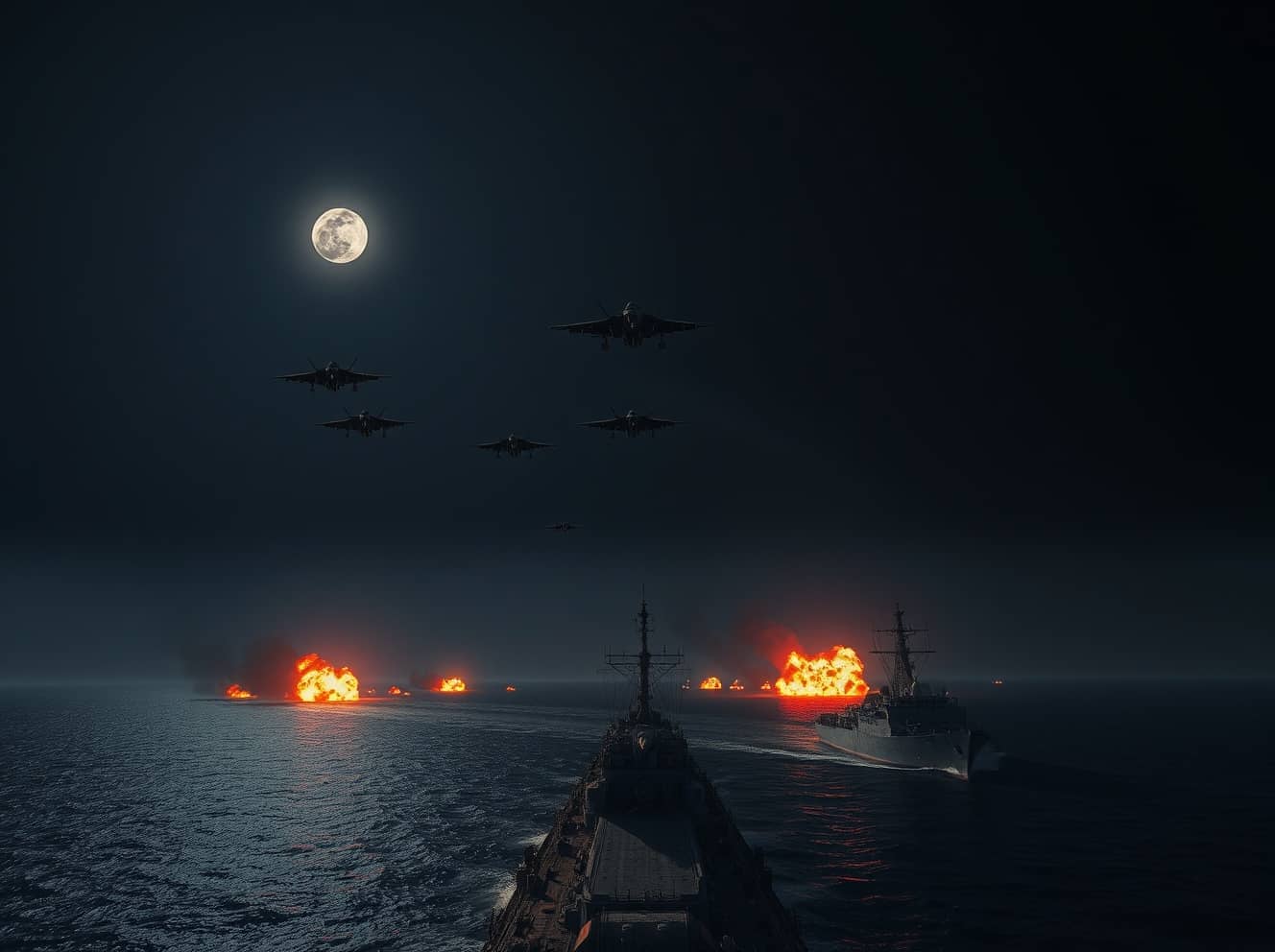

Airstrikes Target Iranian Vessels in Strait of Hormuz
U.S. Central Command confirmed this week that American and Israeli fighter jets carried out airstrikes on multiple Iranian vessels in the strategically vital Strait of Hormuz. The military action occurred just hours after President Donald Trump had indicated progress in ongoing talks for a provisional agreement with Iran, underscoring the fragile state of US-Iran ceasefire negotiations.
Details of the Military Operation
The coordinated airstrikes involved both U.S. and Israeli air assets, targeting several Iranian vessels operating within the Strait of Hormuz. The Strait, a narrow waterway connecting the Persian Gulf with the Arabian Sea and the open ocean, is recognized globally as a critical chokepoint for international maritime traffic, particularly for oil shipments. Its strategic importance stems from the fact that a significant portion of the world's seaborne oil passes through it daily. Any disruption in this waterway can have immediate and far-reaching implications for global energy markets and international trade.
The confirmation from U.S. Central Command provided official acknowledgment of the operation, which reportedly aimed at specific Iranian maritime assets. The nature and extent of the damage to the Iranian vessels were not immediately detailed in the confirmation.
Context of Ceasefire Negotiations
The airstrikes took place against a backdrop of delicate diplomatic efforts between the United States and Iran. President Trump had earlier conveyed optimism regarding the progress of these talks, suggesting that a provisional agreement might be within reach. These negotiations have been characterized by intermittent progress and significant challenges, reflecting deep-seated distrust and divergent interests between Washington and Tehran.
The pursuit of a ceasefire agreement typically involves complex discussions on various security, economic, and political issues. For the United States, such an agreement often seeks to de-escalate regional tensions and address concerns regarding Iranian maritime activities and broader geopolitical influence. For Iran, a deal could potentially alleviate economic pressures and secure certain guarantees regarding its regional interests.
Parallel Paths: Diplomacy and Pressure
The timing of the airstrikes, following closely on the heels of President Trump's positive remarks about negotiations, highlights a consistent approach in US-Iran relations: the simultaneous application of diplomatic engagement and military pressure. This dual strategy aims to keep channels for dialogue open while also demonstrating a readiness to use force to protect perceived interests or deter specific actions. The strikes serve as a clear indication that even as diplomatic efforts continue, military options remain on the table as a tool of foreign policy.
This approach suggests that the United States and its allies are pursuing a strategy where negotiations are conducted in parallel with actions designed to exert leverage. The objective of such a strategy is often to compel concessions at the negotiating table by demonstrating resolve and capability, even if it risks exacerbating tensions in the short term.
Iranian Distrust and Complications
Reports from Tehran indicated a prevailing distrust within Iranian circles regarding the ongoing talks. This skepticism from the Iranian side complicates the negotiation process, as a lack of trust can hinder the ability to reach mutually acceptable terms and ensure adherence to any potential agreement. Iranian officials have frequently expressed concerns about the sincerity and long-term commitments of their counterparts in past diplomatic engagements.
Such distrust can manifest in various ways, including a reluctance to make significant concessions, a tendency to view diplomatic overtures with suspicion, and a continued focus on strengthening their own strategic positions. This reported Iranian sentiment underscores one of the fundamental obstacles to achieving a lasting ceasefire or a broader provisional agreement.
Strategic Importance of the Strait of Hormuz
The Strait of Hormuz is approximately 39 kilometers (21 nautical miles) wide at its narrowest point, with the shipping lanes themselves being only a few kilometers wide. It is bordered by Iran to the north and the Musandam Governorate of Oman to the south. Its geographical configuration makes it easily susceptible to disruption, which has historically made it a flashpoint for regional tensions.
The Strait's strategic importance cannot be overstated. It is a vital conduit for crude oil and liquefied natural gas (LNG) from major producers in the Persian Gulf, including Saudi Arabia, Iran, the UAE, Kuwait, and Iraq, to markets worldwide. Any significant disruption to transit through the Strait could trigger a global energy crisis, impacting economies far beyond the Middle East. Consequently, maintaining freedom of navigation through this waterway is a paramount concern for numerous international actors.
Potential Implications of a Ceasefire Deal
A significant outcome of a potential ceasefire deal between the United States and Iran could be the formal reopening or guaranteed unimpeded passage through the Strait of Hormuz. While the Strait is technically an international waterway, periods of heightened tension have led to concerns about its security and the potential for blockades or harassment of commercial shipping.
An agreement that explicitly addresses the security and free flow of commerce through the Strait would provide considerable relief to global energy markets and contribute to regional stability. Such a development would not only facilitate trade but also potentially pave the way for broader de-escalation in the Persian Gulf region, impacting various economic and security dynamics.