

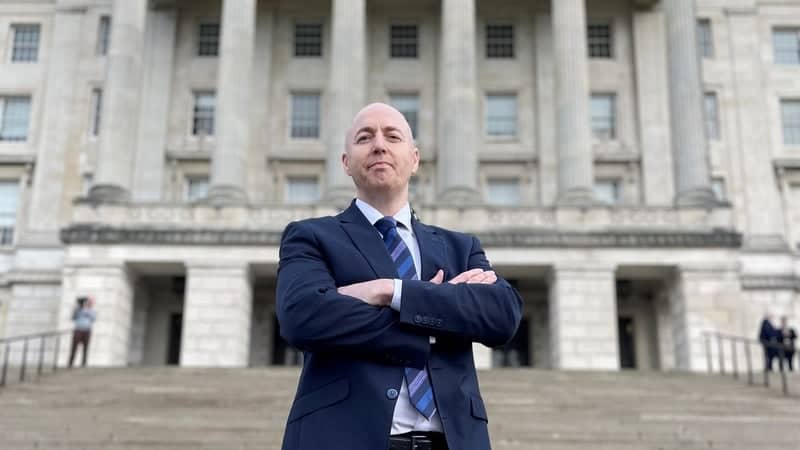

UUP Names Kyle Savage for Upper Bann Contest
The Ulster Unionist Party (UUP) has officially selected Kyle Savage to stand as its candidate in the upcoming Assembly elections for the Upper Bann constituency. This significant announcement fills the void left by former party leader Doug Beattie, who previously represented the area and whose departure created a notable shift in the local political landscape.
UUP leader Jon Burrows confirmed that Savage will receive the "full backing of the party" as he prepares to contest the crucial seat. This pledge of unified support underscores the party's intent to present a cohesive front in Upper Bann, particularly in the wake of recent internal challenges. The selection of Savage marks a pivotal moment in the UUP's efforts to consolidate its position and reaffirm its electoral strength in a region that has historically been a significant stronghold for unionist representation.
Savage’s Local Governance Experience
Kyle Savage brings established local administrative credentials to his candidacy, having served as a deputy lord twice. This experience in local governance is expected to be a key asset in his campaign, allowing him to connect with voters on issues directly impacting their communities. His appointment suggests a strategic move by the UUP to endorse candidates with a proven track record in local administration for one of its key constituencies, signaling a focus on practical competence alongside party loyalty.
The Upper Bann seat has long been a focal point of political activity within Northern Ireland, and its importance has only intensified following the departure of its long-serving member. Savage’s selection indicates the UUP’s clear intent to maintain a strong and visible presence in the area throughout the next electoral cycle, aiming to reassure its traditional support base and attract new voters.
Former Leader's Exit Reshapes Upper Bann Politics
The vacancy in the Upper Bann constituency arose after Doug Beattie resigned from the Ulster Unionist Party in May. His exit was not merely a change in personnel but was accompanied by sharp and public criticism of the party's internal dynamics, drawing significant attention to the UUP's leadership and structure.
Beattie cited a "toxic atmosphere" under the current leadership as the primary reason for his resignation. This strong condemnation highlighted underlying tensions within the party and presented a challenge to its public image. Crucially, Beattie did not remain within the UUP structure, choosing instead to leave the party entirely, a decision that underscored the depth of his dissatisfaction and the finality of his break with the party apparatus he once led.
Beattie's Independent Unionist Representation
Following his departure from the Ulster Unionist Party, Doug Beattie now sits as an independent unionist in the Assembly. His status as an independent represents a significant shift in the political landscape of Upper Bann, as it means the constituency is now represented by a figure who, while still identifying as unionist, operates outside of the formal UUP party structure. This creates a new dynamic for voters, who previously associated Beattie with the UUP banner.
The timing of Beattie’s resignation in May set the stage for the current candidate selection process. The UUP’s decision to appoint Kyle Savage comes several months after Beattie’s exit, a period that allowed the party time to evaluate its options, strategize its approach, and identify a candidate it believes can effectively reclaim and defend the seat in the next Assembly elections, which are scheduled for next year.
UUP's Electoral Strategy and Internal Dynamics
The selection of Kyle Savage highlights the UUP's strategic imperative to retain its traditional support base in Upper Bann. The constituency has historically been a significant stronghold for unionist parties, but the political dynamics have demonstrably shifted with Doug Beattie’s move to the independent benches. This creates a multi-faceted challenge for the UUP, which must now contend with a former leader campaigning outside its ranks.
Jon Burrows’ statement regarding Savage’s "full backing" underscores the party’s unified front in this contest, aiming to project an image of solidarity that directly counters the narrative of internal division prompted by Beattie’s departure. The UUP leadership aims to present a cohesive campaign, focusing on Savage’s local credentials and the party’s broader vision, as it faces the challenge of defending the seat against both independent candidates and other political entities vying for influence in the region.
Navigating the Post-Beattie Era
With the next Assembly elections scheduled for next year, the UUP has a critical period to organize its campaign around Savage’s candidacy. The party must carefully navigate the post-Beattie era, addressing the concerns and sentiments of voters who may have been influenced by Beattie’s earlier tenure as party leader and his subsequent criticisms. Savage’s role as a twice deputy lord provides him with a specific type of local governance experience, which he will likely highlight extensively in his campaign efforts to demonstrate his commitment and capability to serve the constituency.
Beattie’s criticism of the "toxic atmosphere" under Burrows’ leadership has drawn considerable attention to internal party relations, placing them under increased scrutiny. While Burrows has moved forward decisively with candidate selections, the underlying tensions cited by Beattie remain an undeniable part of the political narrative surrounding the UUP. The party’s ability to present a truly united front in Upper Bann will be a significant test of its resilience and leadership ahead of the upcoming elections. Savage’s candidacy is the first major personnel decision following Beattie’s resignation, making it a key indicator of the party’s direction and strategy under its current leadership.
As the election cycle progresses, the focus in Upper Bann will remain sharply on how the UUP positions itself relative to the independent unionist representation now held by Beattie. The outcome of this contest is not merely about one seat; it will likely influence broader discussions about unionist unity, electoral strategy, and the future direction of unionism in Northern Ireland as a whole.