

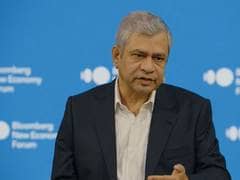

Long-Term Strategy for Technology Sovereignty
Union Minister Ashwini Vaishnaw announced on Wednesday that India is planning over a 20-25 year horizon to reduce critical technology dependencies and strengthen its ability to withstand global disruptions. Speaking at the Bloomberg New Economy Forum, Vaishnaw emphasized that the country aims to become a trusted partner across global technology supply chains rather than pursue complete self-sufficiency.
"Things change, politics change, geopolitics play a big role, so we have to constantly calibrate our approach, and we in India are thinking at least 20 years ahead," Vaishnaw said. He outlined that India was setting short-term goals for three to five years, medium-term targets for five to 15 years, and long-term goals spanning 20 to 25 years.
The minister stated that the focus was on building domestic capabilities in strategically important areas while remaining integrated with global value chains. He noted that technology would continue to be a global industry with supply chains spanning multiple countries, and the priority was to identify strategic dependencies without compromising India's resilience.
Building the Semiconductor Ecosystem
Vaishnaw highlighted the need to develop the full semiconductor ecosystem, including materials, chemicals, gases, substrate materials, chip design, and manufacturing. He noted that India’s second phase of the semiconductor programme places greater emphasis on these inputs and that building such capabilities requires time and sustained effort.
"Without ecosystem, no manufacturing effort will ever pay off," Vaishnaw said, citing the mobile phone industry as an example of India’s gradual move from assembly to modules and components. He added that India was now manufacturing many components needed domestically and had begun exporting some to other countries.
Investing in Applied Research
The minister acknowledged the need to increase research and development spending and improve how it is directed, particularly towards applied research. To illustrate the potential of such collaboration, Vaishnaw cited the development of India’s end-to-end 4G telecom stack through government-private sector collaboration in three-and-a-half years, noting the system "is deployed on more than 100,000 towers." This effort demonstrated how targeted investment could yield tangible infrastructure outcomes within a compressed timeframe.
Preparing for Global Turbulence
Vaishnaw flagged risks from future global financial and technological disruptions, including the effects of artificial intelligence on employment and pressure from debt levels in advanced economies. He stated that AI would bring "much bigger turbulence" by disrupting employment sectors and services industries, alongside unraveling debt levels, describing these as "extremely difficult times ahead." These warnings underscored the urgency of the long-term planning framework he outlined earlier.
In response to these challenges, Vaishnaw said India was preparing to strengthen its financial, economic, and technological resilience. He noted that its public debt-to-GDP ratio had declined from 61 per cent to 55 per cent over the past five years, providing a more stable fiscal foundation for navigating the anticipated geopolitical and economic shifts.
International Perspectives on Sovereignty
The approach drawn by Vaishnaw resonated with international technology leaders attending the forum. Cisco Chairman and CEO Chuck Robbins said India’s scale and approach of building strategically important capabilities while partnering with trusted companies offered a practical path towards technology sovereignty. This perspective aligns with the minister's assertion that complete self-sufficiency is neither feasible nor desirable, but rather that integration with global partners remains essential for long-term stability.