

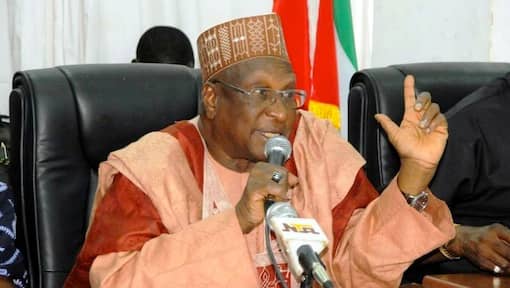

Shettima Describes Tukur as a 'Global Star' With Multifaceted Legacy
Nigeria's Vice President, Shettima, has publicly mourned the death of Alhaji Bamanga Tukur, characterizing the late public figure as a "global star" whose contributions spanned multiple critical sectors of national and continental development. In a statement released regarding the passing of Tukur, Shettima emphasized that Nigeria had lost a significant figure whose life was defined by measurable impact across three distinct but interconnected professional domains.
The Vice President's tribute highlighted Tukur's role not merely as a domestic politician but as a leader who operated on an international stage. By labeling him a "global star," Shettima pointed to the breadth of Tukur's influence, which extended beyond Nigerian borders into broader African and global economic and political arenas.
Tribute Highlights Three Distinct Professional Roles
Shettima structured his eulogy around three specific areas where Tukur exerted what the Vice President described as a "life of impact." These areas were identified as technocracy, statesmanship, and pan-African business leadership. According to Shettima, these roles were not isolated but were "interlinked," suggesting a career path where political authority, administrative expertise, and commercial enterprise reinforced one another.
First, Shettima noted Tukur's contributions as a technocrat. The Vice President specifically cited Tukur's work in building Nigeria's modern maritime infrastructure. This designation places Tukur's professional legacy within the realm of technical governance and national development projects, particularly those related to logistics and port management, which are critical for trade and economic stability.
Secondly, the Vice President acknowledged Tukur's tenure as a statesman and politician. Shettima stated that Tukur "governed with vision," a description attributed to the Vice President regarding Tukur's political conduct. This aspect of the tribute focuses on Tukur's legislative or executive roles, implying a focus on policy-making and national administration rather than purely administrative tasks.
Thirdly, Shettima described Tukur as a "pan-African business leader." The Vice President claimed that Tukur succeeded in putting "Africa’s private sector on the world map." This statement attributes to Tukur a role in internationalizing African commerce, suggesting that his business ventures or leadership positions helped integrate African markets into global economic systems.
Details of the Tribute and Public Reaction
The statement from the Vice President's office serves as an official acknowledgment of Tukur's status within the Nigerian political elite. By outlining these three pillars of Tukur's career, Shettima provided a framework for public understanding of the late figure's significance. The tribute does not detail the specific circumstances of Tukur's death but focuses entirely on his professional achievements and the void left by his passing.
Shettima's characterization of Tukur as someone who operated in "three distinct but interlinked worlds" suggests a career that avoided siloed specialization. Instead, it portrays Tukur as a hybrid leader who navigated government policy, technical infrastructure projects, and private sector expansion simultaneously or sequentially.
Implications for Nigeria's Maritime and Business Sectors
The specific mention of maritime infrastructure in Shettima's tribute draws attention to the importance of this sector to Nigeria's economy. By crediting Tukur with building "modern" infrastructure, the Vice President implies a transition from older systems to more contemporary, efficient models during Tukur's involvement.
Similarly, the reference to Africa's private sector being placed on the "world map" indicates a focus on global visibility and competitiveness. Shettima's words suggest that Tukur was instrumental in changing how African business was perceived internationally, moving it from a regional interest to a global one.
Official Mourning Period
The Vice President's public statement initiates an official period of mourning for the nation. As a high-ranking government official, Shettima's tribute sets the tone for how Tukur's legacy will be recorded in official histories. The description of Tukur as a "global star" elevates his status beyond that of a typical politician to that of an international figure.
No other political figures or opposition parties have been cited as providing immediate counter-statements or alternative assessments of Tukur's legacy in the available reports. The current public record consists primarily of Shettima's tribute and the associated descriptions of Tukur's career achievements.
Historical Context of Tukur's Career
While specific dates of Tukur's appointments are not detailed in Shettima's immediate statement, the Vice President's categorization of his work provides a historical snapshot. The identification of Tukur as a technocrat who built maritime infrastructure aligns with known periods of Nigerian port reforms and expansions.
The description of him as a statesman who governed with vision refers to his political career, which included significant roles in the National Assembly and other governmental bodies. The final pillar, his role as a pan-African business leader, points to his later years focused on commerce and continental integration efforts.
Public Figures Respond to the Loss
Shettima's statement is part of a broader wave of tributes from public figures recognizing Tukur's death. The Vice President's emphasis on the "interlinked" nature of Tukur's work offers a unique perspective on how his various roles complemented each other.
The tribute underscores the view that Tukur was not just a politician but a builder of systems, whether those systems were physical (maritime infrastructure) or economic (private sector growth). This multifaceted approach to leadership is what Shettima highlights as the core of his "global star" status.
Legacy and Future Recognition
The Vice President's words serve as a definitive summary of Tukur's public service. By attributing the construction of modern maritime infrastructure to him, Shettima ensures that this technical achievement remains part of the historical record alongside his political roles.
The reference to Africa's private sector being put on the world map suggests that Tukur's business influence was transformative. Shettima's tribute thus frames Tukur as a key architect of Nigeria's and Africa's economic engagement with the global community.
Official Statements Continue
As mourning continues, further details regarding funeral arrangements or additional tributes from other government officials may emerge. However, the current focus remains on Shettima's assessment of Tukur as a figure who left an indelible mark on Nigeria's maritime, political, and business landscapes.
The Vice President's description of Tukur's life as one of "impact" in three distinct worlds provides a concise yet comprehensive overview of a career that bridged the gap between public service and private enterprise.