


Strategic Disparity Between Perception and Investment
A recent article published by the Lowy Institute, an Australian think tank, highlights a significant divergence between how Western governments perceive India’s role in global order versus their actual investment patterns. According to Stephanie Campbell of the institute, while Western nations have viewed India as indispensable to the 21st-century order for approximately two decades, this recognition has not been matched by corresponding capital investment.
In contrast, China received substantial investment flows over a thirty-year period. The article states that these historical investments created a strategic adversary in Beijing rather than fostering an alternative industrial partner. Campbell notes that India is currently identified as the only country possessing the necessary scale to eventually become an anchor for an industrial alternative capable of balancing China’s economic gravity.
However, the report clarifies that India has not yet achieved this status as a definitive anchor. The think tank suggests that while other nations like Vietnam, Mexico, and Indonesia can absorb specific industries to create valuable redundancy in supply chains, they lack the continental scale required for such a strategic shift. Only India is positioned with the potential magnitude necessary to serve as a genuine industrial alternative at a global level.
Policy Failure in Corporate Decision Making
The article argues that Western efforts to correct this perceived strategic imbalance currently rely heavily on incremental corporate decisions rather than direct government intervention. Companies are being encouraged by governments and policy frameworks to adopt the “China plus one” strategy, which aims to diversify supply chains away from sole reliance on China.
Stephanie Campbell points out that firms face substantial incentives favoring continued investment in China. These advantages stem largely from superior infrastructure conditions within Chinese borders, including more robust power grids and port facilities compared to those currently being built or developed by rising industrial powers like India.
The Cost of Reversing Concentration
According to the report written by Campbell, a significant policy failure exists in mistaking the accumulation of fragmented corporate decisions for genuine strategic rebalancing. The article observes that governments are now asking private firms to bear the cost of reversing an industrial concentration that was created over decades through collective investment and reinforced by Western policies.
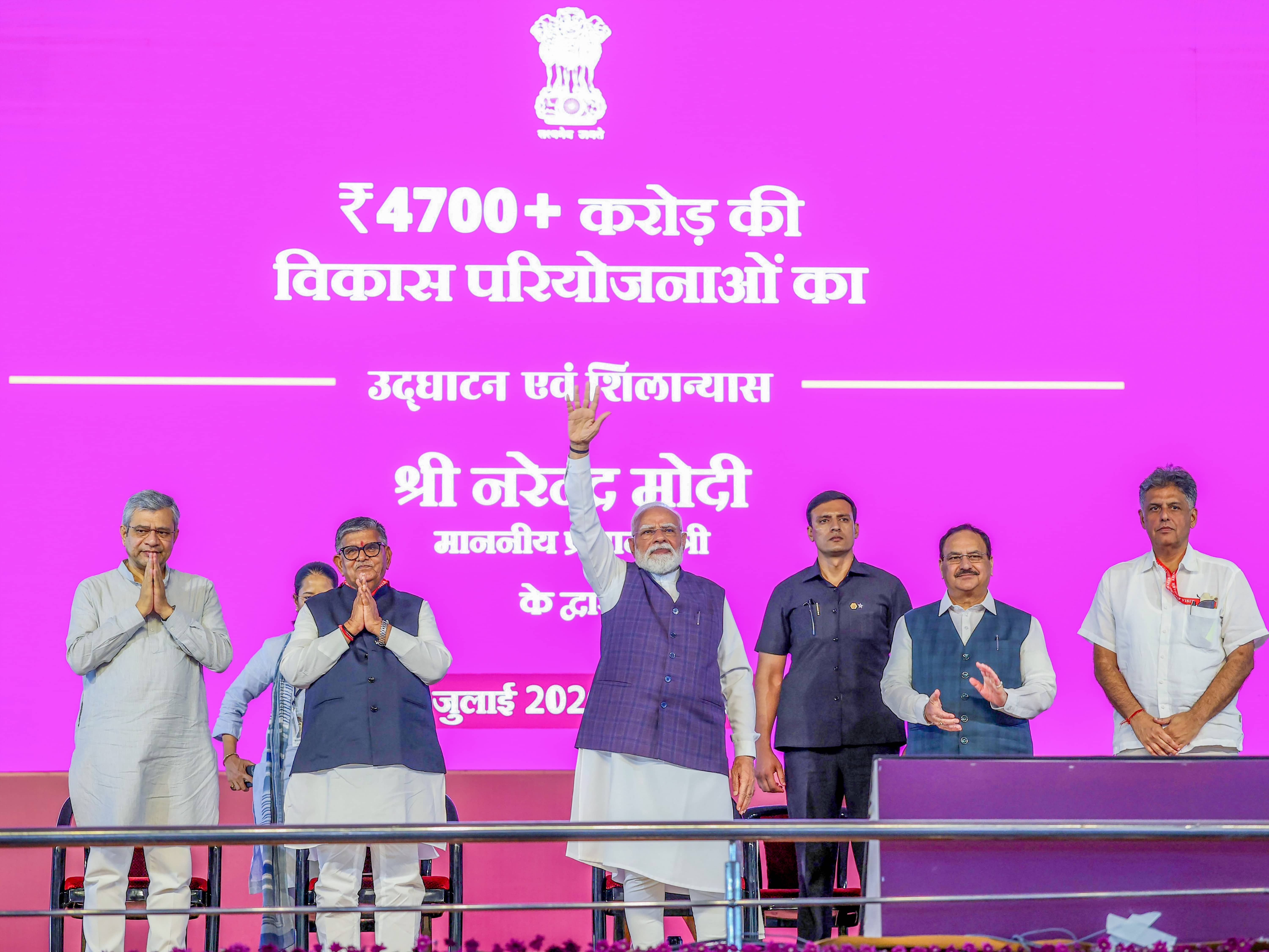
PM Modi has spent more than a decade attempting to convert India’s demographic advantages and geopolitical scale into tangible industrial power. The report describes these efforts as yielding promising but uneven results so far. Campbell states explicitly that “India cannot become a second centre of industrial gravity through domestic reform alone.”
The article further asserts that building a genuine alternative requires governments to alter the underlying conditions under which private investment becomes commercially rational at scale, rather than directing individual investments directly. This distinction between macro-level condition-setting and micro-level project selection is central to the think tank’s analysis.
Continental Scale as a Strategic Necessity
The report emphasizes that the relevant strategic choice lies between pursuing a strategically autonomous India or accepting continued dependency on Chinese industrial dominance. While smaller nations can provide redundancy for specific sectors, they cannot replicate the comprehensive alternative offered by a continental power like India.
Stephanie Campbell notes that creating an industrial rival to China requires more than just corporate willingness; it demands fundamental changes in infrastructure availability and policy environments that make investing outside of Asia’s current dominant player commercially viable without excessive risk premiums. The Lowy Institute analysis suggests that without these structural shifts, the “China plus one” strategy may remain insufficient to counterbalance China’s entrenched industrial advantages.
The article concludes by noting that while India possesses unique demographic and geopolitical attributes, transforming these into sustained industrial output requires external support beyond what domestic reforms alone can provide. The think tank positions this as a critical juncture for Western policy makers who wish to maintain influence in the 21st-century international order without relying exclusively on Chinese supply chains.