

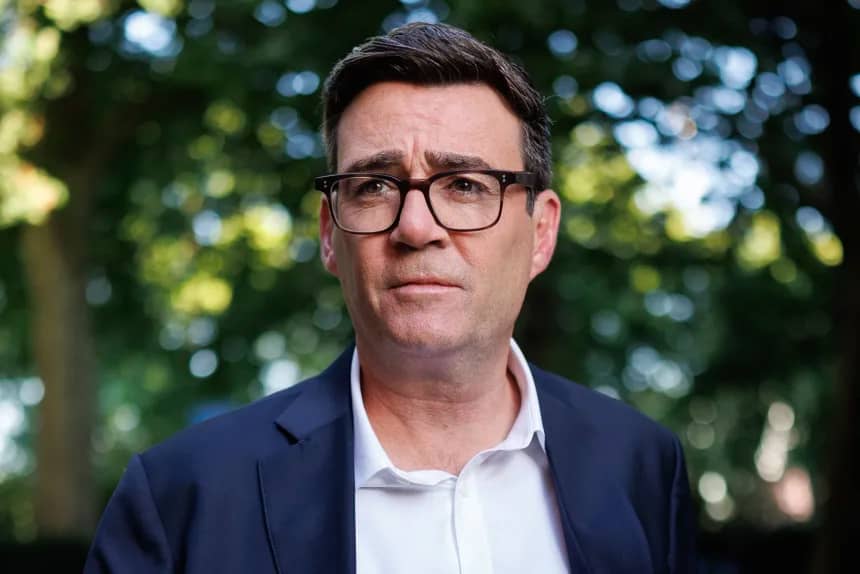

Burnham Takes Helm Amidst UK's Political Turmoil
LONDON — Andy Burnham has been officially confirmed as the new leader of Britain’s governing Labour Party, a development that positions him to become the country's seventh prime minister in a single decade. His formal ascension to the top office is scheduled for Monday, where he will succeed Keir Starmer, marking another significant shift in the nation's political landscape.
The official confirmation of Burnham’s leadership occurred on Friday, culminating a period of intense speculation and strategic maneuvering within the party. While the formal announcement was recent, reports indicate that Burnham has been functioning as the de facto leader-in-waiting since securing a crucial by-election victory last month. This electoral success was pivotal, enabling his return to parliament and providing the necessary platform to formally challenge Starmer for the premiership.
This transition unfolds against a backdrop described by political observers as one of extraordinary political instability within the United Kingdom. The rapid succession of leaders underscores a period of profound uncertainty and volatility that has characterized British governance over the past ten years, setting a challenging stage for the incoming prime minister.
A Decade of Shifting Leadership at Number 10
The impending premiership of Andy Burnham as the UK's seventh prime minister in a decade highlights an unprecedented era of political flux. This rapid turnover of leadership at the highest level reflects a sustained period of national uncertainty and a struggle for consistent governance. Each change in leadership has often been preceded by significant political or economic challenges, public discontent, or internal party strife, contributing to a sense of instability across the nation.
This pattern of frequent changes at Number 10 Downing Street has become a defining characteristic of modern British politics. It suggests a broader challenge in establishing long-term political stability and a consistent national direction. Burnham's arrival, therefore, is not merely a change of party leadership but also a moment that draws attention to the broader systemic pressures and public expectations that have led to such a dynamic and often turbulent political environment.
The Strategic Path to Labour's Top Spot
Andy Burnham, who previously served with a high profile as the mayor of Greater Manchester, emerged from his regional role to become the most viable alternative candidate for Labour’s leadership. His path to the party's top position was reportedly facilitated by a carefully orchestrated electoral maneuver involving a key ally, demonstrating a strategic approach to securing the leadership.
Reports from political sources indicate that a by-election was specifically engineered to pave the way for Burnham's return to Westminster. This intricate process involved the resignation of Josh Simons from his seat in Makerfield, a constituency deeply rooted in the historic Labour heartlands of northern England. Simons' resignation cleared the necessary parliamentary vacancy, allowing Burnham to contest and subsequently win the by-election. This victory was indispensable, providing him with the parliamentary seat required to mount a formal challenge against the incumbent leader, Keir Starmer.
The timing and necessity of these events were directly linked to significant electoral setbacks experienced by the Labour Party. In May, the party suffered what analysts described as disastrous results in local elections across the country. These poor performance metrics were widely interpreted as a stark warning signal, indicating the potential electoral fate if Keir Starmer were to lead the party into the next national general election.
Despite having secured a landslide election victory just two years prior, Starmer was widely considered unpopular by many political observers and segments of the public. The combination of his perceived unpopularity and the tangible failures in the recent local elections created an undeniable imperative for change within the party. This environment made Burnham’s emergence as a strong, alternative leader not just desirable, but seemingly necessary to prevent further electoral damage and to rejuvenate Labour's prospects.
Implications of the Leadership Transition
The succession of Andy Burnham represents a profound shift in British governance, underscoring the remarkable volatility that has seen the nation welcome its seventh prime minister within a mere ten years. This rapid turnover is a stark indicator of the deep-seated political and societal pressures currently affecting the United Kingdom, where leaders are increasingly expected to deliver immediate and transformative results.
Observers note that this significant leadership change within the Labour Party comes after a period where the party’s previous performance, particularly under Keir Starmer, was subjected to intense scrutiny. Following their poor showing in the recent local contests, Labour leaders and strategists were reportedly scrambling to find a new direction and a figure capable of revitalizing the party's appeal. Burnham was ultimately identified as the most capable and viable option available at that critical juncture.
The narrative surrounding Burnham's appointment heavily emphasizes the urgent need for a fresh approach to governance and a renewed connection with the electorate. Sources close to the party suggest that without such decisive changes, Labour faced considerable risks in upcoming national votes. The perceived declining public support under previous leadership, coupled with recent electoral setbacks, made a leadership transition not just an option, but a strategic imperative to safeguard the party's future electoral viability and its ambition to govern effectively.
Burnham's Vision for Economic and Political Reform
In his acceptance speech delivered upon his confirmation as Labour leader, Andy Burnham articulated a clear and ambitious vision for the future direction of the government. He explicitly stated his intention to restore “hope back” to the British people, a central theme of his campaign that resonated with a public weary of political instability and economic challenges.
Furthermore, Burnham pledged a fundamental challenge to what he described as a political culture and an economic model that, in his view, simply does not work effectively enough for ordinary people. His critique targets systemic issues, suggesting that current structures fail to adequately serve the general population. This commitment implies a focus on re-evaluating and reforming established systems to ensure they deliver tangible benefits and opportunities for a broader cross-section of society.
His campaign has consistently emphasized the dual objectives of restoring public optimism and actively confronting entrenched political and economic frameworks. This approach signals a potential shift towards policies designed to empower everyday citizens and address inequalities, moving beyond incremental adjustments to seek more profound structural changes within both the political sphere and the national economy.