

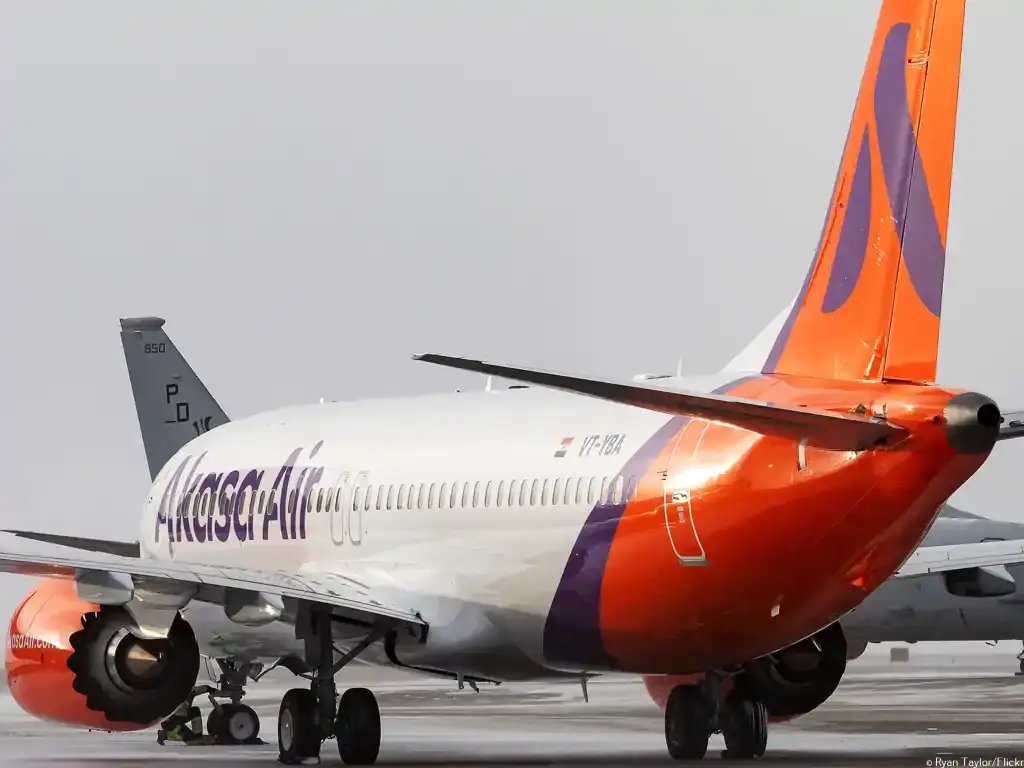

Financing Strategy for a Carrier Facing Market Shifts
\nAkasa Air, identified by industry observers as India's youngest commercial carrier, is currently pursuing a capital raise of Rs. 10.5 billion. This financial maneuver involves the issuance of both equity and debt instruments, according to sources familiar with the private discussions who requested anonymity regarding the specific terms.
\nThe airline has approached existing shareholders alongside two new investors to mobilize approximately Rs. 8 billion through an equity component. Sources indicated that Akasa's current shareholders are expected to contribute Rs. 5 billion toward this equity portion. The remaining funds in the equity tranche, amounting to Rs. 3 billion after accounting for existing shareholder contributions and total targets, are anticipated from one Asian investor and one American investor.
\nSimultaneously with these equity discussions, Akasa Air is engaged in talks with state-run banks regarding a debt infusion of at least Rs. 2.5 billion. This proposed lending arrangement would operate under a government-backed credit line specifically intended for airlines that have been impacted by war-related disruptions.
\nThe timing of this fundraising effort coincides with deteriorating market conditions, contrasting sharply with the environment in which Akasa Air previously secured capital. The carrier had raised funds from investors in June of the preceding year. Since that initial round, the financial landscape for Indian aviation has shifted significantly due to external geopolitical factors.
\n\nGeopolitical Tensions and Operational Constraints
\nThe primary driver cited for Akasa Air's current financial challenges is an ongoing conflict between Iran and the United States. Industry analysts note that this specific regional tension has triggered a cascade of operational difficulties within the Indian aviation sector.
\nFlight disruptions have become widespread across carriers operating in the region, directly affecting schedule reliability and passenger connectivity. Beyond logistical interruptions, the conflict has precipitated a steep surge in jet fuel prices. Jet fuel represents a substantial portion of an airline's total operating costs; specifically, sources estimate that this cost typically constitutes roughly 40% of an airline's operational expenditure.
\nThe combination of schedule disruptions and elevated fuel expenses creates a dual pressure on carrier margins. For Akasa Air, which operates under the constraints of being India's newest commercial entity, these external shocks present unique challenges compared to established carriers that may have larger reserves or diversified route networks.
\n\nInvestor Composition and Market Dynamics
\nThe structure of the proposed fundraising round highlights a reliance on both domestic stability and international capital. The expectation for one Asian investor and one American investor suggests an attempt to diversify Akasa Air's shareholder base beyond its current Indian holdings.
\nThis approach mirrors strategies used by other global carriers seeking resilience against volatile fuel markets, though the specific context of government-backed credit lines adds a layer of state intervention not always present in purely private market transactions. The availability of such credit lines indicates that regulatory bodies are acknowledging the systemic risk posed to airlines when geopolitical conflicts disrupt supply chains and energy markets.
\n\nComparative Financial Trajectories
\nThe contrast between Akasa Air's current financial position and its historical performance offers insight into how quickly market environments can alter for emerging carriers. The funds raised in June of the previous year were secured under different market conditions, a distinction that sources emphasize as critical to understanding the airline's present predicament.
\nMarket analysts point out that the deterioration of these conditions was not gradual but rather sharp and sudden, driven by the escalation of hostilities between Iran and the United States. This rapid change in circumstances has forced Akasa Air to pivot its financial strategy from organic growth or standard expansion financing to emergency liquidity management.
\nThe reliance on state-run banks for a significant portion of the debt requirement underscores the interconnectedness of Indian aviation with broader economic policies designed to mitigate regional instability risks. The government-backed nature of this credit line serves as a mechanism to prevent potential insolvency among carriers that might otherwise struggle against sudden spikes in energy costs.
\nAs discussions remain private, specific details regarding interest rates on the debt or valuation metrics for the equity shares have not been disclosed publicly. However, the involvement of American and Asian investors suggests an assessment by international stakeholders of Akasa Air's long-term viability despite short-term headwinds.
\n\nRisk Factors in Emerging Aviation Markets
\nThe case of Akasa Air illustrates broader vulnerabilities inherent to emerging aviation markets where carriers are still establishing route networks before facing macroeconomic shocks. The 40% operational cost attributed to jet fuel highlights the sector's sensitivity to global energy geopolitics.
\nFor a carrier that had recently secured funding, the sudden necessity for additional capital raises questions about liquidity management strategies in volatile environments. Existing shareholders committing Rs. 5 billion demonstrate confidence in the airline's underlying business model despite external pressures.
\n\nOngoing Negotiations and Future Outlook
\nAs of now, all discussions regarding Akasa Air's fundraising remain private according to sources familiar with the matter who requested anonymity as negotiations proceed. The timeline for closing these deals has not been specified in public reports available through standard industry channels.
\nThe airline continues to navigate a complex financial landscape where operational efficiency must be balanced against rising input costs driven by international conflict. Success in securing this capital will depend on Akasa Air's ability to maintain service quality while managing the increased cost structure imposed by higher fuel prices and disrupted flight schedules.
"