

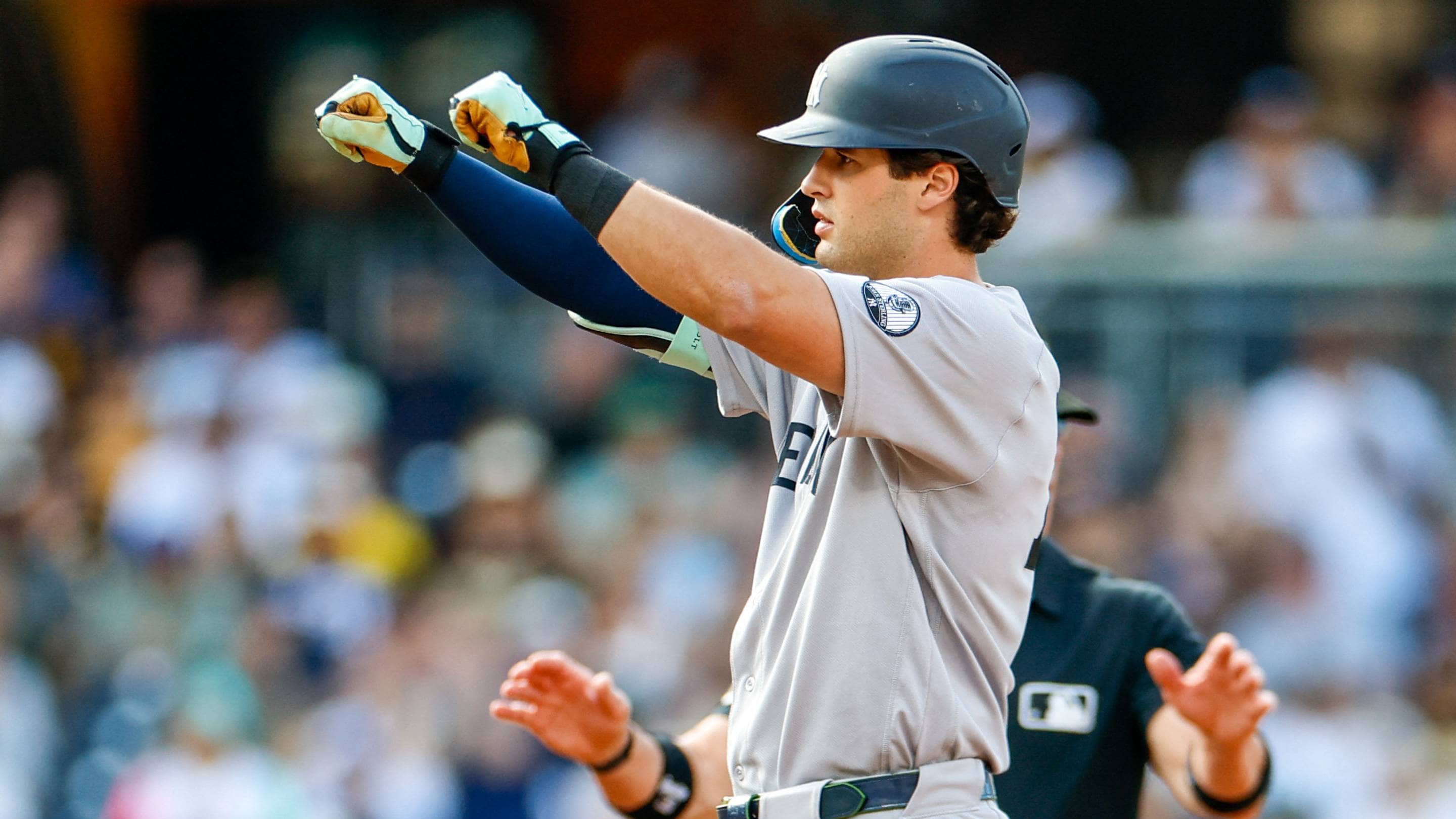

Jones Seizes Center Field Opportunity
New York Yankees rookie Spencer Jones has been given a significant opportunity to play in center field, a pivotal position in major league baseball. This roster move comes as a direct result of an injury sustained by Trent Grisham, who is currently sidelined from the lineup. For Jones, a burgeoning talent within the organization, this situation presents an unexpected and accelerated pathway to demonstrate his capabilities at the highest level. The team is utilizing this period to thoroughly evaluate Jones's potential in center field, not merely as a temporary fill-in, but with an eye toward his long-term viability.
According to reports, the Yankees are closely observing Jones during this critical juncture to envision what the future of their outfield defense could entail with him anchoring center field. The organization's objective extends beyond immediate coverage; they are looking to determine if Jones possesses the skills and readiness to not only fill the void left by Grisham but also to potentially establish himself as a permanent, long-term solution at the position. This evaluation carries substantial weight, as a strong center fielder is often considered the linchpin of a strong defensive alignment.
Accelerated Timeline for Rookie Evaluation
The injury to Trent Grisham has undeniably accelerated the timeline for evaluating Spencer Jones in a major league setting. Prior to Grisham's setback, the Yankees were anticipated to face a complex decision regarding the composition and hierarchy of their outfield. The team typically plans for player development and integration over a more gradual period, allowing rookies to acclimate at a measured pace. However, the current circumstances have provided an immediate and undeniable runway for Jones to demonstrate his skills under the intense scrutiny of major league competition.
Immediate Impact on Outfield Strategy
The New York Yankees are now assessing whether Jones can successfully transition into a regular, everyday role in center field. This evaluation is critical for multiple facets of the team's strategy, directly influencing both their defensive alignment and their overall offensive output for upcoming games. The focus remains intently on observing Jones's performance metrics, his defensive range, and his decision-making during this interim period. The urgency of the situation means every play and every game provides valuable data for the front office and coaching staff.
Reports indicate that the injury bug has significantly impacted the team's initial, carefully laid plans regarding the outfield composition. Instead of a gradual integration, where Jones might have seen limited action or been brought up later in the season, he is now receiving immediate and substantial playing time to prove his readiness. This accelerated timeline allows the front office to gather crucial data on his abilities and adaptability in a major league environment much sooner than originally projected, providing a real-time assessment of his readiness for prime time.
The Crucial Demands of Center Field
Jones's performance in center field will be closely monitored by the coaching staff and management, given the unique and demanding nature of the position. The primary objective is to determine if he possesses the necessary range, instincts, and arm strength to handle the extensive demands of the position at the professional level. Center fielders are often required to cover vast amounts of territory, make split-second decisions on fly balls and line drives, and communicate effectively with corner outfielders. His defensive plays, including his routes to ground balls hit into the gaps and his ability to track and catch fly balls, will be key indicators of his suitability for the role.
Monitoring Defensive Prowess
Beyond raw athleticism, the Yankees are also looking at how Jones adjusts to the heightened speed of the game in center field compared to other positions he may have played in the minor leagues. The reaction time required, the precision of throws, and the overall pace of play are significantly elevated in the majors. This adjustment period is crucial for understanding his versatility and his potential value to the team's overall defensive strategy. The evaluation process is comprehensive and ongoing, as Jones continues to take part in games and practice sessions, with every rep contributing to the team's assessment of his long-term fit.
Long-Term Roster Implications
The situation with Grisham's injury has undeniably opened a significant door for Jones to make a lasting impression on the Yankees organization. The team is acutely aware that this unexpected opportunity could profoundly influence future roster decisions, including potential contract negotiations for other players, future acquisitions, and positional assignments across the entire roster. If Jones performs exceptionally well during this period, he could solidify his place in the major league lineup, potentially altering the team's long-term plans for the outfield.
Conversely, if struggles arise or if he demonstrates areas needing significant development, the team will need to reassess its options for center field coverage, both in the short term and for future seasons. The evaluation of Jones is not merely about finding an immediate replacement for an injured player; it is fundamentally about long-term planning for the outfield and ensuring sustained competitive performance. The Yankees are carefully balancing the immediate need for competitive performance on the field with the crucial long-term development of their young talent.