

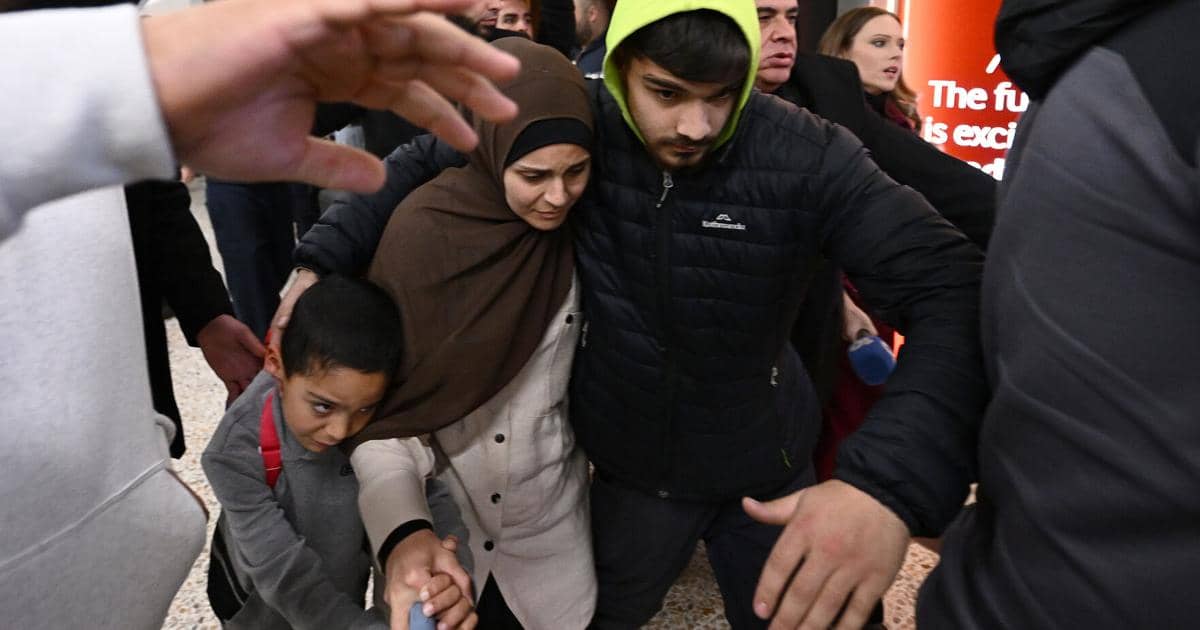

MELBOURNE, Australia (AP) — A group of 19 Australian women and children, identified by authorities as having links to the Islamic State group, are scheduled to return from Syria. The Australian government confirmed on Tuesday that flights have been booked for their repatriation, and indicated that some individuals within the group could face charges upon their arrival in Australia.
The impending return marks another instance of Australia repatriating citizens from conflict zones in northeast Syria, where thousands of foreign nationals, including women and children, have been held in detention camps following the collapse of the Islamic State group's territorial caliphate in 2019.
Government Stance and National Security
The Australian government has consistently stated that any decision regarding the repatriation of its citizens from Syria is made on a case-by-case basis, with national security being the paramount consideration. Officials conduct thorough security assessments of all individuals before facilitating their return, a process that involves intelligence gathering and risk evaluation by multiple agencies.
In statements made on Tuesday, government representatives reiterated that the primary concern is the safety and security of the Australian community. The potential for charges against some members of the returning group underscores the significant legal complexities associated with individuals who have resided in areas controlled by designated terrorist organizations.
Australian law includes robust provisions that criminalize various activities related to foreign incursions and terrorism. These include offenses such as entering or remaining in a declared area without a legitimate purpose, engaging in hostile activities, or being a member of a terrorist organization. Individuals returning from these conflict zones may face charges under these laws, even if they claim they were coerced, trafficked, or did not actively participate in combat roles. The burden of proof in such cases often involves extensive intelligence gathering and collaboration with international partners to secure admissible evidence.
The government's approach seeks to balance its international obligations and humanitarian concerns for children with the imperative to mitigate potential security threats posed by individuals who may have been exposed to extremist ideologies or participated in activities supporting a terrorist entity.
The Repatriation Process and Post-Arrival Protocols
The process of repatriating citizens from northeast Syria typically involves complex logistical and diplomatic efforts, often spanning several months or even years. Australian officials work closely with international partners and local authorities in the autonomous administration of North and East Syria to facilitate the safe transfer of individuals. This often includes intricate travel arrangements through multiple jurisdictions before individuals can reach Australian soil.
Upon arrival in Australia, individuals are immediately subject to rigorous security screening and assessment by law enforcement and intelligence agencies, including the Australian Federal Police (AFP) and the Australian Security Intelligence Organisation (ASIO). This initial assessment determines whether there are grounds for arrest and charging under Australian counter-terrorism laws.
For those not immediately charged, a range of post-arrival protocols may be implemented. These can include the imposition of control orders, which are court-issued orders that place strict restrictions on an individual's movements, communications, and associations. These orders are designed to monitor and manage potential security risks within the community. Furthermore, individuals may be referred to deradicalization and reintegration programs, which aim to address extremist ideologies and facilitate their re-entry into society under supervision.
The government has consistently emphasized that children returning from these environments are viewed primarily as victims of circumstance, having been taken to or born in a conflict zone. However, even children, particularly older adolescents, may undergo assessment to determine any potential radicalization or security risk, though the primary focus for minors is generally on rehabilitation, psychological support, and safeguarding their welfare.
Humanitarian Concerns and International Pressure
For several years, international human rights organizations and various governments have highlighted the dire humanitarian conditions within the detention camps in northeast Syria, such as Al-Hol and Roj. These camps house tens of thousands of individuals, predominantly women and children, who are family members of suspected Islamic State fighters from dozens of different countries.
The camps are often severely overcrowded, lack adequate medical facilities, and face significant security challenges, including outbreaks of violence and the potential for further radicalization. The United Nations and other international bodies have repeatedly called on countries to repatriate their citizens, citing concerns over the welfare of children, the spread of extremist ideologies within the camps, and the long-term security implications of leaving large populations in unstable conditions.
Many countries, including Australia, have faced intense domestic debate over the repatriation of citizens linked to the Islamic State group. Arguments against repatriation often center on national security risks, the perceived moral culpability of those who traveled to join or support the group, and the cost of managing them domestically. Proponents of repatriation frequently cite humanitarian concerns, particularly for children who had no agency in their situation, the rights of citizens, and the belief that it is safer and more responsible to manage and monitor these individuals within their home countries' robust legal and security frameworks rather than leaving them in volatile foreign camps where they could potentially pose a greater, unmanaged threat.
Precedent and Ongoing Challenges
Australia has undertaken similar repatriation operations in the past, albeit typically involving smaller groups of women and children. These previous efforts have involved extensive negotiations and meticulous security planning, reflecting the complex nature of such undertakings. Each repatriation is a significant logistical and security challenge, requiring close coordination between various government departments, including foreign affairs, home affairs, and law enforcement agencies.
The return of these 19 individuals underscores the ongoing challenge for Australia and other nations in managing the complex legacy of the Islamic State group's foreign fighters and their families. The government maintains that its approach balances its humanitarian obligations with the imperative to protect national security, navigating a contentious issue with significant public interest and security implications.