


Historic Electoral Gains for the Far-Right
The Alternative for Germany (AfD) secured a decisive victory in the state elections held in Saxony-Anhalt on Sunday, according to exit polls released by broadcasters. The party captured an unprecedented 44% of the vote, placing it firmly in first place. This outcome marks a significant moment in post-war German politics, positioning a far-right party within tangible reach of governing power at the state level for the first time since World War Two.
While the AfD fell short of securing an overall majority, the result represented a significant loss for Chancellor Friedrich Merz’s conservative party. The election outcome reflects widespread dissatisfaction with Germany's current ruling coalition, contributing to what has been described as a fracturing political landscape across the nation. The contest drew a reported voter turnout of 77%, according to broadcaster ZDF, indicating a high level of public engagement and the profound importance voters placed on this election.
As vote counting continued through the night, it remained unclear whether the AfD would be able to form a government coalition in Saxony-Anhalt. However, the broader political implications of the result were immediately apparent across the country. The AfD is currently the most popular party in Germany at the national level, and its leadership is seeking to leverage this regional success to advance its political agenda on a federal scale.
A New Political Landscape in Eastern Germany
The AfD's performance in Saxony-Anhalt underscores a notable shift in voter preferences, particularly in eastern Germany. The party's ability to garner such a substantial share of the vote challenges established political norms and signals a potential realignment of the political spectrum. This historic win provides the AfD with a powerful mandate in the state, even as the complexities of coalition formation loom. The magnitude of the victory suggests a deep-seated desire for political change among a significant portion of the electorate, propelling the AfD into a dominant position within the state's political discourse.
AfD's Policy Platform and National Ambitions
The AfD’s platform, which it aims to promote following this victory, includes a series of controversial policy proposals that have drawn intense scrutiny both domestically and internationally. Key tenets of their agenda encompass heavy restrictions on immigration, a push to restore diplomatic ties with Russia, a reduction in financial support to Ukraine, and a withdrawal from the euro currency. These positions represent a stark departure from the foreign and domestic policies pursued by Germany's mainstream parties.
Ulrich Siegmund, the 35-year-old lead candidate for the AfD in Saxony-Anhalt, played a pivotal role in the campaign, attracting thousands of supporters to his rallies throughout the state. Speaking after the announcement of the exit polls, he declared the election result a historic moment for the party and the country. Siegmund stated, "We have made history in this country." He further articulated that the electorate had demonstrated a clear desire for political change and had chosen the AfD as the vehicle for that shift, emphasizing the party's role in responding to public sentiment.
Siegmund framed the Saxony-Anhalt win as a strategic first step toward securing national power in the federal elections scheduled for 2029. His comments underscored the party's long-term objective of transitioning from regional influence to federal governance, aiming to translate state-level success into a broader national mandate.
Magdeburg Celebrations and Leadership Statements
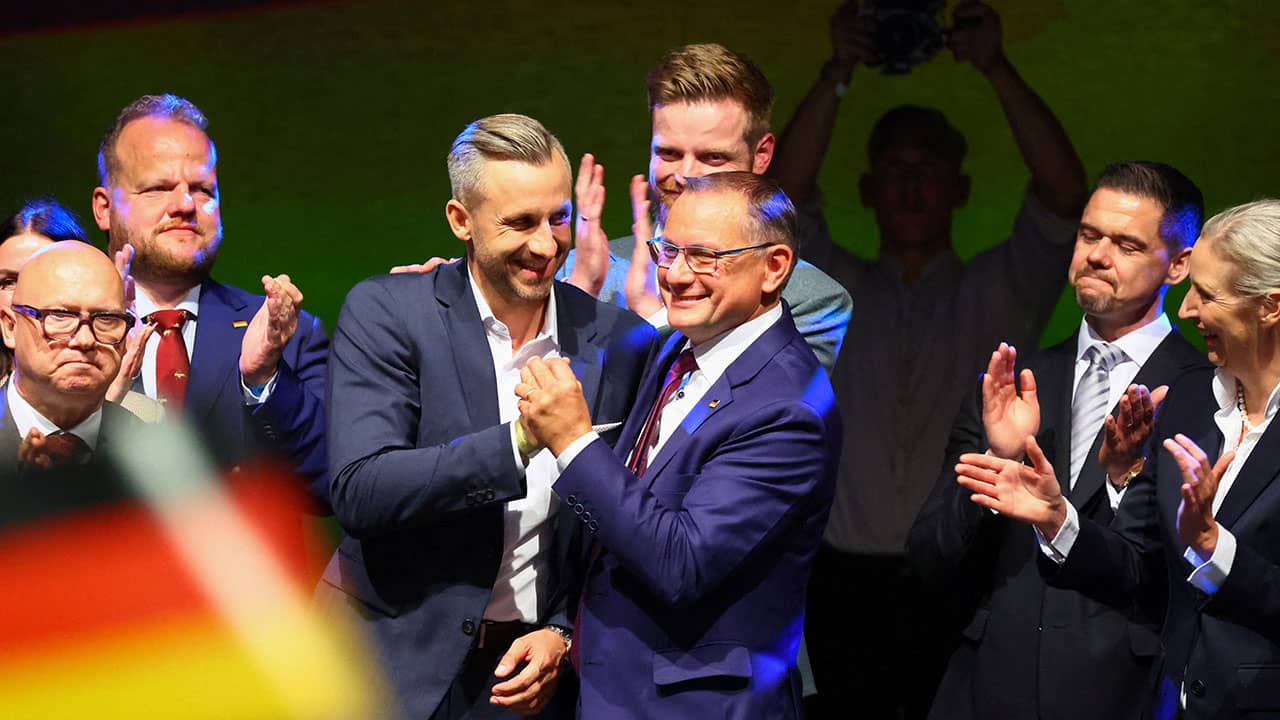
Jubilant celebrations erupted at the AfD’s election night gathering in Magdeburg, the capital of Saxony-Anhalt, as the extent of the victory became clear. Attendees waved German flags and embraced one another in an atmosphere of triumph. Siegmund stood arm-in-arm with two national leaders of the party during the initial moments of the announcement, as laughter and applause filled the venue, marking a moment of collective jubilation for the party's leadership and supporters.
Political Repercussions and International Observation
The electoral shift in Saxony-Anhalt drew immediate attention from international figures, highlighting the global implications of Germany's domestic political developments. Former U.S. President Donald Trump, for instance, posted a screenshot of the election results on his social media platform, Truth Social. The post contained no additional commentary or analysis beyond the shared image, yet its dissemination underscored the international interest in the AfD's growing influence.
Within Germany, the result signals a deepening divide in the political landscape. The drubbing delivered to Chancellor Merz’s conservatives highlights the significant challenges facing the current ruling coalition, which grapples with widespread public dissatisfaction. Political analysts and observers note that the AfD’s ability to translate this state-level success into federal power will depend heavily on its capacity to form viable coalitions and maintain its current level of national popularity, a task that remains complex given the party's controversial stances.
Opposition parties and critics have not yet issued a unified response to the exit polls in the provided records, though the magnitude of the AfD's gain suggests a profound realignment of voter preferences, particularly in the eastern states. The party’s specific policy demands, especially regarding foreign relations with Russia and Ukraine, remain central points of contention in German political discourse, promising continued debate and scrutiny.
The path to forming a government in Saxony-Anhalt remains uncertain as formal results are finalized and coalition negotiations are anticipated. However, the AfD’s achievement marks a notable milestone in post-war German politics, demonstrating the viability of far-right parties in regional governance for the first time since the mid-20th century and setting a new precedent for the nation's political future.