

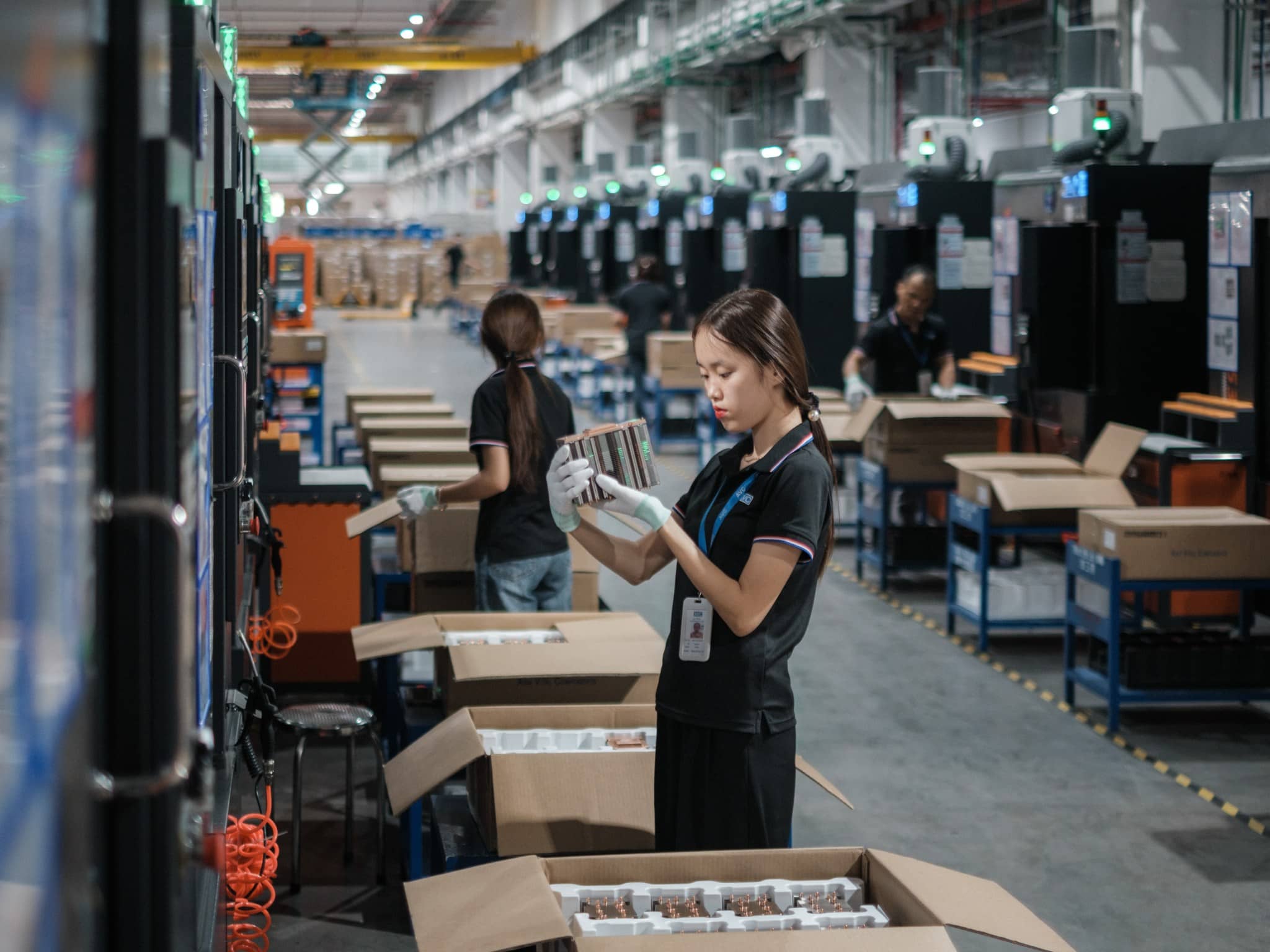

Export Growth Drives Economic Gains Across Asian Nations
The rapid expansion of artificial intelligence (AI) technologies is generating substantial economic growth across multiple Asian economies. This surge is largely fueled by the escalating global demand for AI-related hardware and the underlying infrastructure required to support advanced computational processes.
According to recent data, several nations in the region have reported significant increases in export volumes. Taiwan, a critical player in the global technology supply chain, is currently projected to experience its first year of double-digit gross domestic product (GDP) growth since 2010. This remarkable surge is attributed directly to the rising international demand for AI hardware exports originating from the island nation, underscoring its pivotal role in the AI revolution.
Beyond Taiwan, other economies in the region have also reported robust export performance. Japan, Malaysia, Singapore, and mainland China all recorded export growth exceeding 20% in July, signaling a broad-based uplift in trade driven by AI-related components and services. Data regarding South Korea's export figures was incomplete in available reports at the time of publication, but the overall trend points to a significant economic boost across key Asian markets.
Concentration of Benefits in Hardware Production
Despite the widespread economic uplift, the benefits of the AI boom are not uniformly distributed across the continent. Economists note that nations with established capabilities in semiconductor manufacturing and robust data center infrastructure are seeing the most immediate and substantial financial returns. These countries are positioned to capitalize on the foundational requirements of AI development and deployment.
Taiwan's projected double-digit GDP growth highlights the critical importance of leading-edge hardware production, particularly in the advanced semiconductor sector. Similarly, the significant export surges from Malaysia, Singapore, Japan, and mainland China indicate a strong correlation between their existing AI infrastructure development and their national export metrics. These economies are either producing essential components or providing the necessary physical and digital backbone for the burgeoning AI industry.
Economists Question Sustainability for Southeast Asia
While broader Asian economies are seeing sustained growth, experts express concern that the current economic boost for Southeast Asia may not be durable in the long term. Danny Quah, a distinguished economist at Singapore’s Lee Kuan Yew School of Public Policy (LKYSPP), described the current conditions in Southeast Asia as a "short-term blip" and a "sugar rush economic boom."
Quah attributed this potentially temporary growth to Southeast Asia's current role in supporting AI development rather than leading it. The region is primarily providing supporting, rather than leading-edge, semiconductors. These are crucial components but typically represent lower-value segments of the supply chain compared to the design and fabrication of advanced AI chips. Furthermore, Southeast Asia is supplying the necessary power and resources to drive the massive data centers that underpin AI operations globally, a role that, while essential, may not capture the highest economic value.
Risks of Uneven Distribution
Economists studying the region have voiced worries that the advantages generated by AI growth will not be shared evenly throughout Asia. This disparity is particularly evident between nations producing leading-edge hardware and those primarily providing supporting infrastructure or raw resources. Such a divergence suggests a potential widening of economic gaps and a divide in long-term economic stability across the continent.
The characterization of Southeast Asia's gains as a "short-term blip" implies a critical challenge: without a strategic shift toward higher-value production or deeper integration into the core AI supply chain, the current export spikes may not translate into lasting economic development for the region. This raises questions about the ability of these economies to sustain their current growth trajectory once the initial wave of infrastructure demand stabilizes or shifts.
Regional Economic Divergence and Future Outlook
The divergence in economic performance between different parts of Asia raises significant questions about the future structure of the regional economy. Nations like Taiwan, which are on track for substantial GDP growth driven by their advanced manufacturing capabilities, appear to be capturing a disproportionately larger share of value from the AI boom compared to their Southeast Asian neighbors.
For Southeast Asia, the reliance on providing supporting semiconductors and data center resources may inherently limit the duration and depth of the current economic upswing. Economists suggest that without fundamental structural changes, including investments in research and development, skill enhancement, and moving up the value chain into more complex design and manufacturing, the region risks missing out on the sustained, higher-value benefits that are currently accruing to countries with more advanced semiconductor capabilities and intellectual property in AI.
Challenges for Sustained Growth
The AI boom is undoubtedly lifting economies across Asia, but the longevity and equitable distribution of these gains remain a subject of intense debate among financial analysts and policy experts. While some nations celebrate record export numbers and robust GDP projections, others face the pressing challenge of ensuring that temporary, infrastructure-related demand translates into permanent economic strength and diversified growth. The strategic decisions made by Southeast Asian economies in the coming years will be crucial in determining whether their current economic momentum evolves into enduring prosperity within the global AI landscape.